
 Kettles
 Projectors
 Air Purifiers
 Dash Cams
 Headphones
 Smartwatches
 Blenders
 Humidifiers
 Keyboards
 Tablets






In-ear headphones, especially true wireless earbuds, are the everyday choice for commuting, travel, and casual listening. Their pocket-friendly size and canal-sealing tips deliver strong sound while reducing outside noise. This guide focuses on in-ear models with a spotlight on true wireless earbuds.
Key Features to Consider
In-ear headphones differ from on-ear and over-ear models because they sit directly in the ear canal and rely on soft tips to create a seal. That seal stabilizes the earbuds, shapes the sound you hear, boosts bass response, sharpens perceived clarity, and blocks a significant amount of ambient noise.
Modern in-ear headphones also concentrate a surprising amount of technology into a very small shell. Features such as active noise cancellation, transparency or ambient modes, touch or button controls, auto-pause when you remove an earbud, and app-based EQ are now common across many price ranges.
By design, sealing in-ears provide passive noise isolation even before electronics come into play. This physical isolation is particularly effective at reducing higher-frequency noise such as voices, keyboard clatter, and street sounds.
Ear Tip Fit Options
Ear tip fit is one of the first aspects to focus on. This refers to the range of tip sizes and styles included in the package. More options make it easier to achieve a stable seal, which directly improves comfort, bass, and isolation.
Look for models with foam and silicone tips, or unique shapes designed to stay secure during movement. Avoid assuming discomfort or weak bass is a flaw in the headphones themselves; often, trying a different tip size or shape resolves both issues. If stock tips do not provide a perfect seal, third-party options are widely available and can further refine fit.
Passive Isolation
Passive isolation is noise reduction created solely by the physical seal in your ear canal, rather than electronics. Strong passive isolation lowers background noise and allows you to listen at safer volumes. Look for earbuds that naturally block chatter, street noise, or office sounds without needing ANC enabled. Adjusting tip size, insertion depth, and tip material can significantly improve isolation.
Active Noise Cancellation (ANC)
ANC uses tiny microphones and electronic processing to reduce environmental noise. Look for earbuds with effective ANC that handles low-frequency sounds such as traffic hum or airplane engines, while the seal itself takes care of sudden or higher-pitched noises. Many ANC earbuds also include transparency or ambient modes, letting you hear your surroundings without removing the buds.
Driver Type
The driver is the tiny speaker inside the earbud responsible for producing sound. Dynamic drivers are most common and deliver excellent sound when tuned properly. Balanced armature drivers often appear in multi-driver IEMs to highlight detail, and some premium models use hybrid layouts that mix driver types. Look for driver designs matched to your listening preferences, but prioritize tuning and implementation over the label alone.
Audio Codec Support
Codecs determine how Bluetooth audio is compressed and transmitted. Look for earbuds supporting advanced codecs like AAC, aptX, or LDAC if you have compatible devices, as these can improve audio quality or reduce latency. Standard SBC or AAC is sufficient in most casual listening scenarios. Consider codec support a helpful bonus rather than a deciding factor.
Battery Life (with Case)
True wireless earbuds list runtime per charge and total runtime including the charging case. Look for models that match your listening habits—prioritize longer per-charge endurance if you listen for hours at a time, and total case life if you prefer shorter, intermittent sessions. Remember that ANC reduces battery life, so check whether manufacturer claims assume ANC is on or off. Avoid earbuds with low battery or slow charging if you rely on them for long commutes or travel. Fast charging features are an added convenience for last-minute top-ups.
Multipoint Pairing
Multipoint pairing allows simultaneous connections to multiple devices, making it easier to switch between laptop and phone audio without reconnecting. Look for models with stable multipoint connections that switch seamlessly.
Water/Sweat Resistance
IP ratings indicate protection against moisture and sometimes dust. Look for basic sweat and splash resistance if you plan to use earbuds during workouts or commuting. Higher IP ratings provide additional peace of mind for outdoor activities, rainy weather, or intense exercise. Remember that the charging case may be less protected than the earbuds themselves; always dry the earbuds before storing them.
Sound Signature
Sound signature describes the tonal balance across bass, mids, and treble. Look for earbuds with controlled bass, natural mids, and detailed highs that avoid harshness. A balanced tuning tends to perform well across music genres. App-based EQ or presets are valuable for users who want to fine-tune the sound to personal preference.
Secure, Comfortable Fit
A secure and comfortable fit is foundational. Look for earbuds that provide a reliable seal, remain stable during movement, and feel natural in your ears. Multiple tip sizes, customizable shapes, and optional stabilizing wings all contribute to a secure fit. .
Good Build Quality & Durability
Durable construction extends the life of your earbuds. Look for sturdy housings, dependable charging contacts, and a protective case. Moisture-resistant models are better for exercise, commuting, or rainy environments.
User-Friendly Controls & Features
Look for intuitive controls that let you manage playback, ANC, and calls without reaching for your phone. Features like touch gestures, customizable buttons, or wear sensors add convenience. Microphone quality and voice-noise handling should also be considered core requirements for frequent calls.
Nice-to-Have Features
- Multipoint & Advanced Connectivity Extras: If you typically use a single device, multipoint may not be essential. Newer wireless protocols and low-latency modes add convenience and future-proofing.
- Wireless Charging: Charging the case on a pad is convenient. Look for models that support Qi charging if you want this feature, but avoid assuming it improves sound quality.
- Custom EQ and Sound Personalization: App-based EQs, presets, or sound profiling tools can refine the audio experience.
- High-End Audio Codecs: LDAC or aptX Adaptive support is valuable if paired with compatible devices, but not mandatory for everyday listening.
- Transparency / Ambient Sound Mode: Natural-sounding ambient modes are practical for safety in public spaces.
- Touch Controls and Smart Sensors: Gestures, wear detection, and customizations make daily use smoother.
- Water Resistance Beyond Basic: Higher IP ratings increase confidence during workouts or in wet environments.
- Fast Pair and Ecosystem Bonuses: Platform-specific shortcuts and integrations can improve setup speed and device switching.
- Style & Aesthetics: While not affecting sound, color options, materials, and accessories enhance everyday enjoyment.
Recommended Models
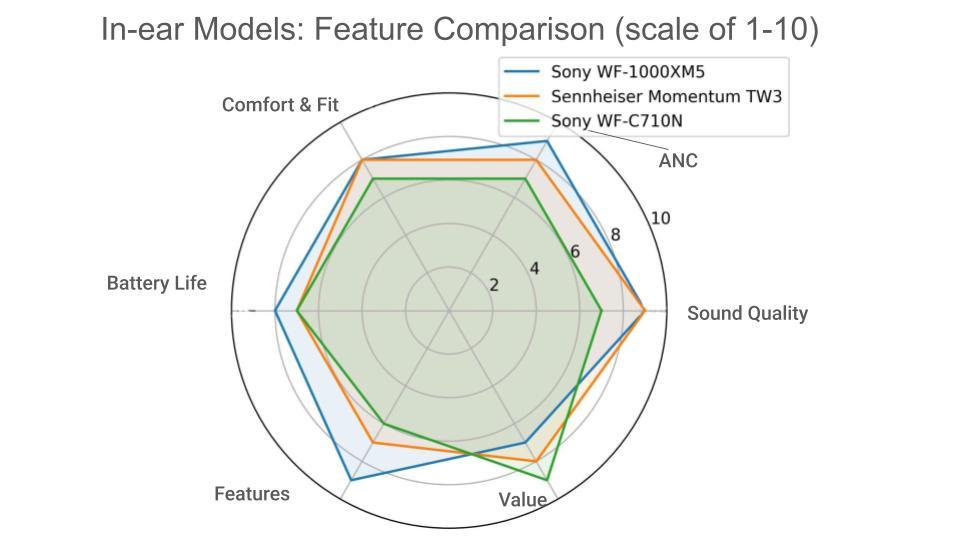
Different priorities lead to different “best” choices. The three picks below represent strong options for flagship performance, professional productivity, and budget value.
Flagship/Top-Tier In-Ear Pick: Sony WF-1000XM5
The WF-1000XM5 is built as a premium all-rounder, pairing strong noise reduction with a polished, enjoyable sound. It offers a compact, comfortable fit, effective passive isolation, and top-tier ANC that helps on flights, trains, and busy streets.
Sony’s companion app adds EQ and feature controls, and multipoint support improves usability if you switch between a phone and computer. With modern conveniences like wear detection and customizable controls, plus basic sweat protection, it aims to cover nearly every daily scenario at a high level.
Midrange Pick: Sennheiser Momentum True Wireless 3
The Sennheiser Momentum True Wireless 3 is an excellent midrange option for listeners who prioritize sound quality over productivity features. Tuned squarely for music, it delivers a clear, detailed, and well-balanced presentation, with punchy but controlled bass, natural mids, and crisp highs that avoid harshness. Sennheiser’s 7mm TrueResponse dynamic drivers create a wide, engaging soundstage with low distortion, allowing vocals and instruments to stand out cleanly across genres.
Comfort is a strong point, thanks to four sizes of silicone ear tips and three sets of optional stabilizing fins that help achieve a secure, personalized fit. Despite a slightly chunky look, the lightweight, ergonomic design stays comfortable during long listening sessions. Hybrid adaptive ANC effectively reduces low-frequency noise and background chatter, while transparency mode keeps you aware when needed. With strong sound tuning, solid noise control, and a fit designed for long, relaxed listening, the Momentum TW3 sits confidently in the midrange sweet spot for music lovers.
Budget-Friendly/Value Pick: Sony WF-C710N
The WF-C710N focuses on delivering the core modern experience at a lower price. It offers lively, broadly appealing tuning, useful ANC for commuting and studying, and a lightweight fit suited to long wear. Battery life is competitive for the category, and app support adds flexibility for EQ and settings. You may miss premium touches, but it covers the features most people use, which is why it stands out as a value pick.
Recommended Picks Compared
Final Buying Advice
Start with your routine, not the spec sheet. If you commute or travel often, prioritize fit plus noise control, since those two factors drive comfort and clarity in loud environments. If you mainly use earbuds for workouts, stability and moisture resistance should be high on your list, and you may want a model that lets in some ambient sound for safety. If you listen critically at home, tuning and comfort may matter more than wireless features, and a wired IEM can still be a smart choice.
Fit is personal, so treat it as something to verify. Try different tips, test for bass fullness and consistent sealing, and remember it is normal to use different sizes in each ear. Also think long-term, case durability, charging reliability, and software support can matter more over time than a flashy feature. Finally, be realistic about premium value, flagships can be better, but many affordable models now deliver an excellent experience if they match your needs.