Ice Makers
 Chairs
 Kettles
 Projectors
 Air Purifiers
 Headphones
 Smartwatches
 Humidifiers
 Keyboards
 Tablets


The Tablet Generation: Are We Raising Screen-Obsessed Kids?
Since tablets hit the mainstream market in 2010, kids and teenagers have seemingly been glued to iPads and similar devices. Naturally, many parents are asking: Are we raising screen-obsessed kids and, if so, what are the effects?
These concerns are more than valid given the technology’s growing adoption, especially among younger kids. However, focusing purely on screen time may be overly simplistic.
Numerous recent studies have shown that parents should also consider the content quality and context of screen use to fully understand the impacts, some of which are actually positive.
Screen time guidelines are also evolving as research advances. The American Academy of Pediatrics (AAP) has moved away from recommending hard time limits for most age groups, asking parents to look at factors such as their child, the content, and whether devices are taking over daily routines.
In this article, we’ll explore how tablet use has grown and what the latest research says about its effects on children. We’ll also share practical tips for managing healthy screen time and choosing kid-friendly tablets.
How Tablets Became a Part of Childhood
For some children, tablets were their first introduction to the digital world. Over the years, both screen time and tablet use have steadily increased in many countries. Driven by a combination of factors like affordability and the rise of digital media, the tablet is quickly becoming a staple in many households.
Growth of Tablet Ownership and Usage
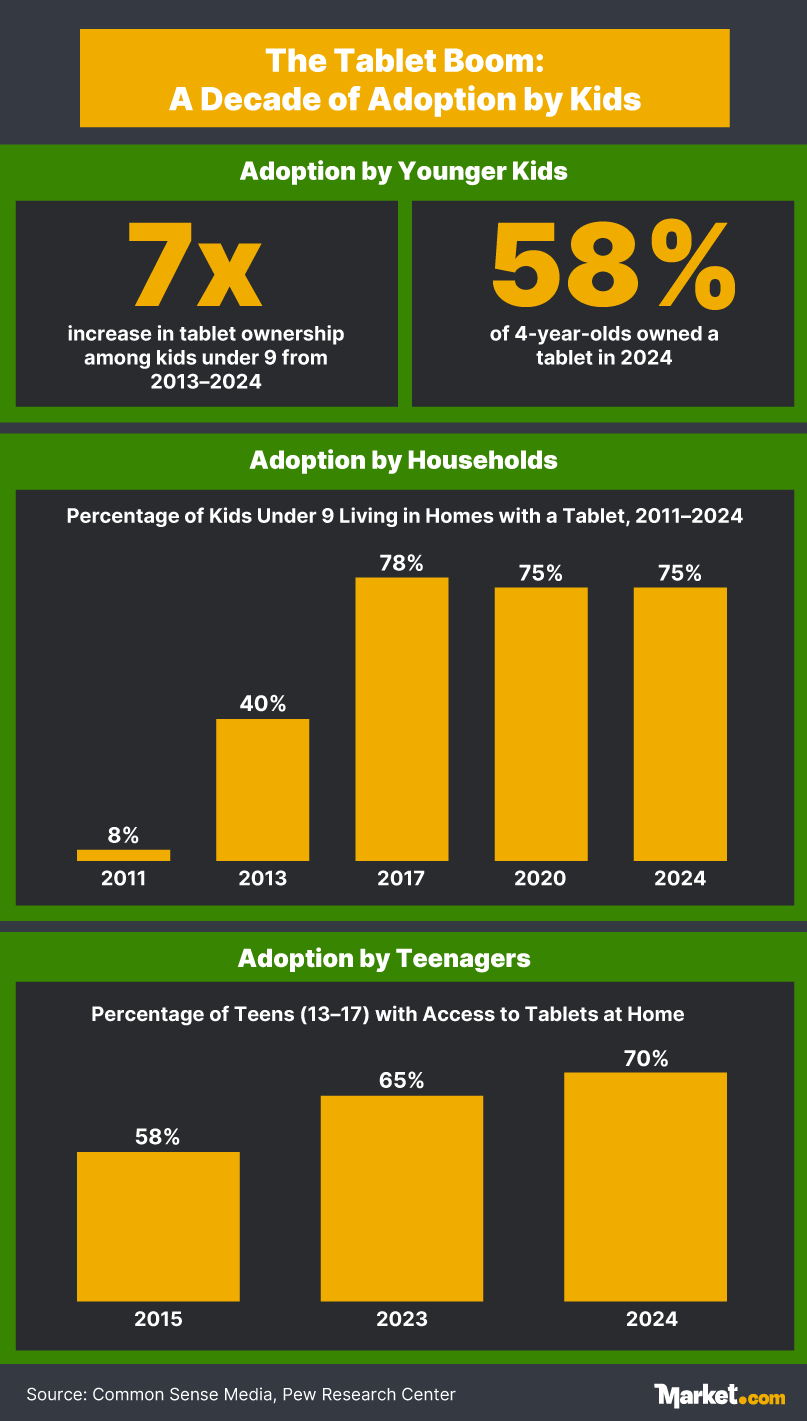
A decade’s worth of data shows how children have gained more access to tablets. According to Common Sense Media, tablet ownership grew almost sevenfold among those aged 0–8 years, with 47% having a tablet in 2024 compared to just 7% in 2013. By 4 years old, 58% of them have a tablet.
Household adoption was also rapid over the same period, growing nearly double, with 75% of children living in homes with a tablet in 2024, compared to 40% in 2013.
Possibly because their market was already saturated, tablet usage among teenagers compared to younger kids grew more modestly, up 12 percentage points from 58% in 2015 to 70% in 2024.
In contrast, 95% of teens have access to a smartphone in 2024. We can see that tablet usage tends to decline as children reach the pre-teen stage, as more parents give them smartphones.
Average Screen Time Has Gone Up over the Decade
With increased tablet usage, naturally, screen time has also increased over the years. In 2011, only 8% of kids under 9 in the US used mobile devices daily, including tablets. By 2024, this figure had more than tripled to 26%.
The average daily screen time for all devices was 3 hours and 47 minutes. The majority was spent watching TV or videos (60%), followed by gaming (26%), and the remaining was spent on video calling, reading e-books, social networking, doing homework, and other activities.
For teenagers aged 13 and older, 96% reported being online every day in 2024. Nearly half said they were online “almost constantly,” compared to nearly a quarter in 2015.
Affordability, Digitalization, and Lifestyle Changes Driving Tablet Adoption
Multiple factors are driving the adoption of tablets, and one of the strongest is their affordability. Consumers can choose from a wide range of brands and price points, from under $100 to thousands of dollars. Even someone on a tight budget can buy a refurbished unit at a fraction of the price of a new one.
The rapid digitalization of media content is also fueling tablet popularity. Many popular children’s shows and games are online, making the tablet a go-to entertainment device.
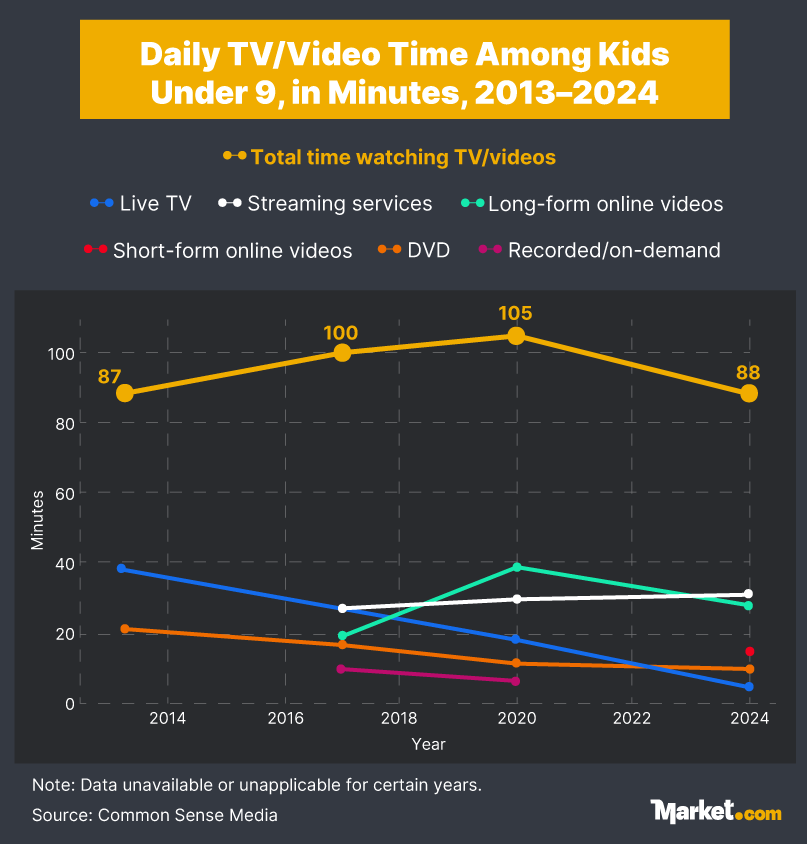
And the numbers reveal just how much children’s entertainment has shifted to online. Among children under 9, 83% of TV time in 2024 was spent on online video platforms, streaming services, and short-form videos. Only 6% was spent watching live TV, a percentage that has been declining since 2013. The remaining 11% was spent on DVDs.
Meanwhile, half of the time spent gaming was on tablet or smartphone games, a much higher proportion compared to only 20% in 2011.
Furthermore, parenting styles have evolved; many parents now hand out devices to children in daily settings.
Two-thirds of parents said they use screens at least sometimes to keep their kids occupied while attending to other tasks, and nearly half use them to reward good behavior. Parents are also okay with screen time when traveling in a vehicle (37%), meal times at home (23%), and in restaurants (22%).
What Parents Need to Know About Screen Use, Content Quality, and Trade-Offs
The impact of screen use depends on more than how much time is spent in front of a device; it also depends on the content quality and the activities that screen time is replacing. We reviewed multiple research articles and highlighted our findings in this section.
Screen Time and the Impacts on Kids
When discussing screen time, two well-established findings stand out.
First, babies gain little to no benefit from screen time. Patricia Kuhl, co-director of the Institute for Learning & Brain Sciences at the University of Washington, notes that numerous brain scans of babies under one year old reveal that they don’t learn from screens, but rather learn the most from human interaction.
That’s why leading organizations, such as the American Academy of Child and Adolescent Psychiatry (AACAP) and the AAP, recommend strict screen time for babies under 18 months, limited to video calls and activities that are done with an adult present. During these early months, children need to explore their surroundings to ensure healthy development.
Secondly, growing evidence shows that high levels of screen time can lead to negative effects, whether immediately or later in life. Excessive screen time is particularly harmful during early childhood because this period is considered the “golden age” for brain development, when it grows the fastest.
A longitudinal study in Japan found that, compared to less than 1 hour of daily use, children with 4 hours of daily screen time at 1 year old were 4.8 times more likely to exhibit communication delays and 2.7 times more likely to struggle with problem-solving by 2 years old. Overall, higher screen time is linked to a greater likelihood of developmental delays in both areas.
Among older kids, excessive screen time leads to weaker impulse control, a foundational skill for executive functioning. A longitudinal study of nearly 8,000 preteens found neurological changes in the brain’s inhibitory control region among those who spent more time on screens than off them.
Screen overuse can also result in social and emotional issues. A meta-analysis of 117 studies between 1972 and 2024, covering nearly 300,000 children of various ages, found that higher screen time increases the risks for socioemotional challenges, such as difficulty regulating emotions. Prolonged screen use also contributes to attention problems.
However, moderate device use may actually support a child’s well-being. An Oxford University study of over 35,000 kids and their caregivers found that kids who spend between one and two hours a day in screen-based activities are more likely to display better social well-being and mental health than those who don’t.
Interestingly, kids could engage in over five hours of device-based activities before showing any signs of psychological difficulties.
Content Quality Also Matters
Many studies on screen time have focused primarily on the link between the number of hours and children’s development and well-being. However, this viewpoint often overlooks the content quality or the context of screen use (whether solitary or with others).
Our review of multiple studies shows that content and context are also crucial. For example, one study found no difference in a preschooler’s story comprehension, whether a book was read by an adult, over a video chat, or in a pre-recorded reading session. However, engagement was lower for pre-recorded sessions.
The right apps can also nurture creativity and creative thinking, and the best are those promoting free play, where kids can create their own items and text.
Kids also learn better when they feel connected to a character. Popular characters like Dora the Explorer have been found to help children grasp mathematical concepts more easily.
Furthermore, high-quality educational apps can support learning. A review of 136 studies on kids aged 3–8 found that game-based learning boosts numeracy, literacy, collaboration, and perseverance skills. Crucially, participants learnt the most when guided by educators.
This leads to our next point: Parents also need to consider the context of screen use. Passive use, where children are mindlessly swiping and scrolling, is well-documented to be associated with poor development and health.
In contrast, active screen time, where kids are actively engaged in an activity like playing educational games, creating digital art, dancing, or coding, can be highly beneficial. Doing these activities with another person also provides many benefits.

Research shows that solitary screen time is linked to weaker brain connections for attention and self-control. However, when a parent engages with a child during screen use, it strengthens their neural networks for learning, cognitive control, and social-emotional skills. Co-viewing is also linked to faster processing capabilities.
Additionally, a review of 17 studies on preschoolers found that when adults co-use digital media, kids learn a little better compared to when left to watch alone. Beyond developmental benefits, spending time together also brings parents and children closer, builds trust, and improves communication.
Social play is also more effective for kids than solitary play. A long-term study found that kids who watched videos and played video games with their siblings had stronger self-control than those who did the activities alone.
Screen Time Shouldn’t Replace Important Routines
Parents should be aware that screen time often replaces other activities. This is called an opportunity cost. For instance, a child who’s indoors all day playing Roblox when the weather is nice outside is sacrificing physical activity time for gaming time.
And several studies show that these routine trade-offs can be harmful. In a large-scale study of over 5,000 adolescents, researchers found that higher screen time is associated with higher BMIs and obesity risks.
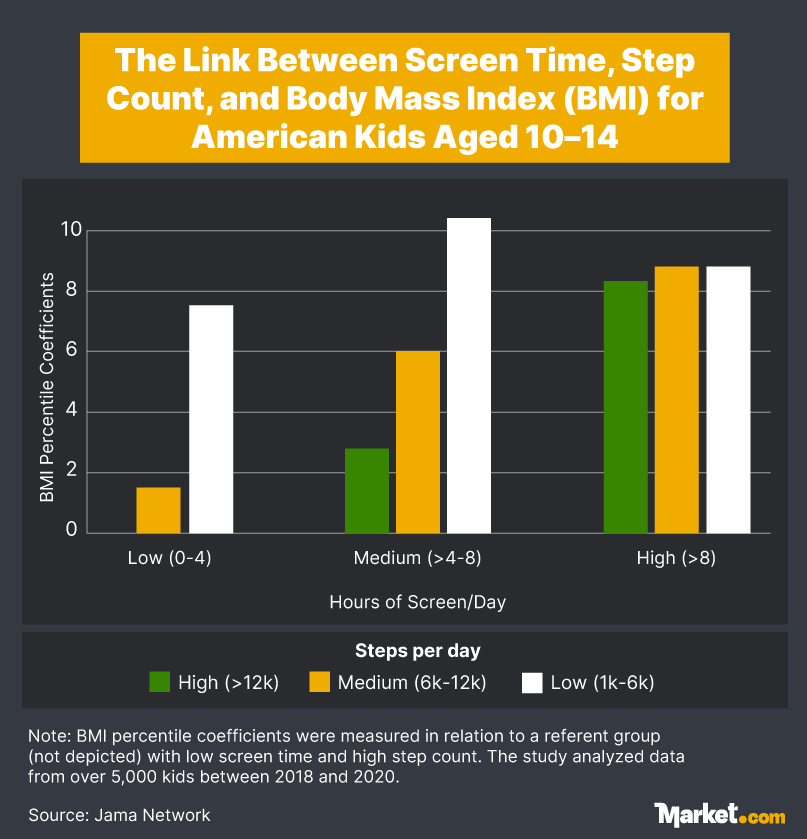
However, increasing physical activity may not necessarily negate the health risks. Youths who registered 12,000+ daily steps still had high BMIs if they used screens for over 8 hours. One explanation is that screen time is mostly a sedentary activity that could lead to more snacking. Seeing food ads could also prompt people to reach for more food.
Screen use shouldn’t come at the expense of sleep, either. Blue light from screens suppresses melatonin production — essential for inducing sleep — and kids are more sensitive to this artificial light than adults.
Furthermore, more screen time reduces opportunities for parent-child conversations. This isn’t ideal for toddlers, who require a language-rich environment to develop language and verbal speech.
A long-term study with 220 families concluded that for 3-year-olds, each minute of extra daily screen time above the mean of 172 minutes leads to 7 fewer words that the child hears and fewer conversations.
Finally, handing out tablets or smartphones to stop a child’s outburst is not advised, because it takes away the opportunity for the child to learn self-regulation skills. A longitudinal study found that parents who used devices to calm their toddlers reported more intense emotional reactions than parents who used other methods.
How to Set Healthy Tablet Limits for Kids
Tablets are great for entertainment and education, but they can easily take over your child’s life without any screen-time rules. In this section, we offer practical tips to develop healthy screen habits for families.
Encourage Healthy Tablet Use
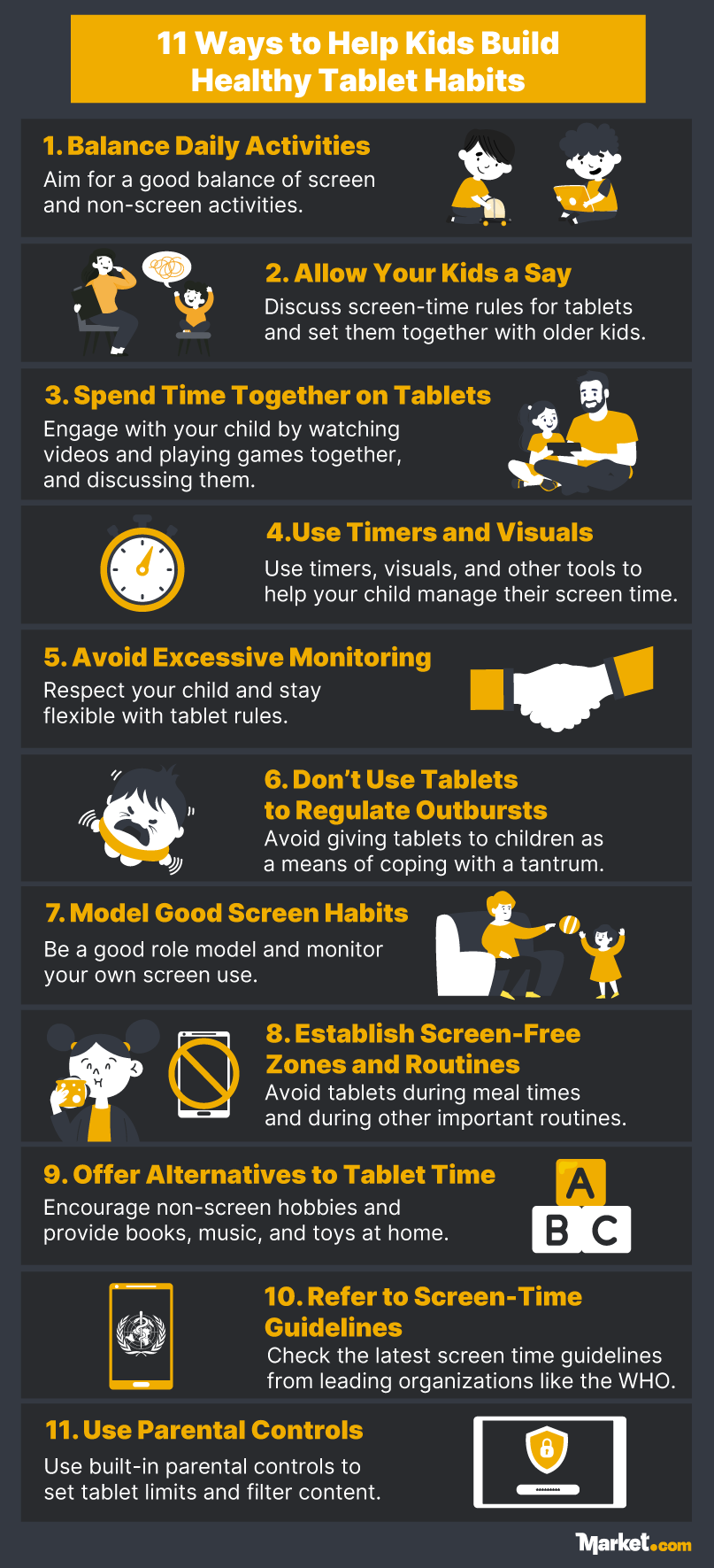
- Balance Screen Time with Non-Screen Activities
Aim for a balanced use of tablets and ensure your kids have plenty of off-screen activities. While younger children require more active supervision, establishing boundaries early will teach them good lifelong habits.
- Allow Your Kids a Say in Screen Rules
Involving your older kids in setting screen-time rules will empower them, making them more likely to comply. You can discuss what’s appropriate for daily limits and which content should be off limits. With younger kids, explain the “why” in simple terms to help them understand the boundaries.
- Engage with Your Child During Screen Time
Co-viewing and interacting with content together are wonderful ways to spend quality time as a family. They are also effective at helping younger kids learn and build strong foundations for them to excel in school.
- Use Timers and Visuals
Toddlers may need extra support with their screen usage as their self-control and emotional regulation skills are still developing. You can use visual cards or timers that allow your child to monitor their own screen time, giving them a sense of control and making transitions easier.
- Avoid Excessive Monitoring
Being overly strict without considering the feelings and opinions of your child will quickly backfire. Research shows that some teens hate parental controls and monitoring apps, likening them to an invasion of privacy. You should address their concerns and be flexible with your rules.
- Avoid Giving Children Tablets to Stop Tantrums
When your child is having an emotional episode, giving them a tablet will only make things worse in the long run, as they won’t learn self-regulation skills. Children, even teenagers, are still learning how to handle their emotions and need an adult to model healthy coping strategies.
- Model Healthy Screen Behavior Yourself
Research shows how your screen time affects your child’s screen time. Parents need to consider how their behavior with screens is perceived by their children, and try to be good role models. Track your own screen time, set limits, or schedule screen time for when your children are asleep.
- Create Screen-Free Zones and Routines
Parents should keep bedtimes screen-free and charge devices outside of children’s bedrooms. Establish device-free zones or set times when the whole family needs to be off screens.
- Offer Alternatives to Screen Time
Focus on honing your child’s interests apart from screen use. Encourage outdoor play and hobbies such as reading, arts, or music. Stock up on books, toys, or sports equipment, so your child has plenty of options to occupy their time at home.
- Refer to Screen-Time Guidelines
There are different screen time guidelines from leading organizations to help you set appropriate limits. The AACAP and WHO provide these recommendations:

Use Effective Parental Controls and Monitoring Tools
Most tablets now come with built-in parental control tools to establish healthy boundaries around technology and prevent overuse. Apple’s Screen Time (iOS), Google’s Family Link (Android), Microsoft’s Family Safety (Windows), and Amazon Kids (Fire OS) allow parents to set time limits, block age-inappropriate content, and track usage across multiple devices.
These tools can make family life easier. For example, you can restrict screen time during certain hours so children can finish their homework, chores, play outside, or get ready for bed.
If you need to be extra vigilant, there are advanced parental control apps to monitor online activities, including social media. Some apps can detect signs of cyberbullying or mental health risks by scanning messages and images. Be sure to discuss with your older children first if you’re planning to monitor their online interactions.
At the end of the day, parental controls are only as effective as parents’ involvement. Parents need to actively monitor, regularly communicate, and model healthy screen use to prevent tablet overdependence.
How to Choose a Kid-Friendly Tablet
With so many options on the market, choosing the right tablet for your child can be overwhelming. Deciding on a kid-friendly tablet is about finding the right balance between functionality, durability, safety, and price.
-
Blue Light Filters
Most tablets, if not all, come with blue light filters. These filters reduce the amount of blue light by adjusting the screen to warmer tones. They help reduce eye strain, eye fatigue, and dryness while improving sleep.
-
Parental Control Settings
Buying a tablet with built-in parental controls makes managing screen time easier. You can set daily limits, restrict inappropriate content, and even manage purchases. Don’t forget to filter browser content too.
-
Kid-Friendly Content Platforms
Some tablets come loaded with content platforms tailored for kids. Google Kids Space is an app that provides media for kids under 9. Meanwhile, Amazon Kids+ is a paid offering on Fire tablets, offering books, movies, games, and other content.
-
Durable, Drop-Resistant Design
With kids, you’ll need durable devices that can survive the occasional accidental drops and spills. Choose models with shock-absorbing frames and scratch-resistant screens. Buying an extended warranty and a tough case will also help your device last longer.
-
Offline Learning and Entertainment
Many popular kids’ apps offer offline modes, and you should check that these modes are compatible with your device. Offline modes are handy when you’re on the road or in areas with spotty Wi-Fi.
-
Battery Life
A long-lasting battery can be a lifesaver when you’re out the whole day with your kids or traveling. Look for tablets with at least 8-12 hours of use on a single charge.
-
Portability
If you’re bringing multiple tablets around, you want units that are easily portable. Younger children do better with a tablet that’s light and easy to hold. Some tablets come with built-in kickstands, handy for watching shows.
-
Tools for Kids with Special Needs
Children with special needs may benefit from built-in tools, such as accessibility features, visual timers, and schedules, to manage their routines. Some tablets include apps for emotional regulation or sensory-friendly activities.
-
Price
Luckily, you don’t need to spend a lot to get a decent tablet for your kids nowadays. However, consider extra purchases such as tablet cases, keyboards, or stylus pens. Paying for extended warranties may also be worth it for the peace of mind.
-
Support and Updates
Choose a tablet that receives regular software updates to keep your device secure. Look for brands with reliable customer support and that are known to provide an easy warranty claiming process.
Conclusion
The growth of tablet usage over the last decade has reshaped family life and routines. Research shows that excessive screen time is contributing to developmental delays as well as behavioral, social, and emotional challenges.
On the other hand, studies show that moderate use can promote a child’s well-being. High-quality apps and games can also support learning and foster creativity, especially with guidance from parents and educators.
All this highlights that screen time isn’t one-size-fits-all, and the key to a healthy screen habit is finding balance.
You can support this balance by establishing daily routines with plenty of off-screen activities, setting screen rules, and modeling healthy screen habits. Tablets shouldn’t replace important activities such as time outdoors, playing with friends in real life, homework, or chores.
By approaching tablets as tools rather than substitutes for entertainment, education, and interactions, you can instill healthy screen habits in your children for life.