Ice Makers
 Chairs
 Kettles
 Projectors
 Air Purifiers
 Dash Cams
 Headphones
 Smartwatches
 Blenders
 Humidifiers


Headphones and Hearing Loss: A Guide for Hearing Protection
Headphones and earbuds are becoming increasingly integrated into many parts of our everyday lives, used to relieve boredom, drown out annoying background sounds, and take important work calls. However, especially when used at high volumes or for prolonged periods, they put users at risk of Noise-Induced Hearing Loss (NIHL).
These risks aren’t limited to older populations. According to the World Health Organization (WHO), 1.1 billion teenagers and young adults are at risk of hearing loss due to their use of Personal Listening Devices (PLDs) like smartphones, earbuds, and headphones. And research from the CDC found that around 20% of Americans in their 20s already have some degree of permanent hearing damage, often without knowing it.
With headphone usage increasing, particularly among younger populations, noise-induced hearing loss is expected to rise.
This article will look at the danger of listening to loud sounds through all types of headphones and what steps can be taken to mitigate the chance of causing irreparable damage.
What Are the Different Types of Headphones?
Personal Listening Devices (PLDs) include personal amplification devices, bone-anchored hearing aids, middle-ear implants, and many other categories of devices, some medical and some private. This article is interested specifically in headphones, earbuds, and similar consumer audio devices, which have a market value of USD 10 billion.
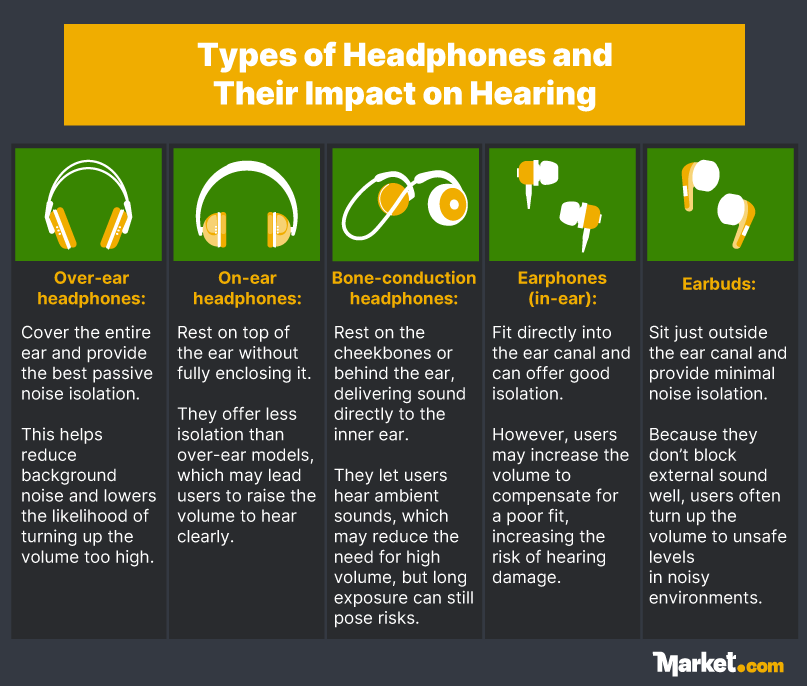
There are five main types of consumer audio devices, each with its own impact on hearing safety:
- Over-ear headphones provide the strongest noise isolation, which allows users to listen to audio at lower levels without sacrificing quality.
- On-ear headphones rest on the ears, often leading to slightly higher listening volumes due to increased sound leakage.
- In-ear headphones have a snug fit inside the ear canal and deliver a direct and intense sound, which can inadvertently lead users to listen at unsafe volumes.
- Earbuds rest outside the ear canal, offering less isolation and often resulting in unsafe practices, especially in noisy surroundings.
- Bone-conduction headphones rest on the cheekbones or behind the ear. They bypass the eardrum to send sound directly to the inner ear, allowing users to still hear ambient sounds.
How Loud, for How Long?
A common misconception among headphone users is that audio isn’t loud if it doesn’t feel loud. However, long-term listening to even mildly elevated audio is enough to cause irreversible hearing damage.
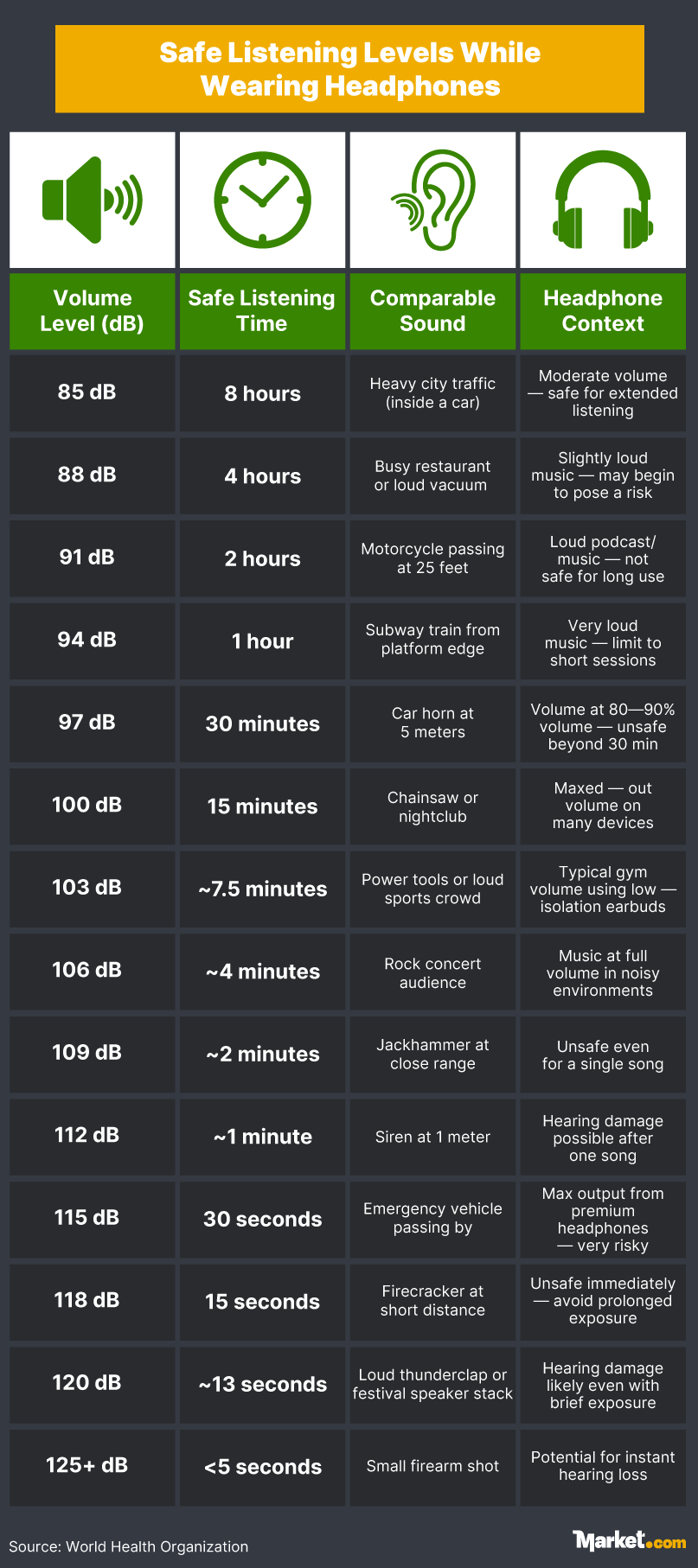
Safe listening levels depend on both volume and duration. According to the World Health Organization, 85 decibels (dB) is the maximum safe listening level for up to 8 hours. Every 10 dB increase cuts safe exposure time dramatically — at 95 dB (roughly the volume of a motorcycle), the safe limit drops to just over 10 minutes per day.
Most headphones and portable speakers can easily exceed 85 dB, and many reach volumes between 100–136 dB. Despite this, the relationship between volume and listening time isn’t widely understood, even though it’s critical for long-term hearing protection.
Noisy environments — such as gyms, busy urban areas, or construction — regularly exceed 80 dB, and long-term exposure poses a hearing risk. Headphone users often turn their volume up to drown out these ambient sounds, putting their hearing at increased risk. One study showed that even young populations, like adolescents, who use earbuds in this way have a 4.5-fold increased risk of hearing loss.
While few people work to protect their hearing, even small changes can have a lasting benefit. Switching to over-ear or noise-canceling headphones, implementing listening breaks, and reducing the volume significantly reduces the risk of irreversible hearing loss.
What Are the Early Warning Signs of Hearing Loss?
Hearing loss often develops gradually; as a result, the earliest warning signs are easy to miss.
One of the leading symptoms of early-stage hearing loss is tinnitus. Tinnitus is characterized by a ringing, buzzing, or hissing sound in the ears with no external source. The symptoms can be intermittent or persistent, which adds to the complexity of recognition. However, both are considered signs of early damage to the inner ear.
Another important signal of hearing damage is difficulty understanding speech in noisy environments. This doesn’t mean an inability to hear speech but rather a struggle to identify specific sounds, particularly the consonants “s,” “f,” or “t.” These letters specifically give trouble because the first stages of hearing loss affect high-frequency sounds.
In addition, sounds may seem muffled, as if people are mumbling or talking from a greater distance. Many people experiencing early hearing loss have problems distinguishing different pitches, notably higher tones like children’s voices or birdsong.
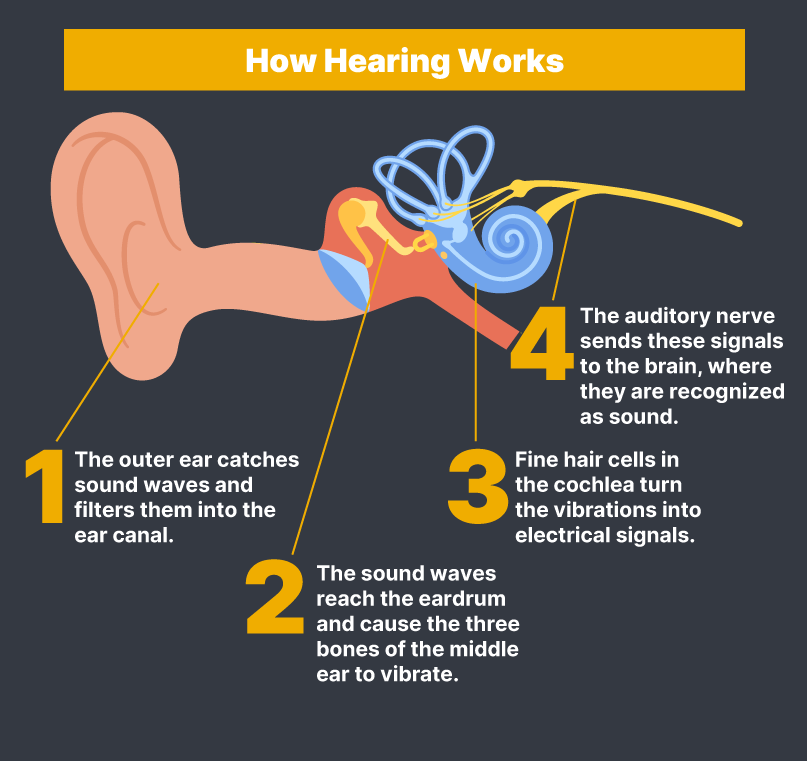
Hearing loss comes from prolonged exposure to loud noise, which damages the hair cells in the cochlea. These delicate inner ear cells translate sound vibrations into electrical signals. The cells are non-regenerative, and once damaged, the hearing loss is permanent. Experiencing any of the symptoms associated with hearing loss is a reason to see a healthcare provider; the damage is not reversible, but further damage is preventable.
What Are the Long-Term Effects of Hearing Loss?
Repeated exposure to loud environments such as concerts, power tools, or listening to headphones at high volumes accounts for cumulative hearing damage over time. Often, this damage builds gradually, with symptoms emerging years later.
The long-term effects of hearing loss go beyond reduced sound perception. As hearing declines, communication becomes more difficult, which can affect both personal relationships and professional opportunities. Many people begin to withdraw socially, avoiding conversations and group settings, which often contributes to increased anxiety, depression, and low self-esteem.
Hearing loss has also been linked to cognitive decline. Adults with impaired hearing are at a significantly higher risk of memory loss and dementia. When the brain struggles to process incomplete or distorted sound, it requires more cognitive effort, which can accelerate mental fatigue and decline. Studies have even found structural changes in brain areas tied to memory and spatial awareness.
These effects can be especially profound in children, where early-onset hearing loss may interfere with speech development, academic performance, and social engagement, often leading to long-term developmental challenges if left unaddressed. In all age groups, hearing also plays a critical role in balance. Damage to the auditory system can reduce equilibrium, increasing the risk of falls and lowering overall quality of life.
Since hearing damage is typically permanent, prevention is critical. Recognizing early symptoms and taking proactive steps, like using hearing protection and limiting high-volume exposure, can help reduce long-term consequences.
How to Protect Your Ears While Still Enjoying Music
Listening to music is meant to be an enjoyable, not damaging, experience. The 60/60 rule offers a simple guideline: keep the device’s volume at 60% or lower and take breaks after every 60 minutes of listening. This prevents overexposure and oversaturation, and gives the ears ample time to recover.
Noise-canceling headphones can also help maintain safe listening levels. Regular headphones don’t block out external noise, and listeners often increase the volume on their device to compensate. Noise cancellation technology removes background noise, making it easier to hear clearly without turning the volume up too high, especially in loud environments.
Open-back headphones are another good choice. Their design allows air and sound to pass through the ear cups, reducing sound pressure inside the ear. This creates a more natural listening experience and encourages users to keep the volume within safe limits.
Many users switch to bone-conduction headphones in the belief that their technology is less damaging to the ears, but this isn’t supported by evidence. While bone-conduction does bypass the eardrum, it nevertheless still causes the cilia in the cochlea to vibrate, and can be just as damaging as other earphone technologies.
Ultimately, hearing health should be treated as an essential part of overall well-being, and scheduling regular hearing checks increases the chances of catching early signs of damage.
Other tips to mitigate the chance of damaging hearing while using headphones are to:
- Take breaks: Giving your ears time to rest is vital, especially after longer listening sessions.
- Monitor sound levels: Numerous smartphone apps can monitor audio volume and help headphone users keep the volume within a safe range.
- Clean devices regularly: Maintaining your headphones by cleaning them regularly helps prevent ear infections.
- Disable notifications: Loud notifications cause a sudden volume spike that is dangerous for overall ear and hearing health.
Establishing healthy headphone habits with the right tools offers long-term protection for listeners’ ears.
How to Choose Headphones That Protect Your Hearing
Choosing headphones with safety-focused features like volume limiters, noise-canceling features, and good passive isolation is key to protecting your hearing without sacrificing listening enjoyment.
- Volume Limiting: Headphones that support volume limiting cap their maximum sound output at around 85 dB. This falls within the recommended safe listening range. Volume limiting is an important feature for children or those who use headphones for long listening sessions, as the cap reduces the risk of overexposure.
- Noise Cancellation: Active Noise Cancellation (ANC) allows users to listen to music in busier areas at lower volumes. Environmental Noise Cancellation (ENC) improves clarity, particularly on calls, without increasing the volume. Both reduce the need to increase volume by blocking external sounds.
- Comfort and Fit: Over-ear headphones are generally safer than in-ear headphones. The fit offers passive isolation and a more even sound distribution. Padded ear cups and adjustable headbands eliminate sound leakage and prevent ear fatigue while providing a comfortable user experience.
Choosing a device that promotes healthy listening is paramount to long-term hearing protection, whether used for a few minutes or several hours each day.
Conclusion
The convenience and pleasure of using headphones should never come at the expense of hearing health. Long-term hearing damage is often both gradual and irreversible, but the onset is preventable with the adoption of healthy listening habits.
These include using headphones at no more than 60% volume for 60 minutes at a time (the 60/60 rule), using noise-canceling headphones, and keeping the volume within safe limits.
There is no time like the present to review your listening habits and see if anything needs to change. A few minor adjustments often separate the right balance between enjoyment and long-term hearing health.
Scheduling a regular hearing check is advisable for regular headphone users, and if you notice changes in how you hear, such as ringing, muffled sounds, or difficulty understanding speech, reach out to a healthcare professional.