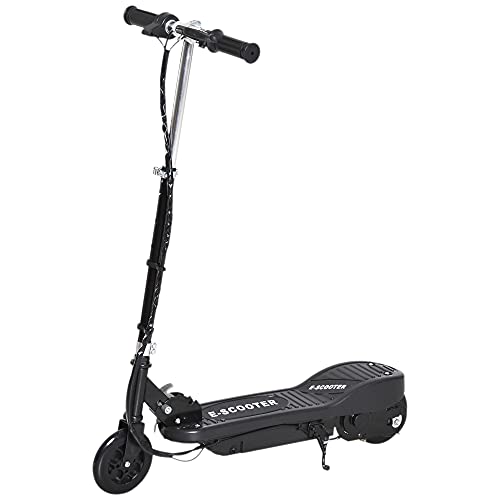
Even if your child doesn’t own an electric scooter, chances are they’ve ridden one or will in the future. Capable of speeds of 15–20 mph, these sleek, battery-powered scooters have become something of a rite of passage for kids wanting more independence. But for parents, the rise in scooter use brings mixed feelings. While letting children join in on the fun gives them the freedom they crave, it also means facing new safety risks.
Child development experts say some level of “risky play” is healthy. It helps build confidence, coordination, and judgment. But e-scooter crashes can have serious consequences. E-scooter injuries in the US rose 80% in 2024, reaching nearly 116,000 emergency room visits, and injuries among kids under 15 more than doubled — with most cases involving head trauma.
This guide is for parents who want to make informed decisions about their child’s e-scooter use. It covers everything from common injury statistics and age-appropriate guidelines to essential gear, local laws, and practical steps for teaching safe riding habits. You’ll also find a printable safety checklist you can use at home to help kids stay safe while enjoying the freedom e-scooters offer.
The Benefits of Risky Play and How to Mitigate Negative Consequences
Risky play includes any exciting or physically challenging activity that carries a small chance of injury or invites children to test limits, face fears, and build confidence. Risky play also helps children learn caution and control. Examples include climbing trees, wrestling, or exploring wooded areas. Speed and momentum are often a part of risky play, and riding a scooter creates the thrill that defines risky play.
While risky play can make parents uneasy, it’s a normal part of healthy development. Research shows that when children are allowed to take manageable risks, they become more resilient, independent, and better equipped to navigate real-world dangers.
The Benefits of Risky Play
Overall, the evidence suggests that, while safeguards need to be taken and parents need to balance possible consequences against the rewards, the benefits of risky outdoor play often outweigh the risks. Studies show that allowing children to experience manageable challenges helps them develop physical, emotional, and social strength. Here are some key benefits of risky play, supported by studies and expert organizations:
Builds resilience and confidence. When children face challenges and sometimes fail, they learn to adapt and try again, developing their persistence and self-belief. (BeYou; Springer)
Strengthens physical health and coordination. Active play can improve cardiovascular fitness, balance, and motor skills while encouraging lifelong physical activity.(MDPI;SickKids; Kool Kidz Childcare)
Enhances executive functioning and problem-solving. Taking risks teaches children to better assess situations, make decisions, and regulate emotions, which are skills that link to better academic and life outcomes. (Kool Kidz Childcare;Canadian Paediatric Society)
Supports mental well-being. Studies link risky play to lower anxiety, fewer internalizing behaviors, and higher overall well-being. (Child Encyclopedia; Springer)
Improves social and emotional skills. Negotiating rules, resolving conflicts, and working together during play help build empathy, cooperation, and a sense of belonging.(MDPI; Canadian Paediatric Society)
Promotes better risk assessment and self-control. By testing their limits in a safe context, children learn how to better gauge danger, which can reduce injuries later in life. (Springer;PMC Study)
Encourages curiosity and joy. Risky play is thrilling and self-chosen, giving children autonomy and a natural motivation to stay active. (Springer; Child Care Providers)
How to Mitigate Negative Consequences
There’s a difference between taking a risk and facing real danger, and risky play shouldn’t be dangerous. While healthy risks help children test limits and grow, dangerous situations can lead to serious harm without meaningful benefits.
Parents play a key role in creating that balance. Risky play should always be child-led and adult-supported, giving children the freedom to explore within safe boundaries. That means knowing when to step back and when to step in.
E-scooters can cross the threshold from risky play to dangerous activity, especially if the proper safeguards aren’t taken, and for children who lack the coordination to handle them safely. While ridesharing services have some filters to prevent children from using e-scooters, those filters are relatively easy to bypass. And there is little to stop a child from using a friend’s scooter.
Here are some practical, evidence-based ways to help children take smart risks safely:
Recognize when play becomes too risky. Encourage challenges, but avoid situations where harm could be catastrophic, such as steep hills, busy roads, or unfamiliar terrain. A “risk” is something a child can see and manage; a “hazard” is something they can’t. (SickKids)
Set clear boundaries. Agree on where and when your child can use an e-scooter, how fast they can go, and which areas are off-limits. Rules should evolve with your child’s age, confidence, and environment.
Model calm, confident behavior. Show children what responsible play looks like. Ride safely yourself, wear protective gear, and talk through your decisions. Children learn risk management by watching adults. (Kidsafe NSW)
Use appropriate safety equipment. Helmets are non-negotiable, especially for e-scooter riders. Helmets alone can reduce the risk of head injury by up to 44%. Knee pads, elbow pads, and wrist guards also help prevent serious injuries.
Supervise with intention. Stay close enough to observe, but not so close that you limit independence. Step in if play becomes unsafe or crosses into an environment with hidden hazards.
Introduce risk gradually. With e-escooters, start in safe, open areas and at low speeds. As your child’s skill and confidence grow, slowly expand the boundaries. (My Little Scholars)
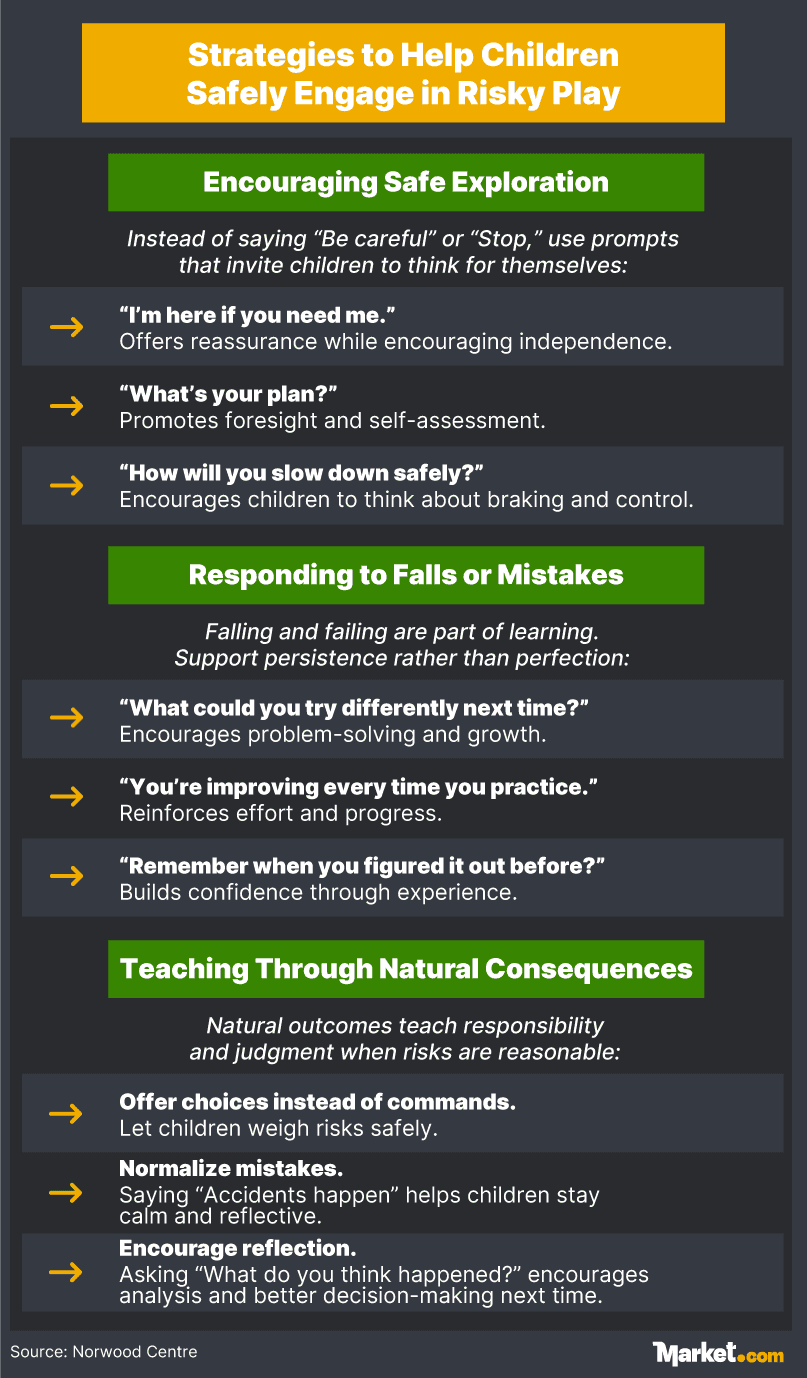
Encourage children to assess risks themselves. Ask guiding questions like “Does that feel stable?” and “What’s your plan if it goes faster than expected?” These prompts help teach children self-awareness and sound judgment. (TTS Group)
Strategies to help children safely engage in risky play
The Popularity and Risks of E-Scooters
Electric scooters are now part of daily life in many cities, lining sidewalks, bike racks, and school gates. And while they promise freedom and fun, they’ve also introduced new safety concerns, especially for kids.
Stories like 12-year-old Abby Gillon’s have made the stakes clear. Abby was killed in an electric scooter crash in Pennsylvania, prompting calls for new laws that would cap scooter speeds, set age limits, and make helmets mandatory for minors. So, while e-scooters are here to stay, families need to understand both their popularity and their risks.
Popularity Boom
Electric scooters have become one of the fastest-growing forms of personal transport for kids and teens. Once seen as a niche product, they now compete directly with bikes and skateboards in popularity. In 2024, US e-scooter sales reached 372,700 units, over five times higher than in 2019. Globally, the electric kickscooter market is expected to generate an estimated $3.5 billion in revenue by 2030, with steady growth expected through the rest of the decade.
For many families, scooters are a practical, portable, and affordable option. For kids, they’re fun and fast, and open the door to newfound freedom. E-scooters let young riders travel short distances, visit friends, or explore their neighborhoods without relying on parents for every trip.
The social factor can’t be ignored either. Platforms like TikTok and YouTube are filled with clips of teens showing off tricks, recording their rides, or customizing their scooters. Hashtags such as #electricscooter and #escooter appear in over a million posts combined on Instagram, while hundreds of thousands of TikTok videos show scooter stunts and scenic rides. These posts shape what kids see as normal and desirable.
Search trends reflect the rising popularity, too. Interest in “electric scooters for kids” surged during the 2024 holiday season and again in summer 2025, likely driven by warmer weather and seasonal demand.
One study found that e-scooter users are predominantly young and urban, using the devices for short commutes and leisure travel. Although the study only included adults aged 18 and older, it found that males ride more often than females, and young male riders account for a disproportionately high share of reported e-scooter incidents.
As shared e-scooters have become more visible and accessible, they’ve also started to outnumber bicycles in some US cities. More than half of all shared micromobility trips in 2023 were on e-scooters rather than bikes. And as availability rises, so does the likelihood that a child will want one.
Risks Associated with E-Scooters
Emergency departments across the US have seen a steep rise in e-scooter injuries. In 2024, an estimated 115,713 e-scooter injuries were reported nationwide, nearly four times higher than in 2020. Children 14 or younger accounted for 17,641 of those injuries, more than double the number from the year before.
An infographic showing the number of children injured on e-scooters each year in the US
Here’s what puts children most at risk on e-scooters:
Developing motor skills: Many children are still developing their balance, coordination, and spatial awareness, which makes it harder to make quick riding corrections, especially at higher speeds or on uneven terrain.
Speed and impact: Children’s e-scooters can often reach up to 10 mph, while shared city scooters cap around 15–20 mph, and high-performance models often exceed 30 mph. Even minor falls at those speeds can cause serious trauma. The most common injuries are head trauma, fractures, and road rash, with doctors also reporting more dental injuries and compound fractures.
Head injuries and lack of helmet use: Hospitals report that head and facial injuries made up 32% of all e-scooter injuries in the US in 2024, a figure likely tied to low helmet use. One study found that only 0.4% of children wore helmets while riding, despite multiple studies showing that helmets can reduce the risk of head and brain injuries by up to 60%.
Limited traffic awareness: Many young riders don’t fully understand right-of-way, braking distances, or how to predict driver behavior. One survey found that only one in four riders felt “very familiar” with local traffic laws, while nearly half admitted breaking them at least occasionally.
Risk-taking behaviors: Research shows that younger, male, and frequent riders are more likely to take risks like speeding, ignoring traffic signals, carrying passengers, using phones while riding, or riding under the influence.
Lack of parental supervision: Many injuries occur when children ride unsupervised or in public spaces not designed for scooters. One study found that some parents are unaware of the legal supervision requirements or the risks involved. And a UK survey found that 85% of parents who bought an e-scooter for their child allowed them to ride in public areas.
Helmet compliance remains one of the most visible weak spots. Surveys show that only a small fraction of young riders wear helmets, yet helmet laws are uneven across the US. Some states require helmets only for minors, while others leave it to local governments or rider discretion. The lack of consistent rules can make safety enforcement difficult.
Electric scooter regulations vary dramatically between states. Most states allow e-scooters on public roads, but others take a firmer approach. In Pennsylvania, for example, e-scooters are currently limited to private property use. Delaware also heavily restricts their use, but is in the process of updating its laws to permit low-speed e-scooters to operate like bicycles.
Some states, like Idaho and New Hampshire, have vague or incomplete legislation, sometimes classifying scooters as mopeds or “toy vehicles,” which can technically make them illegal to operate on roads.
Where clear rules exist, the most common minimum riding age is 16, and helmet requirements usually apply to riders under 18. A handful of states, including California, Massachusetts, and Missouri, also require a valid driver’s license or learner’s permit.
An infographic showing where e-scooters are legal, varied by municipality, or prohibited in the US
Laws outside the US tend to follow a similar pattern, with many countries setting minimum ages between 14 and 16 and speed caps around 20–25 km/h.
In the United Kingdom, privately owned e-scooters remain illegal on public roads, though rental scooters are permitted in trial areas for riders aged 16 and up with at least a provisional driving license. Most provinces in Canada allow e-scooters typically with a 14–16 minimum age and no licensing requirement. Australia enforces rules at the state level, with Queensland allowing riders aged 12 and up under supervision, and 16 and older unsupervised.
Some countries have adopted more unique approaches. Israel requires all riders to register their scooters with the licensing authority and display a personal registration plate, while France enforces a national speed limit of 25 km/h and prohibits riders under 14.
Safety Checklist
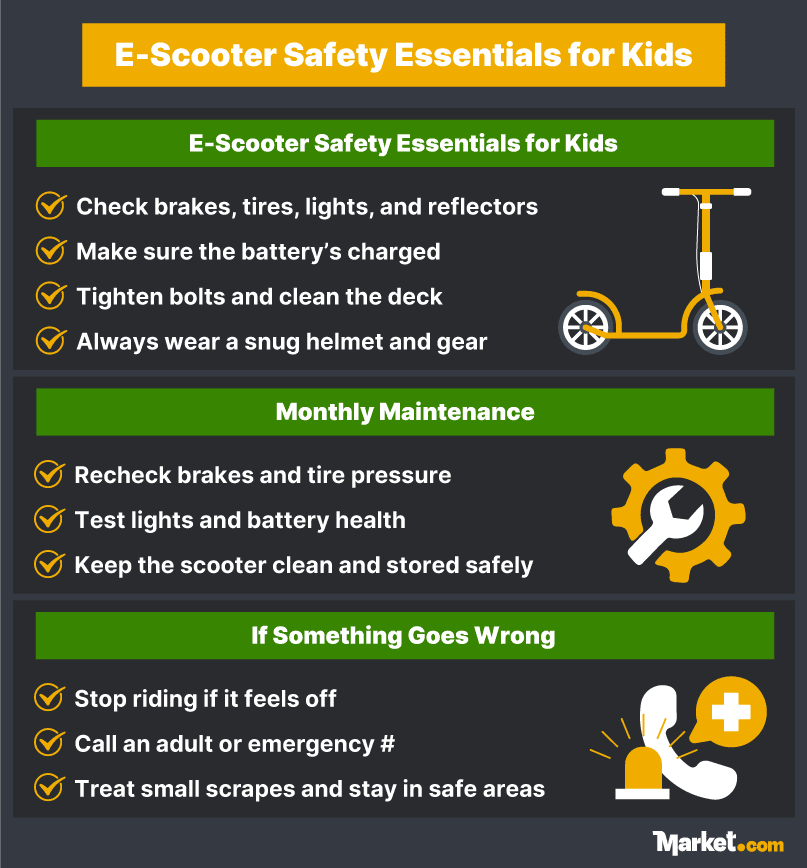
Even with a clear understanding of the risks and regulations, most scooter safety still comes down to what happens at home. The right equipment and regular maintenance checks can help prevent injuries.
The first step is choosing a scooter that matches your child’s age, size, and skill level. E-scooters for kids are typically designed for lower speeds depending on age (usually between 6–15 mph), and come with smaller frames and simpler controls. Look for models with dual brakes, gradual acceleration, and auto shut-off features that cut power if the scooter tips over.
Some scooters also include GPS tracking and parental control apps for monitoring speed and location. Always follow the manufacturer’s age and weight limits, since scooters designed for teens often exceed 15 mph and are too powerful for younger riders.
Protective gear is equally important. A CPSC or ASTM-certified helmet should always be worn, along with elbow and knee pads, gloves, and bright or reflective clothing for visibility. Avoid second-hand helmets, which may have unseen damage or fail to meet current safety standards. Front and rear lights or reflectors can also help children stay visible during evening rides.
And just like bicycles, e-scooters need regular maintenance. The brakes, tires, lights, and battery should be checked before and after each use. A quick check before your child hops on an e-scooter can prevent injuries and extend the scooter’s life.
Nothing replaces hands-on guidance when it comes to learning how to ride an e-scooter. Teaching good riding habits early, both at home and in supervised environments, can help prevent accidents and build lasting awareness of road safety.
Foundational Skills Before Solo Riding
Before allowing your child to ride alone, focus on building core skills in a safe, open area like a driveway, park, or empty parking lot. Start with balance and control by having them practice gliding with the scooter turned off before moving to powered riding.
Teach them the correct stance, which is to have one foot slightly ahead, skateboard-style, not side by side. This position helps maintain stability and control, especially when braking. Children using a hand-operated brake should bend their knees and apply steady pressure, as grabbing the brake suddenly can cause them to pitch forward.
Teach them to:
Mount, dismount, and maintain proper stance.
Brake gently using both hand and foot brakes (if equipped).
Accelerate smoothly at low speed settings.
Make wide, slow turns and practice controlled stops.
Scan ahead for obstacles and learn to steer around cones or chalk lines. Explain how solid tires may slip more easily on wet surfaces.
Encourage daily short practice sessions that emphasize one skill at a time. As they gain confidence, gradually introduce slightly busier environments while maintaining supervision.
Traffic Rules 101 (in Kid-Friendly Terms)
Before riding anywhere beyond the driveway, children should know basic traffic awareness and where scooters are legally allowed. In most places, scooters can use bike paths or park trails, but roads with cars should be avoided for children. Some states permit scooters on sidewalks, but only at walking speed and while yielding to pedestrians.
Teach hand signals for turning and stopping (which are essential if riding near cyclists and intersections):
Left turn: extend the left arm straight out.
Right turn: extend the right arm straight out or bend the left arm upward.
Stop: bend the left arm downward.
Remind them to look both ways, even on green lights or when they have the right of way. Cars may turn unexpectedly, so kids should always assume drivers don’t see them. Teach them to make eye contact with drivers before crossing and to wait for a full stop before proceeding.
Parent-Led Practice Sessions
Practicing with your child can help them learn faster. Start with short, structured, supervised sessions focused on one new skill at a time, practicing for 15–20 minutes each.
For coordination, set up a simple obstacle course using cones or chalk lines. Try a cone weave, placing 6–10 cones spaced four feet apart, or marked stop zones to practice braking control and turns.
As they grow more capable, introduce progressive independence. This might mean letting them ride to a nearby park under supervision before advancing to light-traffic areas, once they show consistent awareness and control.
Encourage them to talk through what they’re doing and what they notice. This helps them internalize safety decisions and builds independence over time.
Common Mistakes to Avoid
A few common mistakes can undo safety lessons and increase the risk of accidents. Help your child avoid:
Riding with friends on the same scooter: Most e-scooters are built for one rider. Doubling up changes the center of balance, strains components, and makes steering unpredictable.
Riding at night without lights: Many children’s scooters lack bright built-in lighting. Always add front and rear lights and reflectors, and use bright or reflective clothing for visibility.
Using phones or earbuds while riding: Kids need both hands and full awareness to stay safe. Cellphones, headphones, and earbuds block important sounds like approaching cars or sirens. Riders should pull over to check phones or navigation instead.
This rise in popularity has also brought new challenges. According to data from the US Consumer Product Safety Commission, nearly two-thirds of e-scooter fatalities were caused by motor vehicle collisions between 2017 and 2023, with most victims between 25 and 44 years old. And while children make up a smaller share, they’re not immune — seven of those deaths involved riders under 15.
For parents, those numbers can sound scary. But awareness and supervision go a long way. The right scooter, proper gear, and safe riding habits can turn a hazardous ride into a confidence-building experience.
“
Note: Market.com is the sole owner of all written and visual content featured on this website. If you’d like to share our product recommendations, comparisons, or any other content, you can do so as long as you include a credit with a link back to the original page. This allows us to continue delivering honest, research-backed insights to help consumers make smarter shopping decisions.
Maya Maceka
Maya Maceka
Was this article helpful?
Glad you found it helpful!
If you think others might benefit from this guide, please consider sharing it.
Sorry to hear that.
Please share what we can improve to make this guide better.
Thank you!
We appreciate your feedback and will use it to improve our content.
With nearly 10 years of experience, Maya Maceka is a freelance writer who creates detailed, research-backed articles that explain products, industries, and related topics. She focuses on uncovering the complex details behind seemingly simple topics, helping readers make confident and informed decisions.
Electric Scooter Charger, 42V 2A Hoverboard Charger, Universal with 6 Connections for 36V Li-ion Batterie, for Xiaomi Scooter,Electric Bike, Mobility Scooter
iScooter Electric Scooters Adult, iX3/iX4/iX7Pro Single/Dual Powerful Motor, 40-80km Range Fast Electric Scooter 10" Off-road Tires with 4 Shock Absorbers Foldable E Scooter,Dual Braking System
Vitalismo Bike Phone Holder Waterproof - Phone Holder for Bike 360° Rotation, Cycling Handlebar Bag, Motorbike Mount for iPhone 15Pro Max/14Pro/14/13/11/X/8 Samsung LG Cellphones up to 7''
Electric Scooter Adult, 8.5" Ultra Light Electric Scooters for Adults and Teens, 30km Range, 36V 7.8Ah Battery, 350W Motor, 3 Speed Mode, TODIMART T3 Foldable E Scooter-Upgraded Black
Xahpower 12V Charger for Ride on Car, 12 Volt Battery Charger for Kids Electric Ride on Car SUV Motorcycle ATV Ride-Ons Accessories, Sports Car, Quad Bike Jeeps Battery Supply Power Adapter
iScooter Electric Scooter, 350W Motor i8/i9 Electric Scooters Adult with Cuise Control, 20-30KM Range, 8.5Inch Tires, 3 Speed Mode, Double Braking System Fast E Scooter for Adults and Teens
42V 2A Electric Scooter Charger,Universal with 6 Connections for 36V Li-ion Batterie,for Xiaomi Scooter,Electric Bike, Mobility Scooter,Self-Balancing Scooter