
 Ice Makers
 Chairs
 Kettles
 Projectors
 Air Purifiers
 Dash Cams
 Headphones
 Smartwatches
 Blenders
 Humidifiers
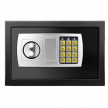
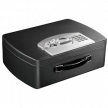
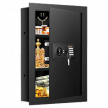
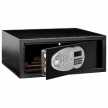
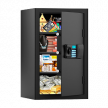
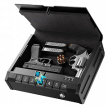
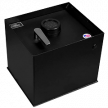
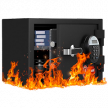


People think about home safety after something goes wrong, like a break-in, a house fire, or that sinking feeling when an important document goes missing. As an engineer and homeowner who’s lived with two different safes for years, I’ve learned the difference between features that matter in daily use and those that mostly exist to pad product descriptions. I currently use two safes: an 80-pound combination-lock safe in my basement for valuables, while a smaller fire-rated safe with a key lock safeguards my irreplaceable documents.
This guide focuses on the technical aspects and real-world performance factors that determine whether a safe actually protects your valuables. I’ll walk you through engineering standards, lock types, and construction details that separate effective safes from expensive metal boxes. For broader considerations and brand comparisons, check our main buyer’s guide.
Understanding Safe Security Ratings and What They Really Mean
Security certifications exist to show what a safe can actually withstand, not what marketing claims suggest. Independent testing labs attack these safes with real tools for defined time periods. The resulting ratings reflect how long the safe resists forced entry, which is a far more meaningful metric than vague phrases like “heavy-duty” or “tamper-resistant.”
- RSC (Residential Security Container) – Survives a 5-minute attack using basic hand tools such as hammers, chisels, and pry bars. Designed to stop opportunistic burglars looking for fast access, but not determined thieves.
- B-Rate – Withstands a 30-minute attack using hand tools, cutting tools, and small power drills. Built with thicker steel and reinforced doors for substantially improved resistance.
- C-Rate – Resists a 30-minute professional-grade attack involving larger drills, cutting torches, and advanced tools. Uses thick steel and composite construction to defeat drilling and cutting.
- E-Rate – Survives a 60-minute professional attack using the same expert tools. Represents the highest residential security standard.
Ultimately, if you want meaningful theft protection without overspending, RSC or B-Rate safes cover most household security needs. Anything above that level quickly becomes specialized protection.
Verifying Legitimate Certifications
Real certifications come from Underwriters Laboratories (UL) or California Department of Justice testing. Always look for the certification number and lab name in the paperwork. Be skeptical of vague claims about “meeting industry standards,” “equivalent protection,” or “tested to similar levels.” These usually indicate the safe was never independently certified.
Fire Protection Ratings: How Long Your Documents Actually Survive
Fire ratings tell you how long your documents will survive in a house fire. During testing, safes are placed into furnaces that reach 1700°F (house fire temperature), and the internal temperature must stay below 350°F to prevent paper from scorching.
My small fire safe carries a 30-minute rating, which seemed adequate until I learned residential fires burn. longer before full suppression. This made me reassess what “adequate protection” really means.
Here’s how typical fire ratings translate to real-world protection:
A 60-minute rating offers the best balance of price and protection for most households. Thirty-minute safes work for low-risk environments or apartments with fast fire response, but they leave less margin for error.
Water Resistance Matters Too
Fire damage rarely happens alone. Sprinklers and firefighting efforts often flood homes, soaking everything. Many safes include rubber door seals that resist water intrusion, but “water resistant” does not mean waterproof.
After moisture issues in my basement, I now store documents in sealed waterproof bags inside my fire safe. For irreplaceable documents, I also maintain offsite copies – because even the best home fire safe represents risk reduction, not absolute protection.
Lock Security: How Access Methods Affect Safety and Convenience
Each lock type brings different trade-offs between safety, convenience, and dependability that become obvious once you live with them daily.
My basement safe uses a dial combination, and after three years of regular use, I appreciate its simplicity more than expected. Zero power requirements mean it works during blackouts, and nobody can hack it. A combination lock’s downside is speed. Even with practice, opening mine takes 20–30 seconds, and mistakes are easy under stress. In daily use, that slower access actually becomes a benefit since it forces you to pause, focus, and fully complete the locking process. This makes it far less likely that you’ll walk away with the door unsecured.
Key Locks
Key locks offer the fastest access and the simplest design, but they shift the security problem to key management. If the key is stored nearby, thieves may find it. If it’s hidden elsewhere, fast access disappears when you need it most. Over years of use, mechanical reliability isn’t usually the issue – it’s the constant risk of misplacing the key or having it discovered during a break-in. I store the key away from the safe, but then getting inside quickly becomes impossible. These locks make sense if you rarely open the safe or need to give family members access without teaching them combinations.
Digital Keypads
Digital locks solve the speed problem but introduce new failure points that conventional locks avoid. Battery backup systems vary wildly between manufacturers; some last years and give weeks of warning before dying, while other, cheaper models need replacement every few months and provide little notice before the keypad simply stops working.
Dual authentication options, like requiring both a code and a physical key, provide excellent safety. However, convenience drops when you need both elements to access your valuables. The biggest concern with digital locks is complete failure during power outages or when batteries die, although many dependable units include backup key access. If you want a deeper look at how electronic safe locks function, see our guide on how safes work.
Biometric Systems
Fingerprint scanners seem cool until you actually live with them. Dry hands, cuts, or aging fingerprints, and basic sensor quality all affect reliability. Missed reads happen most often when you’re in a rush, and some systems falsely accept partial prints. Based on user reports and testing data, biometric systems work best as secondary authentication rather than the primary lock mechanism, although technology continues to improve each year. Our explainer on biometric security breaks down why performance varies so much between models.
Construction Quality: Steel Thickness, Door Design, and Bolt Systems
Steel thickness directly determines how long a safe resists drilling and cutting, with door thickness being more important than wall thickness since that’s where attackers focus their efforts. Entry-level safes use 1/8-inch steel that determined thieves can breach with power tools, while serious defense starts at 1/4-inch thickness.
Bolt systems distribute prying forces across the door frame. Four or more locking bolts dramatically improve resistance compared to two-bolt designs. Pry-resistant door designs use recessed construction where the door sits inside the frame, making it nearly impossible to get a crowbar between the door and the body. My safe’s 80-pound weight provides natural theft deterrence by eliminating grab-and-go theft. However skilled thieves with dollies can still move it, which is why anchor points matter more than weight alone.
Anchoring: Why Weight Alone Doesn’t Stop Theft
Many buyers assume that simply choosing a heavy safe provides meaningful theft protection. In practice, weight alone offers far less security than most people expect. Even my 80-pound safe could be removed by two people with a dolly (or one strong person), which is why anchor points matter more than weight for real safety. Once a safe leaves the house, thieves can take their time opening it, which defeats most security ratings.
This is why anchoring matters more than raw weight. Pre-drilled anchor points allow a safe to be bolted into concrete or solid wood framing, turning it from a portable object into a permanent fixture. In real-world terms, a properly anchored 50-pound safe often provides better theft protection than a 300-pound safe that simply sits on the floor.
Floor anchoring into concrete offers the strongest protection, while wall anchoring works for lighter safes when multiple studs are used. Skipping anchoring altogether remains one of the most common – and costly – homeowner mistakes.
Interior Capacity and Organization
Safe manufacturers list external dimensions, which consistently overstate usable interior space. Door thickness, insulation, locking mechanisms, and shelving quickly reduce actual storage. My fire safe claims 0.8 cubic feet but holds closer to half that in actual documents.
The shelf configuration affects usability more than the total volume, and fixed shelves create frustration when you need to store something slightly too tall. Start with a smaller safe to force prioritization of what actually needs defense, rather than buying oversized and filling space with items that don’t require secure storage.
Interior features add convenience but take up precious space:
- Interior lighting helps visibility, but requires power connections and reduces wall thickness
- Carpeted walls prevent scratches on jewelry but hold moisture and odors
- Document slots organize papers well, but limit flexibility for other items
- Specialized compartments work great for their intended purpose, but become wasted space otherwise
- Door organizers maximize space usage but add weight and complexity to the door mechanism
- Adjustable shelving allows better space usage, while fixed shelves often waste space
A practical sizing rule is to measure what you plan to store and add about 25% for growth, rather than buying based on advertised capacity, which rarely reflects real-world storage.
Battery Backup and Electronic Features
Battery performance separates dependable electronic locks from frustrating ones. Quality systems provide long battery life and early low-power warnings, while cheaper models often fail with little notice. Backup access – either through a mechanical override key or external battery terminals – prevents lockouts when batteries die.
Water resistance for electronic components also matters, especially in basements and garages. Sealed battery compartments and protected wiring reduce corrosion and keypad failure. Automatic motorized door openers add convenience but introduce another failure point, and tend to weaken over time.
For reliability, simple electronic systems with strong battery management outperform complex designs packed with extra features.
Common Mistakes and What I Wish I’d Known Earlier
Here are the mistakes I made (or witnessed other homeowners struggle with) when choosing and using home safes:
- Buying too large initially – Oversized safes encourage storing items that don’t need defense, and make organization harder. Smaller safes force better prioritization.
- Choosing convenience over safety for location – Placing safes in master bedrooms or home offices makes them easy targets because thieves know exactly where to look.
- Failing to plan backup access – Not telling trusted family members combinations or key locations creates problems when you’re unavailable during emergencies
- Ignoring humidity control – Basements and garages require moisture defense that manufacturers rarely emphasize.
- Skipping regular lock testing – Combination locks and electronic locks develop quirks that you’ll discover at the worst possible moment
- Underestimating ongoing costs – Battery replacements, dehumidifiers, and servicing add up over the safe’s lifetime.
- Assuming fire ratings cover everything – Paper survives, but photos, USB drives, and many plastics get damaged even below the rated temperature limits
Budget Considerations and Value Analysis
Safe prices jump dramatically between levels, although understanding what drives these costs helps you spend money on features that actually matter.
Typical Price Ranges
- Basic fire safes: $50–$150
- RSC-rated safes: $200–$400
- B-Rate safes: $800–$2,000
- C-Rate safes: $2,000+
Steel thickness accounts for much of the jump. Moving from 1/8-inch to 1/4-inch steel often doubles cost. Higher fire ratings and digital locks typically add $200–$500, with the lock alone consuming roughly 25% of the total price.
Investment Priorities
Simple defense makes sense for many homeowners storing documents and small valuables, while higher-end features pay off only when securing items worth significantly more than the safe itself. I’d rather own two straightforward safes in different locations than one expensive safe that becomes a single point of failure.
Digital locks and fire ratings deserve priority over thick steel for home use, since house fires happen more often than sophisticated break-ins. Biometric locks and C-Rate safety make sense when storing firearms, large amounts of cash, or jewelry worth thousands of dollars.
Long-Term Value Analysis
Cheap safes often come with one-year warranties, and expensive ones promise lifetime coverage, but what really matters is whether the company actually helps when something breaks. Quality safes last decades with basic care and hold their value. Repairs often cost more than buying new anyway, making cheap models poor long-term investments.
From a cost-per-cubic-foot perspective, mid-range safes offer the best value. Budget models seem cheap until you factor in replacement costs, while premium safes cost too much per unit of storage unless you need their specific features.
Which Home Safe Is Right For You?
Your storage goals should determine every feature choice.
- Documents: Fire protection matters more than thick steel.
- Jewelry and valuables: Security rating matters more than fire resistance.
- Mixed storage: Balanced fire and theft protection works best.
For most households, spending $300–$600 delivers reliable protection. Prioritize 60-minute fire ratings and RSC or B-Rate certification instead of flashy features.
Multiple smaller safes usually outperform one large unit. Documents go in my fire safe, valuables in my security safe. Splitting storage reduces risk, allows better placement, and prevents a single failure point.
A smart approach is to buy a basic fire safe first, then add a security safe later once you understand how you actually use it. This saves money upfront and leads to better long-term decisions.