
 Ice Makers
 Chairs
 Kettles
 Projectors
 Air Purifiers
 Headphones
 Smartwatches
 Humidifiers
 Keyboards
 Tablets
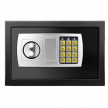
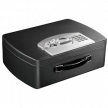
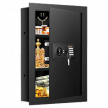
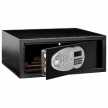


I spent years traveling for work and now own two very different safes, which taught me something simple: portable safes solve problems you don’t think about until you actually need one. I originally bought my lightweight fire safe with a key lock specifically for a few business trips; those times when hotel rooms needed to hold my documents and backup drives securely.
My 80-pound combination safe never leaves the house, but using both taught me how different their roles really are. Real portability isn’t about size or weight. It’s about balancing everyday convenience with meaningful protection while you’re on the move.
Our main safe buyer’s guide focuses on what makes portable safes different from their permanently-installed cousins. From how impact resistance matters, to why the locking mechanism you choose affects both your daily routine and your peace of mind when you’re away from home.
How Size and Weight Affect Real-World Portability
The math behind portable safe design involves constant trade-offs between security and mobility. Understanding those trade-offs helps you avoid buying something that looks portable on paper but becomes a hassle in practice.
Dimensions and Capacity: Why Fit Matters More Than Volume
My fire safe measures roughly 16″ x 12″ x 7″ and fits perfectly in a large suitcase or car trunk. Anything bigger would become a logistics nightmare for travel. In daily use, portable safes function best when sized for your real valuables instead of every item you could imagine storing. For most people, the ideal dimensions let you fit a laptop, important documents, backup drives, and small electronics. Oversizing your safe often leads to frustration during packing and makes the safe less likely to travel with you. In practice, a compact safe that fits easily into your routine provides more protection than a larger one that gets left behind.
Weight Considerations: Finding the Right Balance
Here’s where my two safes taught me opposite lessons: my 80-pound combination safe is technically movable, but only in the sense that two people can move it. Its weight discourages theft, but makes regular relocation unrealistic.
My lightweight fire safe, on the other hand, weighs about 25 pounds, and I can carry it with one hand – but that same portability makes it easy for someone else to grab. The ideal weight depends entirely on your use case. If you’re traveling, lighter wins every time. For temporary home use or short trips, adding some heft provides passive security without sacrificing too much convenience. Buyers often overlook this balance, but it strongly influences whether a safe actually gets used.
Carrying Features That Make Transport Easier
Most portable safes come with basic carrying handles, but design details matter more than many buyers expect. My fire safe has a single top handle that works fine for short trips, but becomes uncomfortable fast over longer distances.
Recessed side handles, padded grips, or shoulder straps distribute weight more evenly and reduce hand fatigue. Some larger models even include wheels, though I haven’t tested those personally. More importantly, the handle mounting points must be robust. Repeated lifting puts stress on these areas, and a handle failure can lead to drops that damage both the safe and its contents.
Locking Mechanisms: How They Affect Daily Use and Reliability
When you’re moving a safe regularly, the lock becomes your most frequent point of interaction and potential failure. Each locking type balances convenience, security, and reliability differently, making the right choice highly dependent on how and where you plan to use your safe.
- Key Locks – Simple, fast, and highly reliable, key locks offer instant access with no batteries or electronics to worry about. They’re ideal for travel and frequent use, but require careful key management since lost or copied keys eliminate much of their security advantage.
- Combination Locks (Mechanical) – These provide strong, battery-free security and eliminate the risk of lost keys, making them well-suited for semi-permanent setups. However, they open more slowly and can be harder to use in low light or stressful situations, which matters when quick access is important.
- Digital Keypad Locks – Electronic locks deliver fast access and convenient features like multiple user codes and silent operation, which is useful in shared environments. Their main weakness is battery dependence, since dead batteries or electronic failures can leave you locked out at the worst possible time.
Why Durability and Impact Resistance Matter for Portable Safes
Portable safes face hazards that stationary models never encounter: drops, bumps, and the general abuse that comes with being moved around regularly. Over time, these stresses reveal weaknesses in construction.
My fire safe has accumulated several dings from being loaded in and out of my car, and each impact reminded me why construction quality matters more for portable units than safes that sit in one spot forever. Corners take the most abuse, making reinforced edges more than just cosmetic features.
Steel thickness is a key trade-off. Thicker steel walls mean better security, but also more weight to carry. My lightweight fire safe uses thinner steel than my heavy combination safe, and noticeably flexes under pressure. For buyers storing higher-value items, models using at least 12-gauge steel offer a better balance of durability and manageable weight.
The real test of durability comes from repeated handling rather than dramatic events. Hinges loosen, locks get finicky, and protective coatings wear off from constant contact. Flush-mounted hinges and protected lock mechanisms survive the constant bumps and scrapes better than exposed components.
Capacity and Organization: Making Limited Space Usable
Manufacturers love to advertise interior volume, but those numbers rarely tell the real story about usable space. My fire safe claims 0.6 cubic feet, yet thick walls, lock mechanism housing, and the awkward rectangular shape reduce usable space significantly.
I learned quickly that measuring your actual belongings beats trusting manufacturer specifications. My iPad barely fits diagonally, and adding a stack of documents makes everything a tight squeeze.
The internal layout matters more than raw volume. Poor organization leads to wasted space and frustration. Thoughtful design features improve usability without increasing size:
- Document holders or clips – keep papers upright and accessible
- Adjustable foam inserts protect electronics and prevent shifting
- Interior pockets or elastic straps secure small items
- Removable trays or dividers create multiple levels of storage
I’ve found that organization features matter more in portable safes than larger models since you’re constantly opening them and need to find things quickly.
Versatility and Anchoring: Reducing Theft Risk
One major drawback of portable safes is that their portability makes them easier to steal. The best portable safes offer multiple mounting and securing options to help offset this risk.
Cable locks that wrap around bed frames, desk legs, or vehicle anchor points won’t stop a determined thief with bolt cutters, but they prevent opportunistic grab-and-go theft. You can get models with removable cables that tuck inside when not needed, or permanent tethering points that work with standard security cables. What matters is having flexibility for different situations like temporary hotel room security, semi-permanent vehicle mounting, or home anchoring without drilling holes in floors.
Travel Considerations and TSA Compliance
What To Know Before Flying With a Portable Safe
Air travel introduces rough handling, vibration, and increased theft risk, which puts extra stress on portable safes. Any locked container must travel in checked baggage, where it may be dropped, stacked, or shifted during transit. This makes impact resistance, reinforced corners, and reliable locking mechanisms far more important than they would be for stationary home use.
Because checked luggage can be opened by airport staff and handlers, portability alone isn’t enough. Buyers who fly frequently should prioritize safes with rigid steel construction, well-protected lock housings, and durable finishes that can withstand repeated handling without loosening or misalignment.
Vehicle Travel and Vibration Concerns
Car travel exposes safes to continuous vibration, sudden braking forces, and temperature changes. Over time, this can knock mechanical dials slightly out of alignment, loosen internal components, and stress battery connections in digital locks. Secure mounting points and vibration-resistant lock mechanisms reduce the likelihood of access problems after long drives.
Cable attachment points also need to remain tight during transit. A tether that gradually loosens due to vibration defeats the purpose of anchoring, especially during long road trips.
Special Case: Firearm Transport Rules
Firearm transport introduces additional legal and security requirements that affect safe selection. Federal law requires firearms to travel in hard-sided, locked containers where only the owner retains access, which eliminates many lightweight portable safes and cable-based designs. TSA-approved locks are not permitted for this purpose.
If firearm transport is a priority, buyers should focus on thicker steel construction, reinforced hinges, and high-quality locking mechanisms designed to withstand both impact and tampering. For most general travelers, however, these higher-security requirements go well beyond what’s needed for documents, electronics, or valuables.
Portable Safe Security Myths and Misconceptions
Marketing materials and online reviews often oversell what portable safes can realistically accomplish compared to their heavier, permanently installed counterparts.
Limitations Compared To Heavy-Duty Models
Portable safes sacrifice security for convenience. My 80-pound combination safe provides security through sheer mass and thick steel construction that my lightweight fire safe simply can’t match.
They deter casual thieves and protect against fire or water damage, but won’t stop someone with time, tools, and determination.
Marketing Claims vs. Reality
Terms like “pry-resistant” or “theft-proof” often lack context. My fire safe’s door has visible gaps around the edges that a crowbar could exploit, while my heavier safe has tight tolerances that would resist the same attack.
Fire ratings also get exaggerated. Some portable safes claim fire protection without UL testing, or they meet lower temperature standards for shorter durations than what you’d get in a real house fire. The “waterproof” claims are similarly optimistic since most portable safes are only splash-resistant or can handle brief submersion, not the prolonged flooding that might occur during an actual emergency.
Setting Realistic Expectations
Portable safes are great at deterring snooping, slowing down grab-and-go theft, and protecting against environmental damage. My fire safe protects important documents from small household fires and stops someone from casually rifling through my stuff, but it won’t deter a burglar who targets it specifically.
Real security comes from not advertising that you own a portable safe and using it for items that aren’t worth the effort to defeat it; think backup drives and documents rather than jewelry or large amounts of cash.
Portable Safe Pricing: What You Get at Different Budget Levels
Portable safe prices vary widely based on construction quality, lock type, fire resistance, and durability. Understanding what changes at each price tier helps avoid both overspending and underbuying.
- Budget models ($30–$70) – Designed mainly for light theft deterrence and basic organization, using thinner steel and simple locking mechanisms. Best suited for low-risk storage such as documents, passports, or short trips where convenience matters more than maximum security.
- Mid-range models ($70–$150) – Offer thicker steel, stronger locking systems, improved fire or water resistance, and better internal layouts. This range delivers the best overall balance of portability, durability, and security for most buyers.
- High-end portable safes ($150–$300+) – Focus on reinforced construction, premium locks, and higher fire ratings, approaching the protection level of small home safes while remaining movable. Ideal for buyers who want maximum protection without permanent installation.
Choosing the Right Portable Safe for Your Needs
Owning both a lightweight fire safe and a heavier combination model taught me that the “right” portable safe depends completely on how you intend to use it.
- For travel or temporary storage – Go for lightweight construction, quick-access, locking and smart internal organization over maximum security. These features make daily use easier and ensure the safe actually travels with you instead of getting left behind.
- For semi-permanent home use – Accept extra weight for thicker steel and stronger construction. The added mass improves theft resistance while still allowing occasional relocation when needed.
Lock choice should support how often you’ll access the safe. Keys work best for fast, frequent entry, combinations provide better security with slower access, and electronic locks add convenience only if you’re comfortable managing batteries and potential failures.
Ultimately, the best portable safe gets used consistently. A slightly less secure model that fits naturally into your routine offers more real protection than a heavy-duty safe that stays unlocked or gets left behind.