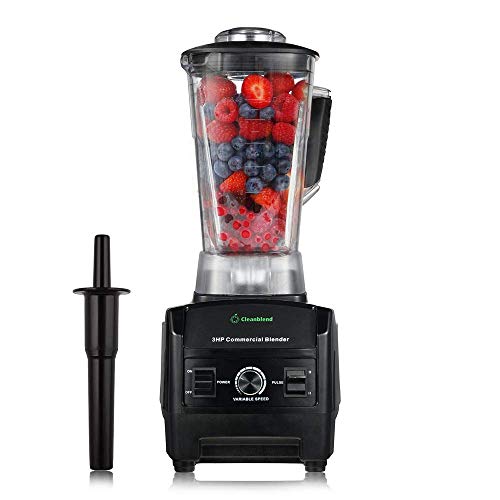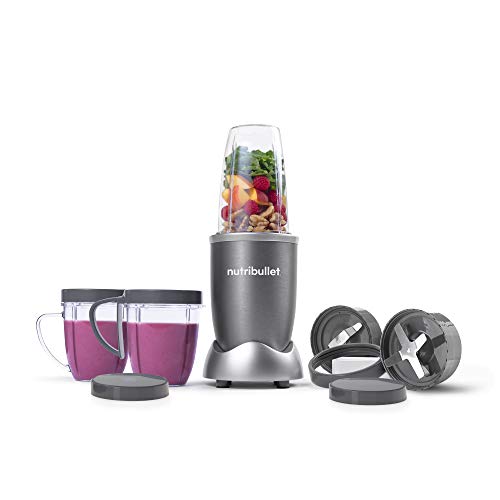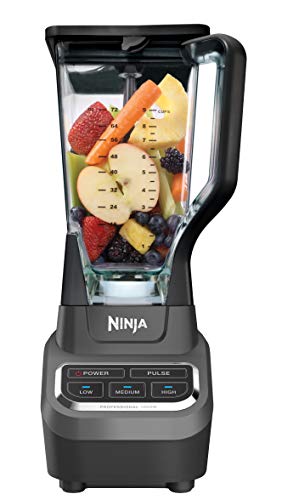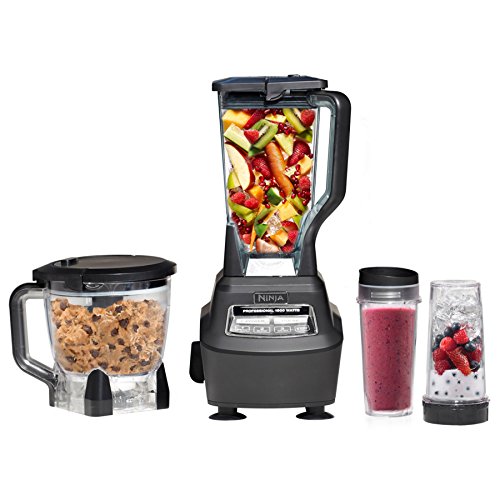

















Choosing the best blender is not as simple as picking the most powerful motor or the most expensive brand. With so many options on the market, from personal smoothie blenders to high performance kitchen models, it can be difficult to know which features actually matter and which ones are just marketing.
A good blender should do more than crush ice. It should handle frozen fruit, blend hot soups safely, last for years, and fit your daily cooking habits. But how do you know what to look for before you buy?
To help you make a smarter decision, Market.com asked chefs, dietitians, restaurant managers, and culinary professionals to share their real world advice. We wanted to know which blender features are worth paying for, when a food processor might be the better choice, how noisy is too noisy, and what common mistakes shorten a blender’s lifespan.
In this expert roundup, you will find practical insights based on hands-on experience, not product hype. Whether you are buying your first blender, upgrading to a more powerful model, or simply trying to understand what makes a quality kitchen blender, this guide will help you choose with confidence.
Is a food processor the same as a blender, and how to choose the right blender for your needs?
While food processors and blenders may look similar sitting on your countertop, in the kitchen they play very different roles. Think of them as teammates, not substitutes. Each one shines in its own lane.
A food processor is your prep station. It’s built for chopping, slicing, shredding, mixing, and kneading. If you’re making pie dough, grating cheese, slicing cucumbers for a salad, or pulsing nuts for pesto, the food processor is your best friend. Its wide bowl and interchangeable blades give you control and texture, which is essential for recipes where precision matters.
A blender, on the other hand, is all about smoothness. It excels at turning solid ingredients into silky liquids. Smoothies, soups, sauces, protein shakes, frozen cocktails, and purées are where a blender truly shines. The tall, narrow jar and powerful blade vortex are designed to pull ingredients downward, creating that creamy, restaurant-quality consistency.
Can a blender chop vegetables? Technically, yes . However, you’ll often end up with uneven pieces or accidental purée. Can a food processor make smoothies? It can try, but you’ll rarely get that perfectly smooth finish; And there’s nothing worse than a lumpy smoothie.
In my professional kitchen, I reach for the food processor when I’m preparing ingredients and the blender when I’m finishing textures. At home, I recommend choosing based on how you cook. If you bake, prep, and cook from scratch often, start with a food processor. If you love smoothies, soups, and sauces, a blender will serve you better.
Ideally, having both gives you the flexibility to cook smarter, faster, and with better results — and that’s always the goal in a well-equipped kitchen.
And when it comes to choosing a blender – like many things in life, it isn’t about buying the most expensive model; it’s about finding the right tool for how YOU cook. A great blender should make your life easier, not more complicated.
First, look at motor power. For everyday smoothies and sauces, 600–900 watts will work just fine. If you plan on crushing ice, blending frozen fruit, or making nut butters, you’ll want something in the 1,000–1,500 watt range. Power equals performance and longevity.
Next, consider the jar material and size. Glass jars are heavier but resist odors and stains. Tritan or BPA-free plastic jars are lighter and more durable. A 48–64 ounce jar is perfect for families or meal prep, while personal blenders work well for single servings.
Blade design matters more than most people realize. Stainless steel blades with multiple angles create better circulation and smoother blends. Cheap blades lead to chunky results and burnt-out motors.
Pay attention to controls and presets. Simple dial controls are often more reliable than complex touch panels. Preset options for smoothies, ice crush, and soups can be helpful, but only if they’re intuitive.
Noise level, cleaning ease, and warranty are often overlooked, but important factors that shouldn’t be ignored. A blender that’s easy to clean will get used more often. A solid warranty tells you the manufacturer stands behind their product.
From a chef’s perspective, I always tell home cooks to buy for function, not hype. The best blender is the one that fits your cooking style, your kitchen space, and your daily habits. When you choose wisely, a good blender becomes one of the most trusted tools in your kitchen.
Chef Dennis Littley, creator of Ask Chef Dennis Productions
In your opinion, what blender features are often overlooked but make a big difference in daily use?
If a blender can’t be cleaned easily and thoroughly, it is a definite discouragement from using that blender daily. While a sharp blade is important for pureeing fruits, veggies, nuts, and seeds, it can be extremely dangerous if it is an obstacle for cleaning the blender. Nothing is worse than not being able to simply remove a blade for cleaning. Not only is it annoying, but it slows you down and can be painful and unsanitary. People want to keep it simple, give them a blender that has easily removable and dishwasher safe parts for sanitary and stress-free cleaning.
Sheri Gaw, RDN, CDCES owner of Sheri The Plant Strong Dietitian
What role do blade design and blade material play in blending performance and longevity?
Blade design determines how efficiently ingredients are pulled into the vortex and pulverized, which affects smoothness and blending speed more than raw motor power. High-quality hardened stainless steel blades and a solid bearing assembly improve durability, resist corrosion, and maintain performance over time. In short, good blade engineering makes a blender blend better and last longer, even at lower wattage.
Junsoo Ba, Chef at SSAL
Is it possible to make whipped cream in a blender without overmixing, and do you recommend it?
It is technically possible to make whipped cream in a blender, but it is challenging to do well, and I do not recommend it. Blender blades spin so fast that heavy cream can go from light, airy whipped cream to butter in seconds. The texture is also denser and less fluffy than whipped cream made with a mixer.
For better results, use a hand mixer. It gives you much more control over speed and lets you easily watch the cream as it thickens. If you do not have a mixer, a whisk works too. It takes longer, but you have complete control over the process.
If you still want to use a blender, please make sure both the blender jar and the cream are well chilled. Use heavy cream with at least 36% fat. Higher-fat cream is more forgiving and less likely to break. Start on low speed and use short bursts, stopping frequently to check the texture. Stop before stiff peaks form, because once you are that close, it can turn into butter in a second or two.
Stephanie Manley from CopyKat
Can a blender effectively handle hot liquids and soups, and what safety tips should users follow?
Blended soups are such a great way to get extra nutrients in, but blending hot liquids can be a bit of a kitchen hazard if you aren’t careful! The steam creates pressure that can actually force the lid off, which is a recipe for burns and a big mess.
If you’re using a blender, here is the best way to do it safely:
- Let it cool slightly: Give the soup about 5–10 minutes to sit before pouring it in.
- Don’t overfill: Only fill the blender halfway (or less). Hot liquids expand and create a vortex, so they need plenty of “headspace.”
- Remove the center cap: Take out the small plastic piece in the middle of the lid to let steam escape.
- The towel trick: Cover that open hole with a folded kitchen towel and hold it down firmly with your hand. This vents the pressure while catching any splashes.
- Start on low: Always start at the lowest speed or use short pulses before ramping it up.
If you have a “bullet-style” blender (the ones you flip upside down), check the manual first. Most of those are airtight and shouldn’t be used for hot liquids as they can’t vent steam.
If you find this a bit fiddly, a stick blender (immersion blender) is a much safer bet since you can blend right in the pot – this is my favoured way!
Priya Tew, Specialist Dietitian and Director of Dietitian UK
How important is the blender jar material (glass vs plastic vs Tritan), and which do you recommend? Also – are personal or single-serve blenders powerful enough for daily smoothies and frozen ingredients?
In professional kitchen environments, jar material is extremely important, primarily for food safety reasons.
Glass jars, while attractive for home use, are generally not recommended in professional kitchens. In the event of an accident, even microscopic glass fragments can enter food preparations and are nearly impossible to detect, representing a serious safety risk. For this reason, many professional kitchens avoid glass altogether.
For most professional applications, stainless steel jars are my preferred choice. They are highly durable, safe in fast-paced environments, easy to sanitize, and ideal for sauces, purées, soups, and large-volume preparations.
That said, for juices, smoothies, and applications where visual control is important, a high-quality clear jar is useful. In those cases, Tritan or reinforced professional-grade plastic is an acceptable compromise. While we actively try to reduce plastic usage overall, Tritan performs well in terms of impact resistance, safety, and longevity.
In short:
- Stainless steel → best overall for professional kitchens
- Tritan / high-grade plastic → suitable when visibility is required
- Glass → not recommended in professional food-service environments
Regarding your question whether single-serve blenders are powerful enough for daily smoothies and frozen ingredients – it really depends on the quality of the motor.
Low-end or very basic household blenders are often not powerful enough to properly handle frozen fruits, ice, or fibrous ingredients on a daily basis.
However, in recent years, high-performance home blenders have become much more accessible. Brands such as Vitamix or Ninja now offer models with strong motors that are more affordable and perfectly capable of producing smooth, consistent results for daily smoothies, frozen ingredients, and even nut-based preparations.
When a home blender has:
- A powerful motor
- Proper blade design
- Good airflow and cooling
It can absolutely perform at a very high level for daily use.
Eduardo Rukos, Director & Co-founder of K’u’uk Restaurant
In which situations can someone use a blender instead of a food processor, and when is it better not to?
I use a blender for making soups and smoothies. I love pureed soups and the blender is a perfect tool for that! I use a food processor for many different items. I make pesto in a mini food processor. I use my large processor to chop and dice and mix ingredients for baking. Cooking is so much easier if you use the right tools.
Andrea Beth Trank from Heaven Lane Healing & Creative Arts
How noisy should a blender be considered “normal,” and are quieter blenders actually worth the premium? Additionally, what common mistakes do people make that shorten a blender’s lifespan or affect blending results?
On the rooftop of Hotel Principe, the 67 Sky Lounge Bar and Lux Lucis Restaurant share the space harmoniously. Our setting is one where blender noise is an issue that must be addressed; thanks to the bar team’s efforts, we have moved the blender to the back office, a choice that currently appears to be the most effective. In the past, I evaluated the purchase of silent blenders, but the cost is disproportionate, and I am not convinced it justifies the expense.
Regarding your second question – to ensure optimal use and maximize beverage quality, as well as extend the machine’s lifespan, it is fundamental to follow specific guidelines:
- It is important not to overload the mixture; add ingredients only when strictly necessary.
- Adjust the speed according to the ingredients being used.
- It is essential to thoroughly clean all parts, taking care to avoid getting the base wet.
Restaurant Manager at Principe Forte dei Marmi