










When buying vacuum cleaners online, you don’t only need to decide between different types, features, and price points. You also need to cut through all the confusing language brands throw up on their pages. In this guide, I’ll go over the specifics to help you find the right vacuum for you and your home.
What to Look For When Buying a Vacuum Cleaner
Here’s a quick overview of the types, features, uses, and key benchmarks to consider when choosing the right vacuum cleaner. Read on for a detailed breakdown of each factor.
Vacuum Cleaner Type
First, you need to identify the type of vacuum you want to purchase. This depends on what you’re cleaning and what results you’re looking for. Common vacuum cleaner types include:
Handheld Vacuums
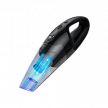
Handheld vacuum cleaners are the smallest type, sometimes weighing less than 300 grams. They’re designed for quick spot cleaning, such as removing dust from keyboards. Because of their small stature, they often have a short battery life and limited suction power.
Cordless handhelds use different charging methods (e.g., removable batteries, direct plug-in). To know which one’s for you, it’s better to identify first where you’ll use it. For example, if you’re looking for a handheld to sit on your kitchen countertop to deal with excess crumbs, it’s more practical to choose a cordless handheld that can sit in a charging cradle rather than one that needs to be plugged in.
Stick Vacuums
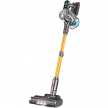
Cordless stick vacuums are defined by their slim and battery-operated design. They tend to be light with minimal suction power, making them ideal for spot cleaning frequently dirtied floors, like in the kitchen or entryway.
The highest-end models can clean for hours with the help of swappable batteries. They also have motors that produce enough suction to rival full-sized vacuums and features like self-emptying dirt bins. They’re also probably going to come with more accessories and attachments.
Upright Vacuums
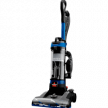
Upright vacuums are a type of floor cleaner that can be locked into a standing position. They’re typically designed to focus on floor cleaning rather than attachments. This is evident in their wider and heavier brush heads.
The bulkiness also permeates the rest of the vacuum. On average, uprights are the heaviest type of vacuum, tipping the scales at 15–25 pounds or 7–11 kilograms. However, this added mass can work out in your favor. Uprights with powerful motors can glide easily, propelling themselves across even high-pile carpets because of their heavy base and the leverage of the handle.
Canister Vacuums
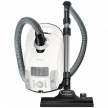
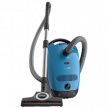
Canister vacuums separate the motor from the brush head by a long hose and wand. The motor itself tends to be very low to the ground and follows behind the user, rolling on wheels. They’re also versatile, having the wide brush head of an upright but with swappable attachments.
However, unlike uprights, canister vacuum cleaners can’t stand up on their own. There’s usually a slot that the brush head can click into, but the inflexible hose will still get in the way no matter what. Also, when you’re moving from room to room, the canister unit can get caught on corners.
Robot Vacuums
Robot vacuums are automated floor cleaners. They typically come with a charging dock and include a pair of side sweepers and a brush roll for cleaning.
Standard docks serve as a home base for the robot to charge and as a starting point for navigation. You may also come across docks with secondary vacuums that suction the contents of the robot’s dirt bin into a separate bag.
Robot vacuums with smart mapping are becoming common, letting you designate areas to avoid, stream video, and program actions to specific conditions like cleaning the entryway when the kids come home from school.
Suction Power
The measure of a vacuum’s ability to pick up household debris is called suction power. It’s commonly measured in air watts (AW) for uprights, canisters, and some cordless vacuums, while robot vacuums often use pascals (Pa). Higher AW or Pa numbers indicate greater suction power.
However, good suction power also pairs with interconnected factors, such as a well-sealed chassis, a well-designed brush head, and an efficient airflow design, to ensure effective suction.
The ideal suction power range varies depending on the type of vacuum cleaner:
Power Consumption
If you prioritize energy efficiency, always check how many watts (W) a vacuum uses. Wattage is the rate of electrical flow over time. The higher the wattage is, the more electricity is used per hour. It may also mean more cleaning potential, but it doesn’t indicate efficiency in converting power into suction, unlike suction power metrics like AW or Pa.
Like suction power, wattage depends on the type of vacuum used:
Filter Types
Vacuum filters trap unwanted particles from the airflow, preventing them from being blown back outside. They also help keep the vacuum cleaner’s internal components clean and protected.
Here are some of the common filter types to choose from:
You may also need to consider vacuum cleaners that offer optional prefilter attachments, designed to keep larger particles like hair from clogging the more expensive primary HEPA filter. These include washable foam or mesh prefilters and cyclone separators, which use centrifugal force to separate particles before air reaches the actual filter.
If air quality is a priority, post-filters may also be worth considering, as they capture the finer particles that pass through the prefilter and primary filter. An example is electrostatic filters (ESF) that use static electricity to attract fine particles.
Weight
Weight is a nuanced matter when it comes to vacuums. For the vast majority of people, lighter is better. A heavier vacuum doesn’t mean better quality, higher suction, or a more durable product. And a vacuum that tips the scale harder will be more difficult to push, more tiring to carry up stairs, and generally make you want to use it less.
Battery Runtime
For cordless vacuum cleaners, excellent battery life depends on the size of the area you’re hoping to clean regularly. For example, if you’re spot cleaning crumbs in your kitchen or cleaning a small apartment, a 10–20 minute battery life will suffice. However, if you expect to deep clean your floor and furniture, you’re going to need a more robust battery.
In fact, the longest runtime you can get from a cordless vacuum is from one with a swappable battery. On the premium end of cordless vacuums, units will come with an extra battery that usually has a designated spot inside the charging dock. If you ever need more cleaning time, you can switch to a fresh battery. For more affordable vacuum models, you typically need to purchase extra batteries.
Regardless, a swappable battery not only gives you more immediate cleaning time, but in the long term as well. The battery is often the first point of failure on a cordless vacuum. A swappable battery makes it a simple matter rather than a tedious or expensive repair.
Bagged vs. Bagless
The trade-off between bagged and bagless comes down to hygiene versus convenience. The bag itself acts as an additional layer of filtration. Some bagless models compensate by including an additional filter, usually made from mesh or foam.
With bagless vacuums, you’ll never have to worry about finding compatible bags. Also, some people really like having a view of all the dirt their vacuum suctioned up.
However, bagged vacuums are more hygienic when it comes to emptying. When you toss the dirt bag away, it won’t cause a dust plume that you get when you open the dirt container of a bagless vacuum. There’s also the added benefit if you’re the type of person who doesn’t like to see, touch, or smell anything unpleasant; the bag helps conceal all that from you.
Bagged vacuums have larger dirty capacities than bagless vacuums. That means emptying less often. However, the consequence of that is that bagged vacuums can get a certain bad odor from the dirt, dust, crumbs, and hair sitting in the bag for months at a time. Bagless vacuum’s dirt cups can also develop that smell, but you can wash them.
Dustbin Capacity
Dustbin or bag capacity refers to how much dirt and debris you can vacuum before you need to change the bag or empty the dustbin.
Noise Level
Vacuum cleaners are noisy. It’s common for a full-sized vacuum to make 72 decibels during operation, which is loud enough to drown out a normal conversation. There are vacuums that have Quiet Mode, which are usually just a reduction in power to the motor. If a vacuum has different cleaning modes, a lighter one will usually reduce the noise it makes.
Brushroll Types
There’s also the question of what the brush head is made of. The best brush heads tend to be made of a combination of fluffy and stiff bristles. The fluffy material, usually nylon, is great at removing fine dust that adheres to hardwood. Imagine a mechanized dusting cloth. The stiffer bristles act more like a broom to sweep up larger debris and beat dust out of carpets.
Storage
Storage for a vacuum cleaner means two things: onboard storage and general storage. Onboard storage is when attachments and spare parts are stored inside or on the vacuum, and in the case of robot vacuums, also in the charging dock.
The best vacuums can store all their extra parts onboard with a combination of internal compartments and exterior slots. Ideally, a vacuum cleaner shouldn’t make a mess. Onboard storage helps organize, and attachments that are kept at hand will increase your odds of using them to get a superior clean.
When rating general storage, we’re interested in the overall footprint of the vacuum itself and any loose attachments. Uprights have the advantage in this regard as they can stand up on their own. There are select cordless vacuums that can stand up, but they’re moderately rare.
Canister vacuums tend to fare the worst when it comes to general storage. The hose often forms a loop that takes up a lot of space.
Attachments
My top three must-have attachments are: the crevice tool, dusting brush, and a mini-brush, preferably motorized. The crevice tool is sometimes combined with the dusting brush. It’s characterized by having a narrow tip that lets you clean tight spaces. The dusting brush’s bristles allow you to clean around delicate objects.
A mini-brush is a versatile tool that can effectively clean stairs and upholstery. Most mini-brushes aren’t powered, relying on the air flow of the vacuum’s suction to spin. This is most common on full-sized uprights and canisters. However, it’s very common for cordless vacuums to have powered mini-brushes.
Beyond the must-haves, I have a few choice nice-to-haves. I like the idea of a spare dusting or a dedicated upholstery brush. If you regularly clean surfaces like pet beds, it’s nice to have a spare brush to avoid cross-contamination.
Ease of Use
For manual vacuums, the ease of cleaning usually boils down to the synergy between the motor and the brush roll, swivel joints, and the placement of the handles.
When a vacuum’s motor works well with the brush roll, you get the feeling that the unit is self-propelled. Motors with higher wattages are more likely to have this effect. Vacuums that advertise swivel or ball joints are also going to be easier to clean with. These joints allow the vacuum to twist and turn on a dime to clean around corners and furniture better.
Finally, vacuums with a secondary handle somewhere on the body are more likely to be of higher quality. Having extra and well-placed handles allows you to carry it up the stairs or out of storage.
Smart Features
Smart features are becoming more common, but you’re still most likely going to find them on robot vacuums. Apps for automated floor cleaners can do everything from schedule cleanings to let you stream what the robot sees to your phone.
On full-sized vacuums, compatible apps are more likely to let you order spare parts or look up troubleshooting advice. Some vacuums even have built-in smart features, such as sensors that indicate if your floors are clean and even what types of dirt your vacuum is picking up.
Mop Features
Did you know that some vacuums can also mop? Specifically, cordless and robot vacuums can have mop features. For cordless vacuums, you swap out the brush head for a mop head. It uses the power from the motor to cause the mop pads to spin.
On robot vacuums, you can purchase hybrid models that have built-in mop pads and water tanks to help clean sticky messes off the floor. There are even advanced models that have docks that can sanitize the mop pads and refill the onboard water tank.
Use Case
Identify where you intend to use the vacuum cleaner to easily determine which type and features are most important for your needs. Here are examples:
Budget
Your budget may affect whether you buy a vacuum cleaner with only the basics or a higher-quality model with extra features. Here’s a simple breakdown of what you get at lower and premium prices for each type of vacuum cleaner:
- Handheld vacuum: This type usually has a narrow range of prices. The most expensive handheld vacuums can come with attachments.
- Stick vacuum: Super affordable options can serve as a supplemental floor cleaner. Battery life, motor strength, and add-ons improve as you move further up the price ladder.
- Upright vacuum: Less expensive uprights work great as a “for now” vacuum. Their wider brush heads mean they make short work of a room. As you move up the cost ladder, you’re going to find uprights with more powerful motors and more flexible joints that let the brush head glide around furniture more easily.
- Canister vacuum: On the higher end of the price spectrum, the wand is often telescopic and extendable, which allows the brush head to slip under furniture and makes it less fatiguing to hold up when cleaning drapes or tall shelves.
- Robot vacuums: The biggest difference between entry-level and high-end models comes down to navigation and smart features. If you’re willing to pay a premium, you can get a robot vacuum with advanced navigation that can recognize and avoid common hazards like power cords, socks, and pet accidents.
What Are the Best Vacuum Cleaner Brands?
Here are some of our recommended vacuum cleaner brands that align with the key factors most users consider:
Shark: Best for Extensive Feature Set
Shark makes some really good general crowd pleasers that offer plenty of features. The most popular Shark uprights can detach from their brush heads to become a wheelless canister (lift-away model). Shark vacuums also tend to come with a full set of attachments and washable prefilters.
On the price front, Shark covers the middle to upper spectrum. You can get a new upright with the lift-away feature for under $200. To get every feature that Shark offers, including a vacuum that adds a pleasant scent to the air or an attachment that can clean the underside of couches and fridges, you’re going to be looking to spend around $500.
The final point in Shark’s favor is that the company covers its models with a robust five-year warranty. In my experience, Shark is responsive to consumer wants, so popular models stay in stock while those that don’t sell well disappear quickly. The company’s manufacturing base is robust, so parts also always seem available.
Dyson: Best for Premium Materials and Design
Products from Dyson show off the company’s commitment to tactile engineering. All the buttons feel good to push, the parts click and snap together satisfyingly, and when you clean with them, you’ll feel the power.
For example, some of the latest brush heads have an angled laser that illuminates even the finest dust. So, when you run the vacuum over an area, you just watch all the dust vanish. Some models also have an LCD screen on the back that displays the types of dirt the vacuum is picking up.
One thing that stands out to me about Dyson is how easy the upright and canister vacuums are to put together, but they’re a hundred times more difficult to take apart if you ever want to return them.
Miele: Best for Solid Uprights and Canisters
Miele’s uprights and canisters are the stars of the lineup. What sets them apart is the craftsmanship. All the seams, screws, and buttons received human attention during quality control. When you use a Miele vacuum, everything feels solid and well put together. However, its robot and cordless vacuums are somewhat underwhelming.
If you’ve ever felt frustrated by your upright tipping over when using the hose attachments, Miele solved this problem by adding weights to ensure stability. The canisters often have a ton of built-in cleaning modes like Quiet Mode and a Drapes setting, so you don’t need to play a guessing game when cleaning.
Overall, my experience testing Miele vacuums makes me think they’re well worth the investment. However, they’re expensive, and the selection is increasingly getting narrower. When I first started testing Miele vacuums ten years ago, there were significantly more models and packages. So if you saw a model in the past you wanted to check out again, it’s likely gone from the retail market.
Bissell: Best for Affordable Upright Cleaners
If you’re looking for an affordable upright vacuum, you should check out Bissell. The company makes vacuums that are perfect for people who just want one that’s “good enough.” Bissell’s vacuums tend to be bulky and powerful, with a few nice-to-have features sprinkled in.
For example, there are Bissells with a large one-liter dust bin, excels at cleaning pet hair, and a 27-foot cord that automatically retracts. It’s also loud and won’t be able to clean under your tables easily.
Also, odds are if you get a Bissell upright, be sure to have a screwdriver when you unpack it. The handle will likely be secured by two screws, and there will always be a little bit of jiggle.
iRobot: Best for Smart Robot Vacuum Cleaners
iRobot is synonymous with robot vacuums. In my experience, whether you’re purchasing their affordable or high-end models, the quality is there. Even entry-level models have some top-notch features like a dock that auto-empties the robot’s dust bin and smart mapping, so you can tell the robot to focus on or avoid certain areas.
On the higher end, you’re going to get a robot that can also mop and has visual navigation. Visual navigation is the cutting edge for robot vacuums because it allows the unit to recognize and avoid common obstacles like socks and power cables.
However, in my experience testing iRobots, if you want your robot to clean in and around furniture, get the more affordable models. The better the navigation, the more likely the robot will shy away from tight spaces to prevent getting stuck. Just be aware of that trade-off.
Eufy: Best for Low-Cost Alternatives
Eufy is a spin-off company of electronic manufacturer Anker. It specializes in making affordable home goods. Its entry-level models have good suction and a low profile that allows them to get under shelves and furniture easily.
Over the years, Eufy has closely followed what its competitors have done. When a feature works well, the next model of Eufy has its own spin on it. For example, when iRobot and Ecovacs started using visual navigation, Eufy eventually came out with its own version, which used similar technology.
Eufy is more or less an Amazon-only brand. This means you get the benefit of Amazon delivery logistics. On the flip side, that also means Amazon pricing, which can cause models to spike and drop in price. For example, data on the popular Eufy 11S Max shows that its price jumps between $104 and $314.
Tips When Purchasing a Vacuum Cleaner
To help narrow your options down to one or two vacuum types that best meet your needs, keep these tips in mind:
Pick Quality Over Price
It’s really easy to choose a product on price alone. We’re all feeling the mounting pressure of inflation. However, if you invest in quality now, it’s going to pay dividends in the long run. Yes, it’s important to shop within your means, but it’s also equally important to shop to meet your needs.
For example, let’s say you have a home with a dog that sheds a lot. If you go for the cheapest vacuum, you may end up wasting hours of time, cutting tangled fur out of the brush roll just to get it to run. Instead, invest a little more and get a vacuum with an anti-tangle brush head that can actually keep your pet’s hair at bay.
Choose a Vacuum Built for Your Main Needs
Expecting one vacuum to clean every surface in your home may lead to frustration. Instead, think about getting specific tools for specific jobs. For example, if you want to keep a countertop crumb-free and your floors spotless, consider getting an upright and a handheld. An extra handheld will prevent cross-contamination and is better suited for cleaning cluttered spaces.
Consider Your Floor Type and Floor Plan
Different types of vacuums have different types of brushes. Wide and stiff bristles are better suited for cleaning carpets. Soft bristles that are more akin to microfiber are better at getting fine dust off bare floors. And some flooring, like wood laid in the parquet style, can be damaged by using the wrong vacuum.
You should also consider cord length. Make sure that the cord length is compatible with your room sizes and outlet placement. You don’t want to be in a situation where you have “dead zones” in your house where your vacuum can’t reach without dragging out an extension cable. If you’re getting cordless units, ensure the battery can last long enough to clean all floors.
Choose a Weight You Can Comfortably Use
Yes, you want to get a vacuum that suits your home, but what about your body? A big, full-sized vacuum might be very powerful. However, it also might be heavy and difficult to carry up the stairs, especially if it lacks a well-placed handle. A large cleaning width makes short work of rooms, but you might not have considered the amount of furniture you’ll have to move.
On the flipside, if you’re tall, you might want to get a vacuum with a telescopic wand so it can extend and be more comfortable in your hand.
Keep Maintenance in Mind
A vacuum requires new filters, new bags, and sometimes new belts to keep working. Ensuring that the filters are replaced on time and that you have new bags on hand is important in keeping your floor cleaner in top shape.
So, a mistake people make is that they buy a vacuum with no regard for getting extra filters. And when their vacuum’s performance starts to drop, or the bag gets full, they have no spare parts to get it up and running again.