














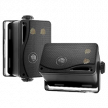
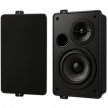


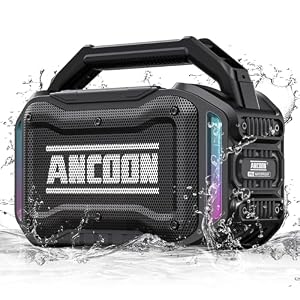


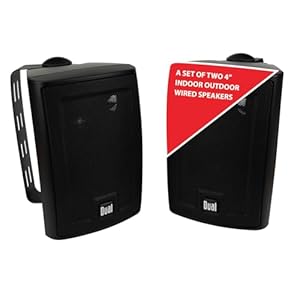


Outdoor speakers solve a different problem than indoor models. You’re not just trying to fill a room — you’re trying to fill open air.
Without walls to reflect sound, music behaves differently outside. Bass feels lighter. Volume dissipates faster. Weather exposure becomes a serious consideration. And once mounted, repositioning isn’t always simple.
This guide focuses on what actually matters when choosing passive outdoor speakers: durability, coverage strategy, placement flexibility, and amplifier power for open-air listening. You can learn all about passive loudspeakers in general in our main buyer’s guide and in both our guide to passive bookshelf speakers, and can use our Guide to passive in-wall speakers to get an idea of what to look (and listen) out for when you’re choosing a new set of speakers.
How to Choose Passive Outdoor Speakers for Your Environment
- Small patio or balcony → Compact speakers, closer spacing
- Backyard seating area → Mid-sized speakers, wider dispersion
- Large yard or pool area → Multiple speakers spaced strategically
- Coastal or high-humidity climate → Higher corrosion resistance
Protecting Your Investment
Outdoor speakers are the most exposed type of loudspeaker, and this vulnerability makes protection a top priority. They must withstand the full range of weather conditions in your climate while maintaining both their physical appearance and audio performance.
The Closed Cabinet and IP Ratings
A well-sealed cabinet is essential for long-term durability. The ingress protection (IP) ratings, defined by the International Electrotechnical Commission (IEC), indicate how effectively a speaker can resist the elements.
IP ratings consist of two digits:
- First digit (solids): 6 = dust-tight, preventing any unwanted material from entering.
- Second digit (liquids): 9 = protected against high-pressure hot water from every angle.
For outdoor speakers, aim for IP69. Any rating lower than this, or a missing/X rating, should be treated with caution.
Material Considerations
The cabinet material is as important as the IP rating. Outdoor speakers need to survive wind-blown debris and resist UV damage from prolonged sun exposure.
Recommended materials:
- Stainless steel
- Aluminium
- UV-resistant plastic or resin
These materials combine strength, weather resistance, and good acoustic properties. If you plan to paint your speakers to match a home or boat, confirm with the manufacturer that the cabinet will accept and retain a third-party finish.
Playing the Angles: Brackets and Placement
Outdoor speakers perform best when you can aim them toward the listening area. Ensure your chosen speaker comes with a bracket or fixing that allows some degree of pivot or rotation.
Some pivoting brackets may be aftermarket or an additional-cost option. Check this when budgeting for your speakers.
Listening is Key
Sound behaves differently outdoors than it does indoors. Some speakers that sound impressive inside can feel diffuse or weak when placed outside. Before purchasing, audition your top choices in an outdoor setting to ensure they meet your performance expectations.
Check clarity, midrange detail, and bass response in an open-air environment. Compare with indoor performance to confirm consistent tonal balance and intelligibility.
Amplifier Compatibility
Passive outdoor speakers often require more power than indoor models to maintain clarity and volume over open spaces. Ensure your amplifier can deliver sufficient, clean power.
Most mid-sized passive outdoor speakers perform well with 50–150 watts per channel into 8 ohms. For 4-ohm models, verify your amp is stable at that load.
Frequency Response and Bass Performance
Open-air listening reduces perceived bass, so drivers and enclosure design are crucial.
Look for speakers with at least 80Hz low-end extension for casual music. For parties, home theater, or larger spaces, aim for 60Hz or lower.
Directionality and Sound Dispersion
Outdoor areas require broad coverage. Narrow-beam speakers can leave listeners outside the “sweet spot” struggling to hear details.
A horizontal dispersion angle of 90°+ is ideal. Adjustable tweeters or pivoting drivers help direct high frequencies where needed.
Integration With Subwoofers
Even robust outdoor speakers may not provide deep bass across large open areas. A subwoofer can complement full-range speakers for improved impact.
A dedicated outdoor subwoofer reaching 30Hz ensures solid bass for music or home theater setups.