









Robot vacuum cleaners used to be just a novelty, but now the technology has advanced enough to the point that some models can rival manual cleaning. They’ve also diversified in price point and feature sets, so you can zero in on one that suits your needs.
The problem is that the market is flooded with choices from companies you may have never heard of. This guide helps you choose the right model – the one that efficiently cleans the messes you often encounter, navigates your home easily, and has the right extra features.
What to Look For When Buying a Robot Vacuum Cleaner
Choosing the best robot vacuum cleaner will depend on several factors that you should consider:
Robot Vacuum Type
For the sake of keeping the taxonomy simple, I’m going to divide robot vacuums into two categories:
- Vacuum-only: Tend to be more affordable and better at cleaning hair and debris.
- Vacuum-mop hybrids: Can clean liquid spills using built-in flat microfiber pads, spinning pads, or roller mops.
To know which type is best for you, consider the types of floors you have in your home. If you have wall-to-wall carpets or use thick throw rugs, you should go for a vacuum-only model.
Many entry-level hybrid models will drag their wet mop pads when transitioning from bare floors to carpeted surfaces. But if you’re willing to pay a premium for a hybrid, you can find higher-end brands that engineer their models to lift their mop pads when they detect carpet.
Dock Features
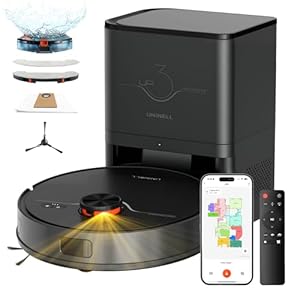
For the vast majority of robot vacuum cleaners, the dock is just a place for the unit to charge and serve as a starting location for navigation. As you move up the price ladder, the dock becomes a major selling point.
Here are some dock features some models offer:
- Self-emptying feature: A vacuum in the dock suctions out the dirt bins in the robot and places the contents in a separate bin or a sealable bag. Using a bag prevents odor and dust plumes that reintroduce allergens back into your home.
- Auto mop cleaning and water tank refilling: The inside of the dock will contain a clean and dirty water tank that needs to be topped off and emptied, respectively.
- Storage: Docks can store things like extra bags, filters, and even a place to charge an included cordless vacuum. The result is a cleaning center, a place where all your vacuum needs can be found.
The downside is that as you increase the number of features a dock has, you also increase its footprint. A simple dock can fit in the palm of your hand. A cleaning center can easily take up a 40-sq-in (around 250-sq-cm) space. They can also be quite tall, up to about knee height. So, if you’re planning on getting a dock that can do everything, be aware that you’ll need to put in some thought on where it’ll stay in your home.
Navigation
Many robot vacuum cleaners use multiple technologies to find their way around your home. To navigate around obstacles, they can employ common navigation types like Light Detection and Ranging (LiDAR), Visual Simultaneous Localization and Mapping (vSLAM), and hybrid AI navigation.
In addition to navigation, robot vacuums can also use ultrasonic and infrared sensors to identify the surface type they’re cleaning. This helps hybrid models shift between mopping and vacuuming and adjusts the suction on vacuum-only models. These sensors can also detect objects and cliffs in their way.
So what should you get? I think investing in a robot vacuum cleaner that uses hybrid AI is a good call if you have pets and kids. They can avoid things like pet accidents, socks left on the floor, and power cables. Basically, they’re good at adjusting to chaos.
But if you’re just trying to figure out if a robot vacuum is right for your lifestyle, a cheaper vSLAM model is the way to go. They’re affordable and reliable for testing out if you love or hate having a robot vacuum underfoot.
Smart Features
The biggest difference in the way you interact with a robot vacuum versus a conventional one comes down to the smart features.
The most bare-bones app will allow you to start, stop, and schedule your robot via your smartphone. It might not sound like much, but imagine you’re at work and you find out last minute that you have guests coming over. If your robot vacuum has connectivity, you can activate it from anywhere you have a signal and tell it to give your home a once-over before you get home.
Beyond just activating a robot vacuum, smart features have evolved to cover a whole host of use cases. For example, there are robot vacuums with cameras that can stream what they “see” to your phone. When you combine that with a remote control feature, you can now have a mobile security camera. Some of them even have speakers and microphones so you can tell your dog to get off the couch.
Suction Power Rating
Robot vacuum suction is usually depicted using pascals (Pa). Higher numbers may indicate stronger suction power, but even the most powerful robot vacuums can’t match upright models when it comes to heavy-duty cleaning.
Robot vacuums can still perform well for routine floor cleaning and collecting pet hair.
They may be less effective at deep cleaning, but running them daily helps reduce the need for it.
Flooring Compatibility
Robot vacuum cleaners work well with most flooring materials, including hardwood, laminate, tile, and most carpets. Here are some of my recommendations for specific types:
- Hard floors: My testing shows that models with rubber brush rolls clean these floors more thoroughly than bristle-only designs, as they create better floor contact and resist hair tangling.
- Low-pile carpets and area rugs: These work well with most robots, though suction power becomes much more important here.
- Medium to high-pile carpets: These demand robots with specialized features – deeper-treaded wheels to prevent getting stuck, stronger motors (3,000+ Pa suction), and auto-carpet detection that increases power when carpet is detected.
- Multiple floor types: I recommend robot vacuums with auto-height adjustment and surface detection for a seamless transition between surfaces without manual intervention.
Pet-Specific Considerations
Pet owners face unique challenges that standard robot vacuums often struggle to handle effectively. I’ve found that pet hair quickly overwhelms basic brushrolls, leading to tangles, jams, and reduced suction.
For households with furry companions, look specifically for models with anti-tangle brushrolls (typically featuring silicone fins or self-cleaning designs) and higher-capacity dust bins, preferably with self-emptying capabilities to minimize your exposure to allergens when emptying.
Beyond hair management, advanced models include specialized filters that capture pet dander and allergens rather than recirculating them back into your home. The difference is noticeable – my newest vacuum with high-efficiency particulate air (HEPA) filtration has significantly reduced both the visible dust and the allergic reactions of house guests.
If your pets occasionally have accidents, avoid camera-based navigation systems that might mistake dark pet waste for shadows. LiDAR systems paired with specific pet waste avoidance technology offer the best protection against the dreaded “pooptastrophe” that early robot vacuum owners discovered the hard way.
Noise Levels
The operational sound of robot vacuums varies dramatically between models and directly impacts when and where you can use them. Budget models I’ve tested typically operate at 65–70 decibels (about as loud as a normal conversation), while premium units with better sound insulation run quieter at 50–60 decibels.
Many newer models feature night modes that reduce suction power for quieter operation, trading some cleaning efficiency for the ability to run during sleeping hours. My current robot vacuum operates at just 55 decibels on standard mode, making it quiet enough to run during video calls without disruption.
Cost Considerations
The robot vacuum market spans from basic $150 entry models to feature-packed $1,200+ premium units, with a sweet spot for reliable performance around $400–600. After owning a few different price-tier models, I’ve found the mid-range vacuums offer the best value, typically including mapping capabilities, decent suction power (2,000+ Pa), and app control without the premium price tag.
Factoring in maintenance costs matters too – replacement filters ($20–40 annually), brush rolls ($20–30 every 6–12 months), and side brushes ($10–15 every 3–4 months) add roughly $100 yearly to ownership costs.
The real return comes in time savings: my robot vacuum saves me about 4 hours of manual vacuuming weekly – translating to over 200 hours annually that I can spend on projects I actually enjoy rather than pushing a vacuum around.
What Are the Best Robot Vacuum Brands?
With those factors in mind, here’s a look at the robot vacuum brands that work best for different needs:
iRobot: Highly Rated Affordable Robot Vacuums
In my experience, whether you’re purchasing iRobot’s affordable or high-end models, the quality is always there. I also like the fact that iRobot has stood the test of time and has always given good customer service.
iRobot’s entry-level models have some top-notch features like a self-cleaning dock and smart mapping. On the higher end, you’ll find models with mopping and pad washing features and hybrid AI navigation.
However, in my experience testing iRobot units, if you want your robot to clean in and around furniture, get the more affordable models with custom mapping. Smart mapping can be unreliable, sometimes causing units to be overly cautious in tight spaces and overlook elements in certain areas, such as floor vents.
Eufy: Best Robot Vacuums for Pet Hair
Certain Eufy lines, such as the Omni series, are well suited for homes dealing with human and pet hair. They can also go under furniture and other areas where hairballs often tend to accumulate.
If you prefer models with mopping features, this brand is a good choice for homes with hard floors. For carpeted floors, however, it’s best to stick with vacuum-only models, as some users have reported that the mops can remain damp after the full drying cycle, which may risk staining carpets.
Ecovacs: Feature-Rich Robot Vacuum-Mop Combos
Ecovacs makes some of the best smart robot vacuums on the market. It has models that can stream their camera view to your phone, take photos, and make voice calls via an app. Some models come with upgraded mopping features, including AI-based stain detection, high-density nylon mop rollers for better stain removal, and docks that can deep-clean the mop rollers using hot water.
If you’re looking for the Swiss Army knife of the robot vacuum world, you should check out the Ecovacs brand. However, the major downside is that stuffing a robot vacuum cleaner with every feature makes it more expensive.
Tips When Purchasing a Robot Vacuum
Whichever model you choose, take note of the following common buyer mistakes so your machine remains reliable over time:
View Robot Vacuums as Supplements
Some people buy a robot vacuum expecting it to 100% replace traditional vacuum types. While this is possible, it requires work on your part. For example, you need to run the robot vacuum every day and make sure your floorspace is as clear as possible.
I’m a big advocate for buying a cheaper model first before investing in an expensive one. It allows you to test whether it works with your lifestyle, especially if you have pets who might hate the robot’s noise or movement.
Perform Regular Maintenance
While a robot vacuum is automated, it still needs a helping hand once in a while. This can be everything from emptying the dust bin or bag to wiping down the sensors. Keeping up with proper maintenance will greatly increase the unit’s longevity.
Take Advantage of All the Features
A lot of robot vacuums come with extra features like a streaming camera or a self-emptying system. If you’re paying for it, you should use them to get the full value out of your robot.
To make sure you’re not paying for features you won’t use, first consider the types of flooring in your home and your cleaning needs before buying a robot vacuum.