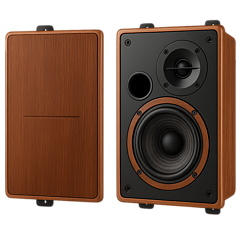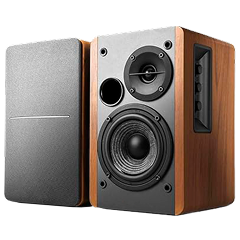


















If your TV sounds flat or quiet, connecting external speakers is one of the easiest upgrades you can make. The good news is that setup is usually quick—most connections take just a few minutes once you know which method to use.
The key is choosing the right connection type for your setup. Some are plug-and-play, while others require a quick trip into your TV’s settings. In this guide, you’ll learn exactly how to connect your speakers, which method is best for your setup, and how to fix common issues.
Quick Answer: How Do You Connect Speakers to a TV?
Connecting speakers to a TV starts with matching the connection method to your setup, then selecting the correct audio output on your TV. Use HDMI ARC/eARC if both devices support it, or Bluetooth for wireless. Once connected, switch your TV’s sound output to the correct source, test the audio, and adjust settings like volume if needed.
How to Connect Speakers to Your TV
Connecting a speaker to a TV involves a different process for each type of connection. Here’s a quick step-by-step instructional guide for each method. Keep in mind that there may be small nuances for each method based on your speaker or TV, but in general, these steps will work for most setups:
Bluetooth (Wireless)
This is the simplest option if you want a clean, cable-free setup. It’s best for casual use, but you may notice slight audio delay.
- Power on your TV and Bluetooth speaker
- Put your Bluetooth speaker in pairing mode by pressing the Bluetooth button (*if there’s no Bluetooth button, refer to the speaker’s manual for information on how to put it in pairing mode)
- Navigate to your TV’s audio settings
- Find ‘Connect a wireless speaker’ or similar setting
- Select your wireless speaker from the list of available Bluetooth devices
- If done correctly, you should see an on-screen message indicating a successful pairing
- Test the sound output by playing something on your TV
HDMI ARC/eARC
This is the recommended option for most modern TVs and soundbars. It delivers the best mix of sound quality, stability, and ease of use.
- Ensure you have a high-speed HDMI cable handy
- Ensure both your TV and speaker have an HDMI ARC/eARC port
- Connect one end of the HDMI cable to the HDMI ARC/eARC port on your TV and the other to your speaker
- Power on your TV and speaker
- Navigate to your TV’s audio settings and select HDMI ARC/eARC as your primary sound output.
- Set the speaker’s input to HDMI ARC/eARC if necessary (some speakers automatically switch)
- Enable HDMI CEC in the settings if you wish to use universal control with a single remote (*Different brands call it different things, e.g., Samsung Anynet+, Sony Bravia Sync, etc.).
- Test the sound output by playing something on your TV.
Optical
Optical is a reliable wired option, especially for slightly older TVs or sound systems. It offers clean, consistent audio, but doesn’t support newer formats like Dolby Atmos.
- Ensure your TV has an Optical Out port, and your speaker has an Optical In port.
- Ensure you have a digital optical cable.
- Connect one end of the optical cable to your TV and the other to your speaker.
- Power on your TV and speaker
- Navigate to your TV’s audio settings and change sound output to Optical/Digital Audio Out.
- Set the audio input on your speaker to Optical/Digital In
- Test the sound output by playing something on your TV
AUX
This is the simplest wired option, but also the lowest quality. It works well for basic setups but isn’t ideal for home theater use.
- Ensure your TV has an audio out jack, and your speaker has an AUX input
- Ensure you have a 3.5mm audio cable
- Connect one end of the audio cable to your TV and the other to your speaker.
- Power on your TV and speaker
- Navigate to your TV’s audio settings and change sound output to audio out or headphone jack.
- Set the audio input on your speaker to AUX/Audio In
- Test the sound output by playing something on your TV
How to Choose Which Connection Type is Best for Your Setup
Common Problems (and How to Fix Them)
Connecting a speaker to a TV isn’t always the hassle-free process we all hope for when dealing with electronics. There are always a few things that could go wrong, but there are easy fixes to many common issues you may run into.
No Sound
If everything seems connected properly, but there’s no audio coming through your speaker, the most common cause is an incorrect audio output setting. Navigate to your TV’s settings and ensure that the audio output is set to your external speaker.
Also check:
- Volume isn’t muted
- Cable is in the correct port (especially ARC vs. regular HDMI)
- Speaker input matches the connection
Audio Delay (Bluetooth)
If sound is out of sync with video, this is usually Bluetooth lag.
You can:
- Adjust lip-sync settings (if available)
- Move the speaker closer to the TV
- Switch to HDMI or optical for zero delay
TV Doesn’t Detect Speaker
If your TV doesn’t recognize your speaker:
- Restart both devices
- Try a different cable or port
- Re-pair Bluetooth devices
- Enable HDMI-CEC in your TV settings (for ARC setups)
If nothing seems to work, you may be dealing with a compatibility issue or dead ports; in that case, the only workaround is to consider a different connection type or setup.
Can You Connect Multiple Speakers to a TV?
Most TVs support only one Bluetooth speaker at a time. Still, some soundbars and wireless streaming technologies, such as Sonos or AirPlay, let you pair multiple wireless speakers to a central hub.
If you want to connect multiple wired speakers, you can do so with a compatible AV receiver, which is how surround sound systems are set up. Otherwise, a single external speaker is the most common type of setup.