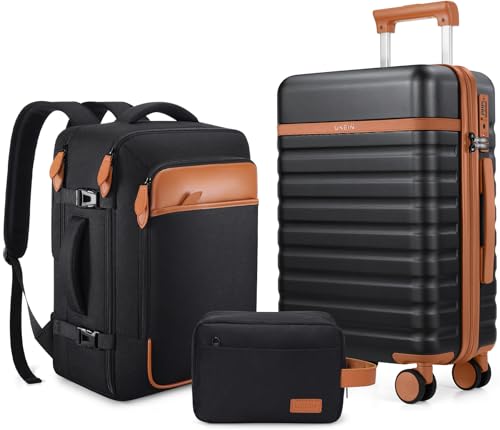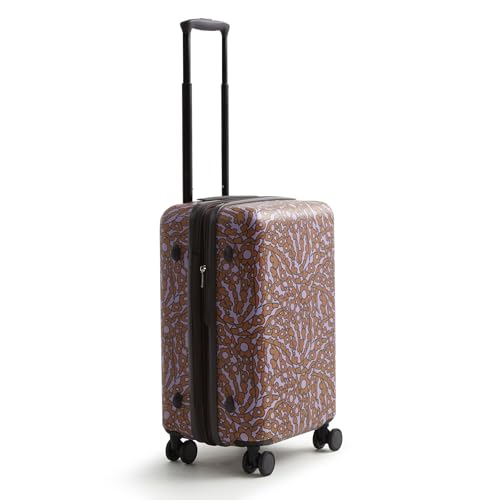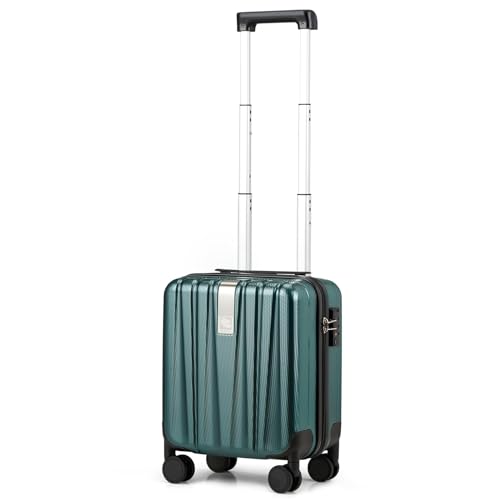




























Summary: Hard-shell suitcases are better for protecting fragile items and handling rough baggage conditions, while soft-sided luggage is lighter, more flexible, and easier to organize. The right choice depends on how you travel – checked bags favor hard shells, while carry-on travelers usually benefit more from soft-sided options.
Hard-shell and soft-sided suitcases solve the same problem in very different ways. One prioritizes protection with a rigid outer shell, while the other focuses on flexibility, lighter weight, and easier access.
The right choice depends on how you travel. If you check bags often or carry fragile items, durability matters more. If you travel with a carry-on suitcase or want quick access and adaptable packing space, flexibility becomes the priority. This guide breaks down how each type performs in real-world use so you can choose what actually fits your trips.
For a broader overview of what to look for, you can read our suitcase buying guide to understand how size, materials, and features all come together.
Hard Suitcase vs Soft at a Glance
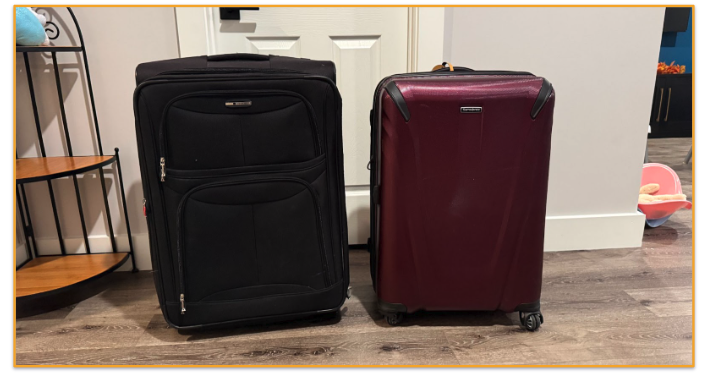
Hard-shell suitcases are typically made from polycarbonate, ABS plastic, or aluminum. These materials create a rigid case that opens into two equal halves. That structure matters because it spreads impact across the shell instead of letting force hit your belongings directly. If your bag gets dropped, stacked, or tossed during handling, a hard shell acts like a protective barrier.
Soft-sided suitcases use fabrics like nylon or polyester stretched over a semi-flexible frame. Instead of resisting pressure, they flex under it. That flexibility makes them easier to squeeze into tight spaces and slightly overpack without immediately running into limits.
At a high level, the decision comes down to protection vs flexibility. A hard-shell is better for protecting fragile items when your bag is handled roughly. A soft-sided suitcase is easier to fit into overhead bins and gives you quicker access to essentials through exterior pockets.
If you mostly check bags or travel with valuables, protection tends to matter more. If you travel carry-on only or prioritize convenience and access, flexibility usually wins.
Ease of Organization: Which Is Easier To Live Out Of?
Soft-sided luggage offers more built-in organization. Most models include external pockets, internal dividers, and dedicated compartments for items like shoes or toiletries. These features make it easier to separate essentials and access what you need without opening the entire suitcase.
That matters in real travel scenarios. Being able to grab your passport, charger, or documents from an outer pocket can save time at security or during boarding, especially when space is tight and unpacking isn’t practical.
Hard-shell suitcases use a simpler layout. They open into two compartments, typically with compression straps on one side and a zip divider on the other. This works well for structured packing, but access is less convenient. You usually need to lay the suitcase flat and open both sides fully, which can be frustrating in small hotel rooms or crowded spaces.
Packing cubes help make hard-shell interiors more usable, but they don’t change the fundamental limitation: you trade quick access for a cleaner, more structured layout.
Protection and Durability: Which Holds Up Better Over Time?
Hard-shell suitcases handle impact and compression better. Materials like polycarbonate distribute force across the surface, which helps protect fragile items such as electronics, glass, or bottles. This becomes especially important for checked luggage, where bags are often dropped, stacked, and compressed in cargo holds.
Soft-sided luggage behaves differently. The fabric flexes under pressure, which can cause items inside to shift. For clothing and soft items, this isn’t an issue. For anything breakable, it increases risk.
Durability also plays out differently over time. Hard-shell suitcases tend to show scratches and scuffs quickly, especially with glossy finishes. While this is mostly cosmetic, a deep crack can compromise the structure and usually isn’t repairable.
Soft-sided luggage hides wear better. High-quality materials like ballistic nylon can handle years of use without failing, though zippers are often the first component to wear out. In many cases, a soft bag can remain functional long after it starts to look worn.
Both types can last for years if well built. The difference is in how they fail:
- Hard-shells protect better but are harder to repair once damaged
- Soft-sided bags wear more gradually and are often more forgiving over time
What To Look For:
- Hard-shell: Polycarbonate (more flexible and crack-resistant than ABS)
- Soft-sided: Ballistic nylon and high-quality zippers (ideally YKK)
Weight and Capacity: Which Gives You More Packing Flexibility?
Suitcase weight directly affects how much you can pack, especially with airline limits. Many airlines enforce a 50 lb (23 kg) limit for checked bags, and some international carriers apply strict carry-on weight limits as well.
Hard-shell suitcases are generally heavier. Aluminum is the heaviest option, followed by ABS and then polycarbonate. Soft-sided luggage is usually lighter, which gives you more usable packing weight.
Capacity is where the difference becomes more noticeable in real use. Soft-sided suitcases often include expansion zippers that add extra depth when needed. Combined with flexible fabric, this allows you to pack slightly beyond the stated capacity. The size you choose also affects how much you can realistically pack, so it’s worth checking out our medium suitcases guide for a more balanced option between space and portability.
Hard-shell suitcases have a fixed volume. What you see is what you get. They don’t expand, and overpacking isn’t really an option.
Interestingly, hard-shell capacity tends to be more predictable. Soft-sided bags often rely on “ideal” packing conditions, so real-world capacity depends on how efficiently you pack and the shape of your items.
Style and Aesthetics: Does It Actually Matter?
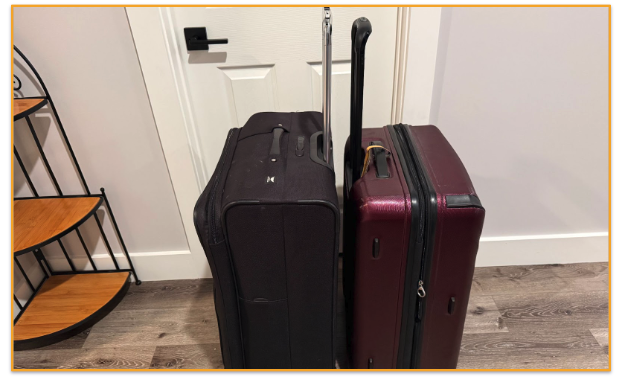
Hard-shell suitcases offer more variety in color and finish. You’ll find everything from matte neutrals to bright colors, which makes them easier to identify at baggage claim. Some brands have also turned hard-shell luggage into a design statement, especially with aluminum models.
Soft-sided luggage tends to be more understated. Most options come in black, navy, or gray, which looks professional but can make bags harder to distinguish in a crowded baggage claim.
While style might seem secondary, visibility is a practical consideration. A suitcase that stands out is easier to spot quickly, which can save time and reduce the risk of someone else grabbing your bag by mistake.
Handles, Wheels, and Zippers: What Actually Affects Day-To-Day Use?
Regardless of shell type, these are the components you’ll notice on every trip. A suitcase can have great materials, but if the handle, wheels, or zippers are poorly made, it will still feel frustrating to use.
- Handle: The telescoping handle should extend smoothly and lock firmly in place without wobbling. Lower-quality handles tend to loosen over time, which makes the suitcase harder to control, especially when moving quickly through an airport.
- Wheels: Wheels have the biggest impact on day-to-day use. Spinner wheels (four-wheel designs) let you roll the suitcase beside you in any direction, which is easier in airports and reduces strain. Two-wheel designs are more durable and handle rough surfaces like cobblestones or uneven pavement better.
- Zippers (or Latches): Zippers are the most common failure point, especially on soft-sided luggage. Lower-quality ones can snag or separate, while higher-end options last longer but still wear out eventually. Some hard-shell suitcases use latch closures instead, which removes that failure point but usually comes at a higher price.
Extra Features: Which Ones Are Actually Useful?
Many suitcases include extra features, but only a few make a meaningful difference when you’re traveling.
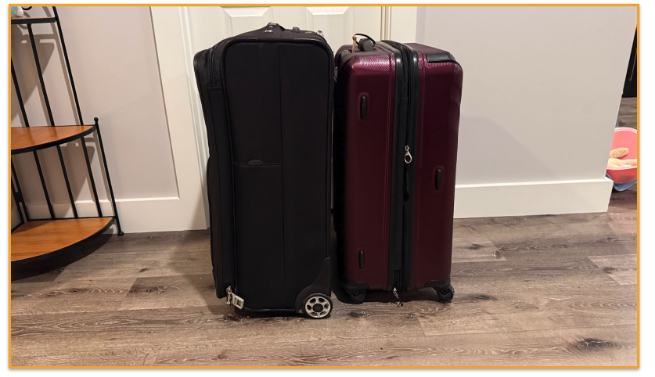
- TSA-Approved Locks. Allow airport security to open your bag without damaging it. Hard-shell suitcases usually have integrated locks, which feel more secure, while soft-sided bags rely on external padlocks attached to zipper pulls.
- Expansion Zippers. One of the most useful features on soft-sided luggage. They add extra space when needed, which can help you avoid checking a second bag on the way home.
- Internal Organization (Straps, Dividers, Compartments). Available on both types and helpful for keeping items in place. The usefulness depends more on the layout than on whether the suitcase is hard or soft.
- Luggage Tags. Simple but essential. Built-in or external tags make it easier to identify your bag and reduce mix-ups at baggage claim.
- USB Ports and Battery Compartments. Often found on hard-shell models. Convenient in theory, but they add weight, introduce more failure points, and can cause issues with airline battery rules.
What To Avoid: Features that add complexity without solving a real travel problem, especially built-in batteries, tend to create more hassle than benefit.
Hard vs Soft Suitcases: Pros and Cons
Hard-Shell Suitcases
Soft-Sided Suitcases
Which One Should You Choose?
The easiest way to decide isn’t by comparing features – it’s by thinking about how you actually travel. Trip length plays a big role here, so you can learn more about large suitcases if you need maximum capacity or explore mini suitcases for short, lighter trips.
Choose a Hard-Shell Suitcase if Protection Is Your Priority
A hard-shell makes more sense when your bag is likely to take a beating or carry fragile items.
- You often pack electronics, bottles, or breakable souvenirs
- You check your luggage regularly
- You want your belongings protected from pressure and rough handling
- You prefer a structured interior that keeps everything in place
This is the safer choice if your suitcase spends a lot of time in cargo holds rather than with you.
Choose a Soft-Sided Suitcase if Flexibility and Convenience Matter More
Soft-sided luggage is better suited for travelers who prioritize access and adaptability.
- You travel with a carry-on and need to fit into tight overhead spaces
- You want quick access to essentials like documents or chargers
- Your trip length varies and you need flexible capacity
- You want to keep luggage weight as low as possible
This is the more practical option if you’re constantly moving through airports, hotels, and different environments. If keeping weight down is a priority, it’s also worth taking a look at lightweight suitcases to see how much difference it can make.
A Simple Way To Think About It
- Frequent travelers tend to prefer soft-sided luggage because it’s lighter, easier to live out of, and more adaptable
- Occasional travelers who check bags often benefit more from hard-shell luggage, since protection matters more than flexibility