
 Ice Makers
 Chairs
 Kettles
 Projectors
 Air Purifiers
 Dash Cams
 Headphones
 Smartwatches
 Blenders
 Humidifiers


We’re long past the days when you’d walk into a shop, ask for a projector, and choose from a small shelf of options based mostly on price. Buying one now means you need a basic idea of what you’re after. Manufacturers promote their tech well, but if someone asks whether you want DLP, LCD, LCoS, laser or LED and none of it makes sense, the choice gets quickly complicated. And that’s only a few of the terms you’ll run into.
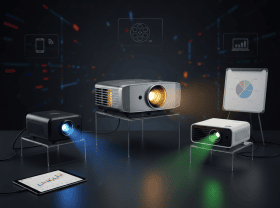
Projectors don’t work like phones where you start with the operating system and sort everything from there. They’re sold based on core tech, light sources and different shapes or sizes, and knowing what each of these means helps you avoid costly mistakes. So, let’s demystify the different types of projectors.
Projector Types by Display Technologies
Projectors fall into three main categories based on how they create images on screen. DLP, LCD, and LCoS each use different methods to produce color and motion, and these differences affect picture quality, price, and where the projector works best.
DLP (Digital Light Processing)
DLP projectors use tiny mirrors on a chip to reflect light toward the screen. Each mirror represents one pixel and tilts thousands of times per second to create the image you see. Most consumer projectors use single-chip DLP, where one chip handles all colors through a spinning color wheel, which keeps the projector small, light, and affordable.
Single-chip DLP produces sharp images with defined edges and fast response times under 16ms. You get good contrast in dark scenes, though some viewers see brief rainbow flashes during fast motion. These projectors typically cost $400 to $2,000 and work well for gaming and portable setups where weight and response time are priorities.
High-end models use three separate chips, one each for red, green, and blue. This removes the color wheel and eliminates rainbow artifacts completely, though you’ll pay $5,000 to $50,000+ for this technology. Commercial cinemas and professional installations use 3-chip DLP, while home users rarely need it.
LCD (Liquid Crystal Display)
LCD projectors split white light through three separate LCD panels, one for red, green, and blue, before combining the colors at the screen. This produces rich, saturated colors without any rainbow effect and creates smooth color gradients that look natural in movies and TV shows.
The tradeoff comes in contrast performance. LCD projectors show lower contrast compared to DLP, and motion looks slightly softer in fast scenes. Response time is around 20ms to 30ms, which works fine for movies and stays playable for most gaming titles. You’ll spend $500 to $3,000 for LCD projectors depending on brightness and resolution.
LCoS (Liquid Crystal on Silicon)
LCoS combines LCD and DLP concepts using liquid crystals on a reflective silicon surface. Sony calls their version SXRD, while JVC uses D-ILA, but the underlying technology stays the same across brands.
These projectors produce extremely smooth images with no visible pixel structure, excellent contrast ratios, and deep blacks. Color accuracy reaches reference levels in properly calibrated units, and 4K content shows fine detail that other technologies struggle to match. Response time ranges from 20ms to 40ms depending on the model.
The downsides are size and price. LCoS projectors weigh more and cost $2,500 to $10,000+, making them a choice for dedicated home theaters rather than casual viewing or portable setups.
Projector Types by Light Source Types
You can also categorize projectors by their light source, which determines brightness, lifespan, color accuracy, and maintenance costs. Traditional lamp, LED, laser, and hybrid systems each have distinct characteristics that affect both upfront price and long-term expenses.
Traditional Lamp
Metal halide or UHP lamps have powered projectors for decades. They produce intense white light that passes through color filters or panels, delivering 1,500 to 3,500 lumens depending on the model. Color performance ranges from good to very good, and these lamps cost less upfront than other light source types.
The problem shows up in lifespan. Traditional lamps last 2,000 to 5,000 hours before needing replacement, and replacement bulbs cost $200 to $400. Over 10 years of regular use, expect to spend $600 to $1,200 on replacement bulbs. So, factor this into your budget when comparing against laser models, since the savings upfront often disappear over time.
LED
LED light sources use red, green, and blue LEDs to create the image without any color wheel or white light filtering. This produces very good color performance and eliminates maintenance costs since LED modules last the life of the projector, typically 20,000 to 30,000 hours.
Brightness output is lower at 500 to 2,000 lumens, which limits LED projectors to dark or moderately lit rooms. Daytime viewing needs careful ambient light control, and you won’t get the brightness punch that lamp or laser models deliver. These projectors work well for portable setups and casual viewing where maintenance-free operation outweighs brightness concerns.
Laser
Laser phosphor systems use a blue laser to excite a phosphor wheel that creates white light. Some models add red and green lasers for wider color gamut, which produces more saturated colors that look closer to theatrical presentation.
You get 2,000 to 6,000 lumens from laser projectors along with 20,000 to 30,000 hour lifespans. Color performance reaches excellent levels, and there’s no maintenance cost since the laser modules don’t need replacement. The catch is upfront price, which is about $1,500 to $6,000 and sometimes more for premium models. The higher initial cost offsets maintenance expenses over time, and you break even around year four or five compared to lamp-based models.
Hybrid Laser-LED
Some portable and mid-range models combine LED and laser technology to balance brightness, color, and cost. You get 1,500 to 3,000 lumens with 20,000+ hour lifespans and very good to excellent color performance. These projectors typically cost $800 to $2,500 and show up in portable and outdoor models where brightness is important but buyers want maintenance-free operation.
Throw Distance Categories
Projectors are also classified by throw distance, which describes how far the projector sits from the screen to create a specific image size. Standard throw, short throw, and ultra short throw options each determine where you place the projector and whether it fits your room layout.
Standard Throw
Standard throw projectors need 8 to 15 feet from the lens to create a 100-inch image. The exact distance depends on the throw ratio, which you’ll find in the specs.
Throw ratio calculation works like this: Distance ÷ Screen Width = Throw Ratio.
Therefore, a projector with a 1.5:1 throw ratio needs 12.5 feet to project a 100-inch image that’s 87 inches wide.
These projectors cost $400 to $3,000 and work best ceiling-mounted in dedicated home theaters or living rooms with enough space behind the seating area. You’ll need to run cables through walls or conduit for clean installation, and professional mounting typically costs $300 to $600 if you’re not comfortable doing it yourself.
Short Throw
Short throw models cut the distance to 4 to 8 feet for a 100-inch image with throw ratios ranging from 0.5:1 to 1:1. You mount these closer to the screen, which reduces shadows when people walk past and works in smaller rooms where standard throw projectors won’t fit.
The closer placement means less ceiling height required, and you can sometimes mount these short throw projectors on shelves instead of ceilings. The price range is about $600 to $2,500 depending on resolution and light source type.
Ultra Short Throw (UST)
UST projectors sit inches from the wall or screen and project upward. They create 100-inch images from 6 to 24 inches away with throw ratios under 0.4:1, and this changes how you set up the viewing space entirely.
These projectors rest on TV stands or low cabinets directly below the screen, so there’s no ceiling mounting required. This makes installation easier and gives you furniture-like setup instead of the permanent mounting that standard throw models need. Price range sits at $1,500 to $6,000, though you’re paying extra for the convenience and specialized optics.
Form Factor and Specialized Types
Besides display technology and light source, projectors also come in different form factors designed for specific use cases. Home theater, portable, mini, 4K, and outdoor models each prioritize different features based on how and where you’ll use them.
Home Theater Projectors
Home theater projectors are built for permanent installation in dedicated theater rooms or living rooms. These projectors prioritize picture quality over portability and include features that serious enthusiasts need for reference-grade viewing.
Key characteristics:
- Weight: 10 to 25 pounds
- Advanced color calibration controls
- Lens shift for flexible placement
- Extensive connectivity options
- Price: $800 to $10,000+ depending on display technology, light source, and resolution
Expect to ceiling mount these units and run cables through walls or conduit for clean installation.
Portable Projectors
Portable projectors are designed for occasional moves between rooms or locations. These projectors balance image quality with lighter weight and simpler setup for users who need flexibility.
Key characteristics:
- Weight: 5 to 10 pounds
- Built-in batteries on some models
- Basic connectivity options
- Moderate brightness for various environments
- Price: $400 to $2,000
These work well for backyard movie nights, presentations, or moving between spaces without permanent installation.
Mini/Pocket Projectors
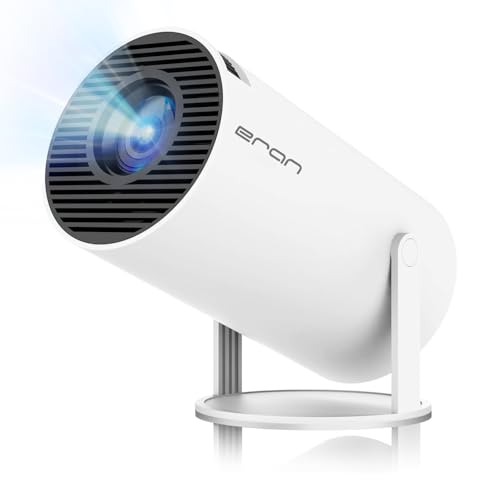
Mini and pocket projectors are ultra-compact models that fit in bags or large pockets. These models sacrifice brightness and features for maximum portability.
Key characteristics:
- Weight: 1 to 3 pounds
- Battery power included
- Wireless connectivity
- Limited brightness: 300 to 800 lumens
- Price: $200 to $800
These work for casual viewing in very dark rooms or small group presentations where you need something small enough to throw in a backpack. Don’t expect home theater performance from these compact units.
4K Projectors
4K projectors are a resolution tier rather than a form factor. These projectors display 3840 x 2160 pixels for sharp detail on large screens and exist across all form factors including home theater, portable, and UST configurations.
Key characteristics:
- Resolution: 3840 x 2160 pixels (true 4K)
- Available in all form factors
- Native 4K or pixel-shifting technology
- Price: $1,000 to $10,000+ depending on technology
True 4K uses native 3840 x 2160 panels, while some budget models use pixel shifting to simulate 4K from lower-resolution chips. The pixel-shifted versions cost less but don’t deliver the same clarity as native 4K, especially with fine text or detailed patterns.
Outdoor Projectors
Outdoor projectors are high-brightness models designed for daytime or ambient light viewing. These models often include weatherproof cases and rugged construction to handle outdoor conditions.
Key characteristics:
- Brightness: 3,000 to 6,000 lumens
- Weatherproof cases on some models
- Rugged construction
- Price: $1,200 to $4,000
You need brightness above 3,500 lumens for viewing after sunset, while daytime viewing needs 5,000+ lumens to compete with ambient light.
Matching Projector Types to Your Needs
Now that you understand the different projector categories, here’s how to match technology to your primary use case. Different scenarios call for different combinations of display technology, light source, and form factor, and choosing the right mix saves you money while getting the performance you need.
Conclusion
Display technology shapes how your images look, light sources determine what you’ll spend on maintenance, and throw distance decides whether a projector even fits your room. These are important details and they add up to whether you love or regret your purchase.
Start with your space and how you’ll use the projector most often, then work backward to find the right combination of features. The technology exists to match almost any scenario, but only if you know what you’re looking for.
![[Netflix Officially & Dolby Audio] Smart Projector with WiFi6 and Bluetooth5.3, Electric Focus & Auto Keystone 4K Support, High Brightness Movie Projectors, Native 1080P Proyector Built-in Apps](https://m.media-amazon.com/images/I/51Ce3XUj8CL._SL500_.jpg)



![[2000 ANSI/ Official-NetfIix/360°Stand] Outdoor Projector with WiFi and Bluetooth, Auto Focus, Auto Keystone 4K Projector Native 1080P Support 36W DoIby Audio Smart Proyector](https://m.media-amazon.com/images/I/41eDNL3duCL._SL500_.jpg)


