
 Ice Makers
 Chairs
 Kettles
 Projectors
 Air Purifiers
 Dash Cams
 Headphones
 Smartwatches
 Blenders
 Humidifiers
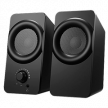

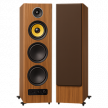
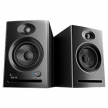

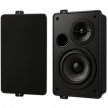


Buying loudspeakers is rarely about finding “the best” model. It’s about finding the speakers that work best in your room, with your equipment, and for the way you listen.
This guide explains what loudspeaker specs actually mean and how to use them when comparing speakers. You’ll learn how frequency response affects bass and clarity, how sensitivity and impedance determine amplifier compatibility, which speaker types fit different spaces, and how placement changes what you hear.
By the end, you should be able to narrow your options confidently instead of guessing based on brand names or marketing claims.
How to Choose the Right Speakers (Quick Answer)
If you want the short version before diving into details, start here:
- Pick the speaker type that fits your room
- Small room or desk: bookshelf or compact powered speakers
- Medium to large room: bookshelf + subwoofer or floorstanding speakers
- Clean install or limited space: in-wall speakers
- Outdoor use: sealed, weather-rated speakers only
- Check compatibility with your amplifier (if passive)
- 6–8Ω impedance and 84–90 dB sensitivity are the easiest matches
- 4Ω or low-sensitivity speakers need a capable amp
- Use frequency response to decide if you need a subwoofer
- Around 50–60Hz: full-sounding music
- Below 40Hz: deeper bass, often for movies or bass-heavy genres
- Below 30Hz: usually requires a subwoofer
Once those three pieces line up, the rest of the specs help you fine-tune the choice.
Speaker Specs Explained (And How They Affect Your Choice)
Loudspeaker specs can look technical, but they mainly answer a few practical questions:
- Will these speakers sound full, or thin?
- Will they play loud easily, or need a stronger amp?
- Will they sound balanced, or emphasize bass/treble too much?
- Will they work in my room, or fight it?
Frequency Response (What It Is, What It Tells You, and How to Use It)
Frequency response describes the range of sound a loudspeaker can reproduce, from the lowest bass frequencies to the highest treble. It’s typically expressed as a range, such as 20Hz–20kHz, which roughly matches the limits of human hearing.
In real-world buying terms, frequency response helps you understand how full, deep, or lightweight a speaker will sound, especially in the bass.
What the numbers mean:
- 20Hz represents extremely deep bass, more felt than heard, like the rumble in a cinematic explosion.
- Around 60Hz is where you hear the weight of a kick drum or bass guitar.
- 10kHz–20kHz covers treble details like cymbal shimmer, string harmonics, and vocal air.
Because producing low frequencies requires moving a lot of air, smaller speakers usually cannot reach as low as larger ones. Bookshelf speakers often roll off below 60Hz, while larger floorstanding speakers can extend lower thanks to bigger cabinets and drivers. High frequencies are easier to reproduce, so most speakers have no trouble reaching the upper end of the range.
A speaker also needs to reproduce its frequency range smoothly and evenly. If bass is much louder than midrange, voices can sound muddy. If treble is exaggerated, cymbals and “S” sounds can become piercing. Balanced frequency response is what allows dialogue, music, and soundtracks to sound natural rather than lopsided.
Sensitivity (How Loud the Speaker Gets for the Same Power)
Speaker sensitivity measures how efficiently a loudspeaker converts amplifier power into sound. It’s usually expressed in decibels (dB) at one meter with one watt of power.
How this helps you choose:
Sensitivity tells you how loud a speaker will get with the same amplifier.
For example, a speaker rated at 92dB will sound noticeably louder than one rated at 86dB when both receive the same power. To reach the same volume, the lower-sensitivity speaker needs significantly more power.
Impedance (What It Means for Your Amplifier)
Impedance is the electrical resistance a loudspeaker presents to an amplifier. It’s measured in ohms (Ω) and indicates how hard the amplifier has to work to drive the speaker.
Impedance isn’t fixed. It changes with frequency and listening conditions, which is why manufacturers list a nominal impedance as an average value rather than a constant one.
For example, a speaker rated at 8Ω nominal can still dip to 4Ω or lower during bass-heavy passages, pulling more current from the amplifier than the spec alone might suggest.
Because of this, impedance is one of the most important specs to match correctly.
- Lower-impedance speakers (4Ω or below) draw more current. They can play louder, but stress weaker amplifiers
- 8Ω impedance speakers are easier to drive and safer for most systems
This matters most with compact AV receivers or older integrated amps, which may overheat or shut down if paired with low-impedance speakers they’re not designed to handle.
Pairing 4Ω speakers with an amplifier that isn’t designed to handle them, such as some compact receivers or older integrated amps, can lead to overheating, distortion, or shutdown, especially at higher volumes.
Bottom line: if your amplifier’s capabilities aren’t clearly stated, sticking with 8Ω speakers is the safest way to avoid problems.
Power Handling (How to Match Speakers and Amps Safely)
Power handling tells you how much amplifier power a speaker can handle without damage. It’s measured in watts and usually listed as RMS (continuous) and peak power.
RMS is the number that matters for buying. It reflects how much power the speaker can handle over time during normal listening. For example, a speaker rated at 100W RMS can safely handle that level during everyday music or movie playback.
Peak power is short-term only. It shows how well a speaker handles brief volume spikes, like orchestral crescendos or action-movie explosions. A speaker rated at 300W peak can tolerate those moments, but it should not be driven at that level continuously.
Tips:
- Match your amplifier’s output to the speaker’s RMS rating, not the peak number
- Slightly more amplifier power is safer than too little
- Distortion from an underpowered amp is a common cause of speaker damage
Example:
A 100W RMS speaker paired with a 50W amp may distort at high volumes. Pairing it with a 125–150W amp gives cleaner headroom, as long as you don’t push it excessively.
Bottom line: Ignore flashy peak wattage claims and focus on RMS power and clean amplification for safe, long-term performance.
Driver Technology (What It Affects and When It Matters)
Most loudspeakers use dynamic (electrodynamic) drivers because they’re efficient, affordable, and available in many sizes. A cone-shaped diaphragm attached to a voice coil moves within a magnetic field to produce sound, making this design flexible enough for everything from small Bluetooth speakers to large floorstanders.
Dynamic drivers in practice:
- Used in most home stereo speakers, car speakers, and portable models
- Larger drivers (e.g., 6.5-inch woofers) move more air and handle bass
- Smaller dynamic drivers cover midrange sounds like vocals and guitars
- High frequencies are handled by tweeters, usually dome-shaped, which reproduce cymbals, string harmonics, and vocal detail cleanly
Planar magnetic drivers are more specialized.
- Use an ultra-thin diaphragm with conductive traces suspended in a magnetic field
- Known for detailed, accurate sound reproduction
- Less efficient than dynamic drivers, requiring more amplifier power
- Common in high-end headphones and niche speaker designs, especially for classical, jazz, and acoustic music
Electrostatic drivers are the most niche option.
- Use a charged diaphragm positioned between electrically charged plates
- Deliver extremely low distortion and fast transient response
- Require large cabinets, special amplifiers, and careful room setup
- Typically found only in dedicated listening rooms
Buying takeaway:
- Dynamic drivers offer the best balance of performance, efficiency, and value for most buyers
- Planar magnetic and electrostatic designs can sound exceptional, but only make sense if you’re prepared for the cost, space, and amplification demands
- Overall speaker design matters far more than the driver technology alone
Crossover Frequency (Why It Matters When Choosing Speakers)
A crossover is the system inside a speaker that splits sound into different frequency ranges and sends them to the right driver.
- Low sounds (bass) → woofer
- Midrange (vocals, guitars) → woofer or dedicated mid driver
- High sounds (cymbals, detail) → tweeter
Without a crossover, a small tweeter could be forced to handle deep bass and distort or even get damaged.
The crossover affects clarity, vocal realism, and overall balance. When crossover design is done well:
- Vocals sound clean and centered
- Instruments don’t blur together
- Bass and treble don’t overpower dialogue
When it’s poorly implemented:
- Voices can sound thin or muddy
- Treble may feel disconnected
- The speaker can sound uneven or strained
Two-Way Speakers
- 1 woofer + 1 tweeter
- Typical crossover: 1kHz–3kHz
- Woofer handles bass and most midrange
- Tweeter handles high frequencies
Best for:
Small to medium rooms, bookshelf speakers, simpler setups
Real-world example:
Vocals and guitars come mostly from the woofer, while cymbals and hi-hats come from the tweeter. Clean and effective when well designed.
Three-Way Speakers
- Woofer + dedicated midrange + tweeter
- Typical crossover points: ~300Hz and ~3kHz
- Each driver handles a narrower range
Best for:
Larger rooms, higher volume listening, more complex music
Real-world example:
Bass stays in the woofer, vocals stay in a dedicated mid driver, and treble stays in the tweeter. This often results in clearer vocals and better separation in orchestral or layered music.
Subwoofer + Satellites
- Sub handles deep bass (typically below 80–120Hz)
- Main speakers focus on mids and highs
Best for:
Home theater, EDM, hip-hop, or anyone who wants physical bass impact
Buying advantage:
Relieves small speakers from trying to produce deep bass, improving clarity.
What Should You Choose?
- Small room or desk setup? Two-way is usually enough.
- Medium/large room and louder listening? Consider three-way.
- Want real bass impact? Add a subwoofer instead of upsizing mains.
Bi-Wiring and Bi-Amping (Do You Need It?)
Most buyers don’t need to worry about this, but if you see speakers with two pairs of binding posts, this is what it means.
What Is Bi-Wiring?
Bi-wiring means running two sets of speaker cables from one amplifier to a single speaker.
- One cable feeds the woofer (bass)
- One cable feeds the tweeter (high frequencies)
The idea is to separate high and low-frequency signals so they don’t share the same cable path.
Does it improve sound?
Some listeners report:
- Slightly clearer treble
- Tighter bass
- Better instrument separation
In reality, improvements are usually subtle and depend heavily on the system.
Buying guidance
- If your speakers include metal jumper plates between the terminals, they’re designed to work perfectly with one cable
- Bi-wiring is optional, not required
- It’s rarely the best upgrade for beginners
What Is Bi-Amping?
Bi-amping means using two amplifiers to power one speaker.
- One amp drives the woofer
- One amp drives the tweeter (or mid/tweeter section)
This gives each driver its own dedicated power source.
Why some people use it:
- More available power
- Better dynamic control
- Potentially cleaner sound at higher volumes
Real-world example
In a larger room, one amplifier might handle bass duties for stronger low-end control, while another focuses on mids and highs for clarity and detail.
Should You Do It?
- Small to medium room? Not necessary
- Entry-level or mid-range system? Spend money on better speakers instead
- High-end system or large listening space? Bi-amping can make sense
Bottom Line:
Bi-wiring is optional and often subtle.
Bi-amping can offer real benefits — but only if the rest of your system justifies it.
For most buyers, your budget is better spent on better speakers, proper placement, or a subwoofer before considering either of these upgrades.
Sealed vs Ported Cabinets (Which Is Better for Your Room?)
Speakers either have a sealed cabinet or a ported cabinet (a small opening or vent that helps reinforce bass).
The difference mainly affects bass output, bass character, and placement flexibility.
Ported Speakers
Ported cabinets use a vent (often on the back) to boost low-frequency output by using the air movement inside the cabinet.
What this means in practice:
- More bass from a smaller speaker
- Fuller sound at lower volumes
- Can sound bigger than the cabinet size suggests
Placement matters
Rear-ported speakers are sensitive to wall distance.
- Closer to wall → more bass
- Further from wall → leaner bass
For example, placing a rear-ported bookshelf speaker a few inches from the wall can noticeably increase bass impact in a small room.
Trade-offs
- Can sound looser or less tight
- Poor port design can introduce noise
- More sensitive to room positioning
Best for:
Small to medium rooms where you want more bass without adding a subwoofer.
Sealed Speakers
Sealed cabinets do not use a port. All bass comes directly from the driver.
What this means in practice:
- Tighter, more controlled bass
- More accurate rhythm and timing
- Less affected by wall placement
For example, sealed speakers tend to handle fast bass lines or punchy kick drums with more precision than similarly sized ported speakers.
Trade-offs
- Usually less bass output for the same cabinet size
- May require more amplifier power to reach similar volume
Best for:
Rooms where placement is limited, or listeners who prioritize accuracy over maximum bass weight.
Quick Comparison
What Should You Choose?
- Small room, want fuller sound? Ported
- Tight space or close to walls? Sealed (or front-ported)
- Care about rhythmic precision? Sealed
- Care about maximum bass impact for size? Ported
Types of Speakers (Which One Fits Your Setup?)
All loudspeakers work on the same basic principles, but they’re built for very different rooms, layouts, and listening priorities. Choosing the right type often matters more than chasing small spec differences.
Below are the most common types and what they’re best suited for (or, read my full guide on speaker types).
Passive Loudspeakers
Passive speakers do not contain their own amplification. They must be connected to an external amplifier using speaker cable in order to function.
All the specifications discussed earlier (frequency response, sensitivity, impedance, and power handling) apply directly here. With passive speakers, matching them properly to your amplifier is part of the buying decision.
Best for:
- Traditional hi-fi systems
- Home theater receivers
- Buyers who want flexibility to upgrade components separately
Consider this if:
You already own an amplifier or want more control over system pairing and future upgrades.
Active/Powered Loudspeakers
Active (or powered) speakers have amplification built in. In many cases, they also include wired and wireless inputs, meaning you can connect sources directly without a separate amplifier.
Because the amplification is built into the speaker, sensitivity, impedance, and power matching are handled by the manufacturer. You don’t need to calculate compatibility in the same way.
Most powered speakers require mains power, though some use internal batteries. In some models, one speaker houses all electronics and connects to the second speaker.
Active vs Powered: What’s the difference?
- Powered speakers amplify the signal first, then split frequencies using a passive crossover
- Active speakers split the signal first, then use separate amplifiers for each driver.
Active designs are typically more precise and often more expensive, but both approaches can sound excellent when implemented well.
Best for:
- Simple setups
- Desk systems
- Streaming-first listening
- Minimalist spaces
Bookshelf (Standmount) Loudspeakers
Bookshelf speakers are compact and designed for shelves or dedicated stands. Their smaller cabinets mean smaller drivers, which limits how much air they can move.
That usually translates to:
- Less deep bass than larger speakers
- A smaller overall soundstage
However, many well-designed bookshelf speakers can reach around 50–60Hz, which is enough for satisfying music playback in small to medium rooms.
Best for:
- Apartments and smaller rooms
- Desk setups
- Paired with a subwoofer for deeper bass
Floorstanding Loudspeakers
Floorstanding speakers use larger cabinets and often multiple drivers. This allows for greater bass extension and larger-scale sound.
With more internal volume and driver surface area, they can:
- Move more air
- Fill larger rooms
- Deliver deeper bass without a subwoofer
They also cost more due to materials, cabinet design, and internal bracing. On the plus side, you won’t need separate stands.
Best for:
- Medium to large rooms
- Higher listening volumes
- Listeners who want fuller bass without adding a sub
In-Wall (Architectural) Loudspeakers
In-wall speakers are designed to sit flush inside a wall or ceiling cavity. Only the grille is visible, making them ideal for clean installations.
Most performance considerations from bookshelf and floorstanding speakers still apply — frequency response, crossover design, and driver quality still matter.
Additional factors to consider:
- IP rating for dust and moisture resistance
- Backboxes, which can improve sound consistency and protection
- Pivoting tweeters, useful when ideal speaker placement isn’t possible
Best for:
- Dedicated home theaters
- Multi-room audio
- Clean, minimal interiors
Outdoor speakers
Outdoor speakers must be weather-resistant and fully sealed. An IP rating is essential here, as it indicates protection against dust and water.
Many outdoor speakers are powered or battery-operated. Materials also matter — UV-resistant plastics, aluminum, and stainless steel hold up best outdoors.
Because outdoor spaces lack walls to reinforce bass, deep low-frequency impact is harder to achieve. Cabinet sealing is critical — an outdoor speaker that isn’t tightly sealed isn’t suitable.
Best for:
- Patios and decks
- Pool areas
- Garden installations
Tip: Check out my guide on how to clean speakers to keep outdoor speakers performing.
Loudspeaker Evaluation: What to Listen For Before Buying
Sound is personal. Two speakers can measure similarly on paper but feel very different in a room. The goal when auditioning speakers is not to find the most “impressive” sound at first listen, but the one that stays clear, balanced, and natural over time.
Here’s what to focus on — and what each trait tells you about the speaker.
Attack (How Fast Sounds Start)
Attack is how quickly a sound begins.
Fast attack: drum hits, hand claps
Slow attack: softly pressed piano notes, brushed drums
What to listen for:
- Do drum hits sound tight and immediate?
- Does bass feel punchy or slightly slow?
- Do rhythms feel clean and controlled?
If bass sounds bloated or sluggish, the speaker may struggle with low-frequency control. If attack is sharp and precise, the speaker will feel more rhythmic and engaging.
Buying takeaway:
If you listen to electronic music, rock, funk, or anything rhythm-heavy, strong bass attack matters more.
Detail Retrieval (Can You Hear the Small Stuff?)
Detail isn’t just about brightness. It’s about whether subtle elements in a recording are audible and placed naturally.
Test it with:
- A vocal track you know well
- Acoustic instruments
- Quiet background elements
Listen for:
- Breath in vocals
- Fingers on guitar strings
- Room ambience in live recordings
A good speaker reveals detail without sounding harsh or exaggerated.
Buying takeaway:
If you hear more information but feel fatigued after a few minutes, the speaker may be boosting treble rather than resolving detail cleanly.
Dynamics (Quiet vs. Loud Control)
Dynamics describe the difference between soft and loud moments.
A symphony can move from a single triangle strike to a full orchestral swell. A good speaker handles that shift without sounding compressed or strained.
What to listen for:
- Do quiet parts remain clear?
- Do loud parts stay controlled?
- Does the speaker feel effortless at higher volume?
Buying takeaway:
If you listen loudly or enjoy cinematic soundtracks, dynamic capability becomes more important.
Harmonics (Why Some Voices and Instruments Sound “Real”)
Harmonics are the extra frequencies that ride on top of a note. They’re what make a violin sound like a violin (not a sine wave), and what gives voices texture, body, and “air.”
What to listen for
Use vocals and acoustic instruments first. You’re listening for tone and texture, not volume.
- Voices: do they sound human and full, or thin and papery?
- Strings and piano: do they have richness and complexity, or feel flat?
- Cymbals: do they shimmer naturally, or turn into a splashy hiss?
Real-world example
A speaker with good harmonic reproduction makes a singer’s voice feel layered and lifelike. You can hear the chest tone and the subtle air on top, without the sound becoming sharp.
What it means for buying
- If harmonics feel missing, speakers may sound clean but emotionally “flat.”
- If harmonics feel over-emphasized, detail can become fatiguing and sibilant (“S” sounds pop too much).
- The sweet spot is rich detail without glare.
Buying takeaway:
If you listen to vocal-heavy music, jazz, classical, acoustic, or podcasts, harmonic realism matters a lot. It’s one of the easiest ways to tell “pleasant for 5 minutes” from “great for hours.”
Integration (Do the Drivers Sound Unified?)
Most speakers use at least two drivers. Good integration means you don’t hear them separately.
Warning signs of poor integration:
- Vocals sound disconnected from instruments
- Treble feels like it’s coming from a different “spot”
- The sound changes character as notes move up in pitch
When integration is smooth, everything feels cohesive and natural.
Buying takeaway:
This is especially important in multi-driver floorstanders and three-way designs.
Soundstaging (Can You “See” the Music?)
Soundstaging is about spatial placement.
In a good stereo setup:
- Vocals should appear centered
- Instruments should occupy distinct positions
- The sound shouldn’t feel glued to the speakers
Important:
Speaker placement affects this as much as speaker design. Even great speakers sound flat if positioned poorly.
Buying takeaway:
If imaging matters to you, prioritize careful setup and symmetry.
Tonality (Overall Balance)
Tonality refers to the overall balance of bass, midrange, and treble.
- Too much bass → muddy
- Too much treble → sharp or fatiguing
- Too little energy → dull or lifeless
The best tonal balance depends on your taste, but it should never feel extreme or tiring.
Buying takeaway:
Choose a speaker you can listen to for an hour without fatigue, not the one that sounds most dramatic in the first 30 seconds.
Your Room and How to Get the Best from Your Speakers
Your room has as much influence on sound as the speakers themselves. A well-matched speaker in the wrong room can underperform, while a modest speaker in a well-set-up space can surprise you.
Before buying, consider the space they’ll live in.
Match Speaker Size to Room Size
Start by measuring your room. Speaker size should match the amount of air the room contains.
If the room is small:
- Very large speakers can overload the space
- Bass reflections build up quickly
- The sound can feel boomy or confused
If the room is large:
- Small speakers may struggle to fill it
- Volume may feel strained
- Bass can sound thin at listening distance
Buying guidance:
- Small room → bookshelf speakers or compact floorstanders
- Medium room → bookshelf + sub or mid-size floorstanders
- Large room → larger floorstanders or multiple subs
The goal is balance. Too much speaker for the room is just as problematic as too little.
Speaker Placement and Boundaries
Speakers need breathing room. Placing them too close to walls increases bass and reflections.
Keep in mind:
- Rear-ported speakers are more sensitive to wall distance
- Corners amplify bass and can muddy sound
- Boxing speakers into shelves restricts performance
Unless a speaker is specifically designed for corner placement, avoid corners whenever possible.
Practical tip:
Start with speakers at least several inches from the rear wall and adjust from there.
Symmetry and Listening Position (Stereo Setup)
Symmetry improves imaging and soundstage.
Basic placement guidelines:
- Keep left and right speakers equally spaced
- Tweeters should sit near ear height
- Sit slightly further away than the distance between the speakers
- Angle (toe-in) the speakers slightly toward your listening position
A simple rule: imagine a line extending from each tweeter. Those lines should cross just in front of where you’re seated.
Avoid placing large reflective objects directly between the speakers if possible.
Home Cinema Setups
In surround sound systems, the same placement principles apply, but one speaker matters most: the center channel.
Most movie dialogue comes from the center speaker — often a large percentage of the soundtrack.
Priorities:
- Place the center speaker as close to the screen as possible
- Align it so voices appear to come from the actors’ mouths
- Toe-in front and rear speakers toward the listening area
Acoustic Environment
Rooms affect sound through reflection and absorption.
- Glass reflects sound strongly
- Bare walls increase brightness
- Soft furnishings absorb sound
You don’t need to redesign your home, but small adjustments can help.
Easy tests:
- Compare the sound with curtains open vs closed
- Notice changes when rugs or cushions are added or removed
- Listen for harshness (too reflective) or dullness (too absorbent)
Popular Loudspeaker Brands
Bowers & Wilkins
Known for: Premium design and detailed sound
Pros
- Clear, articulate midrange
- Strong build quality and finish
- Wide range from entry-level to high-end
- Good long-term brand support
Cons
- Premium pricing
- Some models lean bright in reflective rooms
- Certain speakers benefit from stronger amplification
Best for: Buyers who want refined, revealing sound and upscale aesthetics.
KEF
Known for: Excellent imaging and modern engineering
Pros
- Precise stereo imaging
- Balanced tonal presentation
- Compact models that perform above their size
- Distinctive Uni-Q driver design
Cons
- Bass depth may require a sub in larger rooms
- Higher-end models can be expensive
Best for: Listeners who prioritize clarity and soundstage.
Focal
Known for: Energetic, detailed presentation
Pros
- Strong dynamics
- High-resolution treble
- Premium materials and design
- Broad product range
Cons
- Some models can sound forward in bright spaces
- Upper-tier models carry premium pricing
Best for: Buyers who enjoy lively, dynamic sound and bold design.
ELAC
Known for: Strong performance at competitive prices
Pros
- Excellent value in mid-tier models
- Balanced sound signature
- Solid cabinet construction
- Good bass extension for size
Cons
- Styling is more understated
- Entry-level models benefit from careful placement
Best for: Value-focused buyers who want performance without luxury pricing.
Dynaudio
Known for: Smooth, controlled sound
Pros
- Natural midrange
- Refined, non-fatiguing treble
- Premium craftsmanship
- Strong reputation among serious listeners
Cons
- Often lower sensitivity (needs capable amplification)
- Higher price bracket
Best for: Listeners who want long-term listening comfort and are willing to invest in proper amplification.
JBL
Known for: Dynamic, high-output performance
Pros
- Strong bass impact
- High sensitivity in many models
- Good for larger rooms
- Wide pricing range
Cons
- Some models emphasize punch over refinement
- Design aesthetic may feel industrial
Best for: Home theater setups and energetic music genres.
Bose
Known for: Compact lifestyle systems
Pros
- Easy setup
- Space-saving designs
- Strong brand recognition
- Widely available
Cons
- Limited customization
- Not typically focused on traditional hi-fi performance
Best for: Buyers prioritizing convenience and minimalism.
Sonos
Known for: Wireless and multi-room ecosystems
Pros
- Seamless streaming integration
- Strong app ecosystem
- Clean, modern design
- Easy multi-room expansion
Cons
- Closed ecosystem
- Limited upgrade flexibility
- Less customization for advanced users
Best for: Streaming-first homes and multi-room audio setups
Common Buying Mistakes (And How to Avoid Them)
Even if you understand the specs, a few practical missteps can undermine a good purchase. Here’s what to watch for.
1. Ignoring System Balance
Your speakers and amplifier should be proportionate.
- A budget amplifier can bottleneck expensive speakers
- Premium amplification won’t shine through entry-level speakers
- The system should feel balanced in overall quality
Buying guidance:
If one component dramatically outclasses the other, you’re likely overspending in the wrong place.
2. Overspending (or Underspending) on Speaker Cable
If you’re buying passive speakers, don’t ignore cable quality — but don’t overspend either.
- Extremely cheap, thin cable can limit performance
Ultra-expensive cable rarely transforms a system
Practical rule:
Choose solid, properly gauged speaker cable appropriate for your room length. Prioritize speaker and amplifier quality first.
3. Buying Without Listening (If Possible)
Specs narrow options. Listening confirms them.
If you can audition speakers:
- Use the same music for each pair
- Listen in the same room if possible
- Use music you know well
If in-person demos aren’t possible, buy from a retailer with a fair return policy.
4. Judging Too Quickly at Home
New speakers may not sound their best immediately.
Driver surrounds can loosen slightly after a few hours of use. More importantly, your ears also adjust to a new sound signature.
Before deciding:
- Give them several listening sessions
- Experiment with placement
- Adjust distance from walls
Small positioning changes often matter more than you expect.
Common Questions About Speakers
Do more expensive speakers always sound better?
Should I upgrade my speakers or my amplifier first?
How long should good speakers last?
Are floorstanding speakers always better than bookshelf speakers?
Bookshelf speakers often perform exceptionally well in smaller rooms, especially when paired with a subwoofer, making them a more practical and balanced choice in many homes.