






















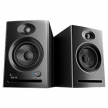
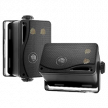
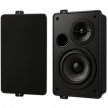


Active in-wall speakers offer clean aesthetics and space-saving sound — but they demand more planning than bookshelf or floorstanding models.
Once they’re installed, changes become expensive and inconvenient. You’re cutting drywall, routing power, and committing to placement. That means your decisions about power access, wall depth, networking, and long-term usability matter far more than cosmetic features.
This guide focuses on what makes in-wall speakers different — and what you must confirm before cutting into your wall.
If you’re still considering, check out my complete guide on choosing speakers.
Quick Answer: How Do You Choose Active In-Wall Speakers?
Choose active in-wall speakers based on wall depth, power access, and Wi-Fi coverage before anything else.
Confirm the cutout dimensions fit your stud spacing, ensure you have safe access to mains power (or understand the limitations of battery models), and verify strong network coverage if streaming over Wi-Fi.
Because installation is permanent, prioritize placement planning, adjustable tweeters, and subwoofer output for long-term flexibility.
Power Requirements: The Biggest Practical Challenge
Unlike passive in-wall speakers that only require a concealed speaker cable, active designs require actual power inside the wall cavity.
This is where complexity increases.
Battery-Powered Models
Some active in-wall speakers use rechargeable batteries. These are easier to install but come with trade-offs:
- Speakers may need to be removed for charging
- USB charging ports may need discreet access
- Repeated removal can stress drywall over time
They’re simpler but rarely elegant.
Mains-Powered Models
If the speaker runs on household mains power, you’ll likely need:
- A qualified electrician
- Code-compliant in-wall power routing
- Proper concealment of cabling
- Additional budget for installation
You cannot safely tap mains power inside a wall without professional work. Factor this cost into your overall budget before committing.
If simplicity is your priority, power planning should be your first decision, not your last.
Wi-Fi Practicalities: More Important Than Bluetooth
In bookshelf speakers, Bluetooth may be sufficient. In-wall systems often benefit more from Wi-Fi. Why? You don’t want your phone permanently tied up streaming to speakers installed in your walls.
Wi-Fi allows:
- Direct streaming from apps
- Network playback
- Multi-room integration
- Higher-quality audio than standard Bluetooth
However, signal strength becomes critical. If your router doesn’t adequately cover the room, you may need:
- A mesh Wi-Fi system
- A Wi-Fi extender
- Ethernet backhaul (if supported)
The Importance of Listening
With freestanding speakers, you can reposition them. With in-wall speakers, you can’t.
If possible, audition the speakers in a dealer setup that simulates in-wall placement (a cavity with rear void space). Wall cavities significantly affect bass response and tonal balance.
Once installed, reversing the decision means patching and repainting drywall. Listening first is strongly recommended.
Cutout Dimensions & Wall Space Requirements
In-wall speakers may look slim from the front, but the required cavity depth can be substantial.
Typical requirements:
- 6.5-inch woofer models: 3–4 inches minimum depth
- 8-inch or larger drivers: 5 inches or more
- Extra clearance for mounting brackets and cabling
Before purchase, confirm:
- Stud spacing (typically 16-24 inches on centre in North America)
- Obstructions such as plumbing or electrical wiring
- Insulation thickness
- Required back box (if included or recommended)
Cutout dimensions are not suggestions — they are structural constraints.
Frequency Response Expectations
Frequency response gives you an idea of how low and high the speaker can go. For most powered in-wall models, expect a low-frequency extension down to 40–50Hz for smaller designs. Larger models may reach closer to 30Hz, producing deeper and more impactful bass.
The high-frequency range should extend to at least 20kHz to capture the full treble spectrum. Keep in mind that these numbers indicate potential output under ideal conditions; room acoustics and placement will influence the perceived performance.
Amplification & Wattage Benchmarks
The built-in amplifiers of powered or active in-wall speakers vary in power output, measured in RMS (the continuous, average wattage a speaker can handle).
Typical RMS benchmarks:
- 30–50 watts per channel: small to medium rooms
- 70–100+ watts per channel: larger rooms or higher listening levels
Make sure the amplifier’s output matches your listening environment; overpowered speakers can stress the drivers, while underpowered models may struggle to fill the room evenly.
Connectivity & Input Options
Consider how you plan to connect your speakers. Most entry-level powered in-wall models offer Bluetooth, with the current standard being v5.4. Bluetooth codecs like aptX or aptX Lossless provide better audio fidelity than older codecs. Higher-end active speakers also include Wi-Fi, allowing you to stream from networked music services without tying up your phone.
Check for physical inputs if you want to connect a turntable, CD player, or TV via HDMI ARC. Ensuring the speaker supports the sources you actually use will save headaches later.
Tweeter & Driver Positioning Options
Because the speaker is fixed in drywall, adjustability becomes more important than with movable speakers.
Look for:
- Pivoting tweeters (10–15° adjustment minimum)
- Adjustable high-frequency level controls
Small directional changes can significantly improve clarity and stereo imaging.
Grilles & Long-Term Aesthetics
In-wall speakers are permanent visual elements.
Look for:
- Magnetic, flush-fit grilles
- Paintable finishes
- Clean edge trim
Avoid screw-on grilles with visible fasteners if aesthetics matter to you.