















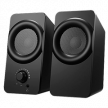



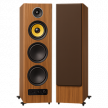
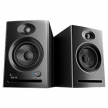


Passive bookshelf speakers are compact speakers that require an external amplifier to power them. They are popular because they offer flexibility, upgrade potential, and excellent sound quality without taking up as much space as floorstanding speakers.
But choosing the right pair involves more than picking a size that fits your shelf.
Room size, amplifier power, placement, and speaker specifications all affect how your system will actually sound. This guide explains what each specification means, how it affects performance, and how to match speakers to your room and equipment with confidence.
Quick Start: Is a Bookshelf Speaker Right for You?
Bookshelf speakers are ideal if you:
- Have a small to medium-sized room
- Listen at moderate volumes
- Value clarity and imaging over extreme bass
- Plan to build a flexible, upgradeable system
- Want speakers for a desk, bedroom, or apartment
They may not be ideal if you:
- Have a very large or open-concept space
- Want deep, room-shaking bass without adding a subwoofer
- Listen at consistently high volumes
If you’re unsure, check out my main guide on types of speakers.
Matching Bookshelf Speakers to Your Room
Room size determines how much air your speakers need to move. Bookshelf speakers are compact by design, so this matters more than with large floorstanders.
Under 150–200 sq. ft. (Bedroom, Office, Desk Setup)
- 5–6 inch woofers are usually ideal
- Sensitivity of 86–90 dB is sufficient
- A subwoofer is optional
In smaller rooms, oversized speakers can actually overwhelm the space.
200–300 sq. ft. (Average Living Room)
- 6–6.5 inch woofers perform better
- 88–91 dB sensitivity is a safe range
- A subwoofer noticeably improves fullness
This is the sweet spot for most bookshelf systems.
300+ sq. ft. or Open Spaces
- Larger standmount-style bookshelf speakers
- Sensitivity of 90 dB+
- A subwoofer is strongly recommended
If speakers are too small for the room, they’ll sound thin and strained at higher volumes.
Ceiling Height and Room Surfaces
High ceilings increase the volume of air to fill. If you have 10+ foot ceilings, lean toward larger drivers or higher sensitivity.
Hard surfaces (tile, glass, bare walls) reflect treble and can make bright speakers sound sharper. Soft furnishings (carpet, curtains, couches) absorb sound and can make a system feel warmer.
Room acoustics often influence sound more than small spec differences.
Placement: Bookshelf Speakers Need Space
Despite the name, most bookshelf speakers perform best when:
- The tweeter is at ear height when seated
- They are 6–12 inches away from the back wall (more for rear-ported designs)
- They are not tightly boxed in by shelves or cabinets
If you must place speakers on a shelf:
- Choose front-ported or sealed designs
- Use isolation pads to reduce vibration
If you can use stands:
- You’ll improve imaging and clarity
- You’ll reduce bass muddiness
- You’ll gain more precise stereo separation
Bookshelf speakers are particularly sensitive to placement. Small adjustments in distance and angle can noticeably improve soundstage and balance.
Nearfield vs. Room Listening
One of the strengths of bookshelf speakers is nearfield listening.
Desk or close-range listening (3–6 feet away):
- Smaller drivers work extremely well
- Bass remains controlled
- Imaging can be excellent
Couch-distance listening (8–12 feet away):
- Larger drivers or higher sensitivity help
- A subwoofer becomes more valuable
If you primarily listen at a desk, you don’t need large drivers designed to energize a whole room.
Understanding Bookshelf Speaker Specs: What Actually Affects Sound
Driver Size (Woofer Diameter)
The woofer is the larger driver that produces bass and midrange frequencies.
Most bookshelf speakers use 5–6.5 inch woofers.
- 5-inch drivers
- Compact cabinets
- Tight, controlled bass
- Best for small rooms or nearfield listening
- 6–6.5 inch drivers
- Fuller midbass
- Better room-filling sound
- More impact for music and movies
Larger drivers move more air. Moving more air creates more bass presence and overall scale. However, larger drivers require larger cabinets, which take up more space.
For beginners: If your room is average-sized and you want fuller sound without immediately adding a subwoofer, 6–6.5 inches is a safe choice.
Frequency Response (Hz Range)
Frequency response tells you how low and how high the speaker can reproduce sound.
It’s written like this: 45Hz–20kHz
- The first number (45Hz) shows bass extension
- The second number (20kHz) shows treble extension
Lower bass numbers mean deeper bass capability.
Examples:
- 65Hz–20kHz: Limited deep bass
- 45Hz–20kHz: Noticeably stronger low-end
- 38Hz–20kHz: Strong performance for a bookshelf speaker
Important: This does not mean the speaker produces strong bass at that exact number. It simply means that is roughly where output begins to roll off.
If you want powerful low-end for movies or electronic music, most bookshelf speakers benefit from a subwoofer.
Sensitivity (Measured in dB)
Sensitivity tells you how loud the speaker gets with one watt of power at one meter.
- 86–88 dB → Average efficiency
- 90 dB+ → Easier to drive
- 92 dB+ → Very efficient
Higher sensitivity means:
- You need less amplifier power
- The speaker plays louder more easily
- It works better with small amplifiers
Impedance (Measured in Ohms)
Impedance is how much resistance the speaker presents to the amplifier.
- 8 ohms → Standard and amplifier-friendly
- 4 ohms → Requires more current from the amplifier
Lower impedance speakers can sound excellent, but they demand more from your amplifier.
If you are unsure about your amplifier’s capability, 8 ohm speakers are generally the safer choice.
Tip: You can learn more about specs like this in my main speaker buyer’s guide.
Sealed vs Ported Cabinets
The cabinet design changes how bass behaves.
Ported (Bass Reflex)
These use a vent to reinforce bass.
- Louder bass for the size
- More room-filling presence
- Sensitive to wall placement
Sealed
No port. Bass rolls off more gradually.
- Tighter, more controlled bass
- Easier placement near walls
- Slightly less output
If your speakers must sit close to a wall or on a shelf, sealed or front-ported models are easier to manage.
Front vs Rear Ports
Rear-ported speakers project bass toward the wall behind them. When placed too close, reflected sound can exaggerate bass and make it sound bloated.
As a general guideline:
- Leave 6–12 inches of space behind rear-ported speakers
- Front-ported speakers are more forgiving in smaller rooms
Room placement can change bass response dramatically, so this is not a minor detail.
Crossover Design (2-Way vs 3-Way)
The crossover splits audio frequencies between drivers.
Most bookshelf speakers are 2-way:
- Woofer handles bass and midrange
- Tweeter handles treble
3-way designs add a dedicated midrange driver. This can improve clarity and separation, but it increases cost and cabinet size.
For most buyers, a well-designed 2-way speaker performs exceptionally well.
Driver Materials
Different cone materials affect tonal character more than raw quality. There isn’t a universally “best” option — it’s about preference and system matching.
How to Use This Information
- In bright or reflective rooms, warmer materials (paper, polypropylene) often balance better.
- In soft or heavily furnished rooms, more detailed materials (Kevlar, aluminum) can restore clarity.
- If you listen mostly to vocals, acoustic, or jazz, warmer materials are often preferred.
- If you prioritize detail and precision, metal or woven composites may appeal more.
Material influences flavor, not overall quality. Cabinet design, crossover tuning, and system matching matter just as much.
Cabinet Construction and Build Quality
The cabinet should be rigid and well-braced.
Why this matters:
Speakers produce vibration. A poorly built cabinet can resonate and color the sound, especially in the midrange.
Look for:
- MDF construction
- Solid weight relative to size
- Clean internal damping
Heavier and better-built cabinets generally perform more consistently.
Binding Posts and Bi-Wiring
Some speakers include dual binding posts for bi-wiring or bi-amping.
This allows separate connections for bass and treble sections.
For most beginners, standard single wiring is completely sufficient. Do not prioritize bi-wiring unless you understand the system benefits and plan to use it.
Shelf or Stands? What Actually Sounds Better
Despite the name, most bookshelf speakers sound better on dedicated stands than inside bookshelves.
Placing Speakers on a Shelf
If you must use a shelf:
- Choose front-ported or sealed designs
- Leave space behind and to the sides when possible
- Use isolation pads, rubber feet, or adhesive putty in each corner
Why this matters:
When the full base of a speaker sits directly on a hard surface, bass vibrations transfer into the furniture. This can make the low end sound muddy or bloated. Simple isolation reduces that vibration and often improves clarity.
Shelves are convenient, but they require careful placement to avoid compromised performance.
Using Dedicated Speaker Stands
Stands typically improve:
- Stereo imaging
- Bass control
- Overall clarity
Good stands:
- Position the tweeter at ear height
- Use spikes or isolation feet to reduce floor vibration
- Decouple the speaker from the stand’s top plate
The result is cleaner bass and more precise imaging.
If sound quality is your priority and space allows, stands are usually worth it.
Grilles
Most passive bookshelf speakers include removable fabric grilles.
Grilles serve two purposes:
- Protect drivers from dust or accidental damage
- Create a cleaner, more understated appearance
However, removing them can slightly improve clarity and openness, especially in the treble.
The difference is subtle but audible in resolving systems.
What to Look For
- Magnetic grilles (cleaner front baffle when removed)
- Secure fit that doesn’t rattle
Practical Guidance
- If you have pets or children, leave them on.
- If sound performance is your top priority, try listening without them.
- If aesthetics matter most, choose what fits your room visually.
This is one of the few decisions where preference outweighs specification.
Amplifier Matching: A Practical Guide
Passive speakers depend entirely on the amplifier.
Here’s how to match them properly.
If You Own a Basic AV Receiver (50–80W per channel)
- Choose 8 ohm speakers
- Avoid very low sensitivity (under 86 dB)
- 88–90 dB is a safe range
If You Own a Low-Watt Tube or Compact Amp (15–40W)
- Choose 90 dB+ sensitivity
- Stick to 8 ohm nominal impedance
If You Listen Loudly or Have a Larger Room
- Higher sensitivity (90 dB+)
- Larger drivers (6.5 inch+)
- Amplifier with clean headroom
Underpowering bookshelf speakers is one of the most common beginner mistakes.
Do You Need a Subwoofer?
Bookshelf speakers prioritize clarity and balance over deep bass.
You should strongly consider a subwoofer if:
- You watch movies
- You listen to bass-heavy music
- Your room is medium or larger
- Your speakers roll off above 50–60Hz
A well-integrated subwoofer often makes a bookshelf system sound larger and more complete than a bigger standalone speaker.
Common Beginner Mistakes
Avoid these:
- Buying small 4–5 inch speakers for a large living room
- Placing rear-ported speakers flush against a wall
- Expecting deep bass without a subwoofer
- Pairing 4 ohm speakers with underpowered amps
- Choosing based only on brand name
Matching speakers to room and amplifier matters more than minor spec differences.