Having the right vacuum for the job spells the difference between a quick chore and a frustrating task. I’m going to go over the broad strokes of six major vacuum cleaner categories. However, if you don’t have time to get in the weeds, here’s everything you need to know at a glance:
Vacuum Type
Pros
Cons
Best For
Upright vacuums
✅ Easy storage
✅ Easy transition between surfaces
❌ Not ideal for stairs and tight spaces
❌ Usually comes with fewer attachments
Large floor spaces
Canister vacuums
✅ Good at cleaning stairs and furniture
✅ Easier to push
✅ Attachment storage
❌ Bulky
❌ Challenging transition between surfaces
Various surfaces like upholstery and drapes
Stick vacuums
✅ Lightweight
✅ Often cordless
✅ Good at cleaning tight spaces
❌ Weaker suction
❌ Short battery life
Cleaning car interiors and hardwood floors
Handheld vacuums
✅ Compact
✅ Easily accessible
✅ Easy to store
❌ Weaker suction
❌ Can’t handle big messes
Quick countertop or desk cleaning
Robot vacuums
✅ Automated
✅ Smart features
✅ Easily gets under furniture
❌ Can damage furniture
❌ Can be poor floor cleaners
❌ Can get very expensive
Keeping floors clean while cutting down on manual work
Wet/Dry vacuums
✅ Can clean wet messes
✅ Can handle large debris
❌ Requires maintenance
❌ Can be noisy
Garage or basement cleanups
Upright Vacuums
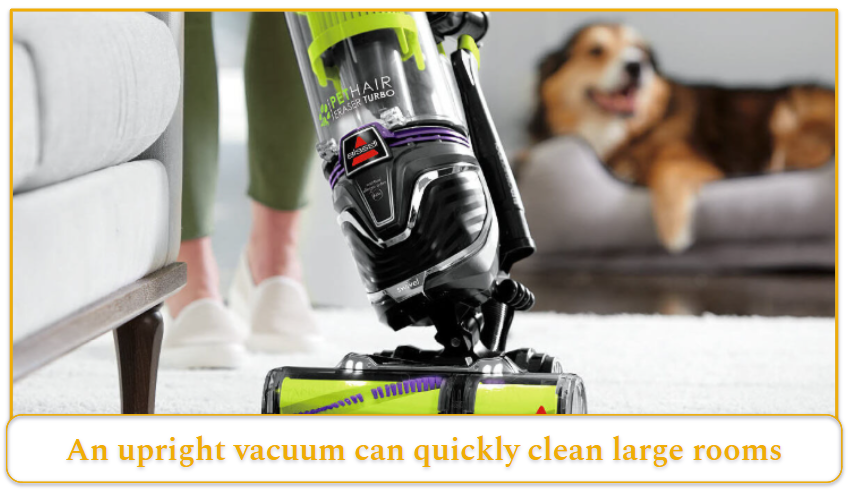
An upright vacuum used to clean a white carpet.
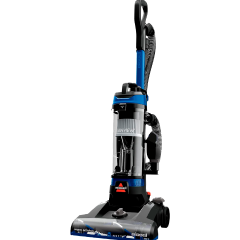
An upright vacuum is a single unit that combines the motor and dust container. It’s designed for cleaning large floor spaces and various floor surfaces, such as carpet and hardwood.
Uprights tend to have wider brush heads compared to other vacuum types. This increased width translates to a larger cleaning path, making it easier to clean more floor space quickly. However, this makes it challenging to clean narrow spaces like stairs.
Most modern upright vacuums come with an extendable hose that can accommodate a few attachments to reach ceilings and tight spaces.
Canister Vacuums
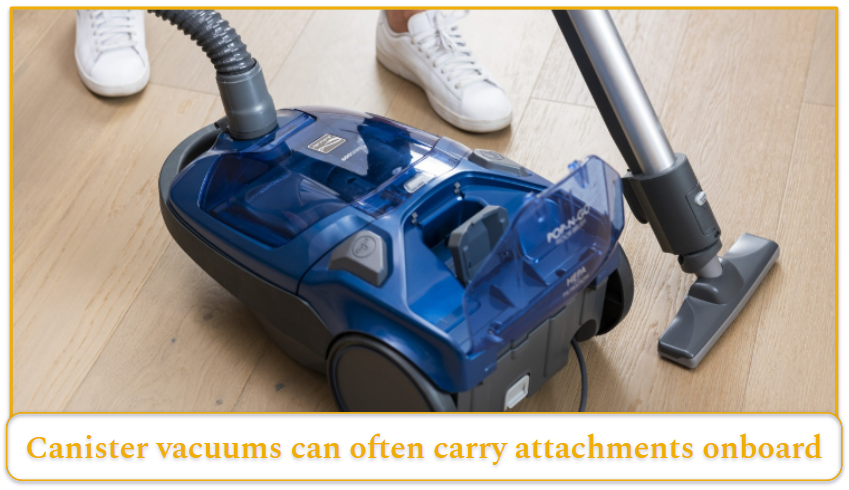
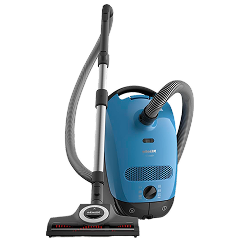
Blue canister vacuum with attachment storage.
With canister vacuums, the motor (the canister) is separated from the brush head and handle by a hose. This design allows you to easily push the brush head into narrow areas, get under furniture, and reach overhead areas.
Canisters often come with more attachments than other vacuum types, and they can be stored inside the motor section. They can handle almost any vacuuming situation and are best suited for cleaning upholstery and flooring. One of the main issues, however, is how it can be cumbersome to drag the canister unit around.
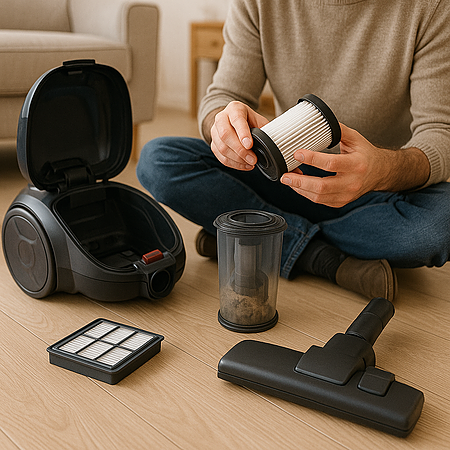
Pro Tip: If you have allergies or asthma, bagged canister vacuums are better than bagless to keep dust and debris contained. Emptying bagless units may send off clouds of particulates that can trigger allergies.
Stick Vacuums
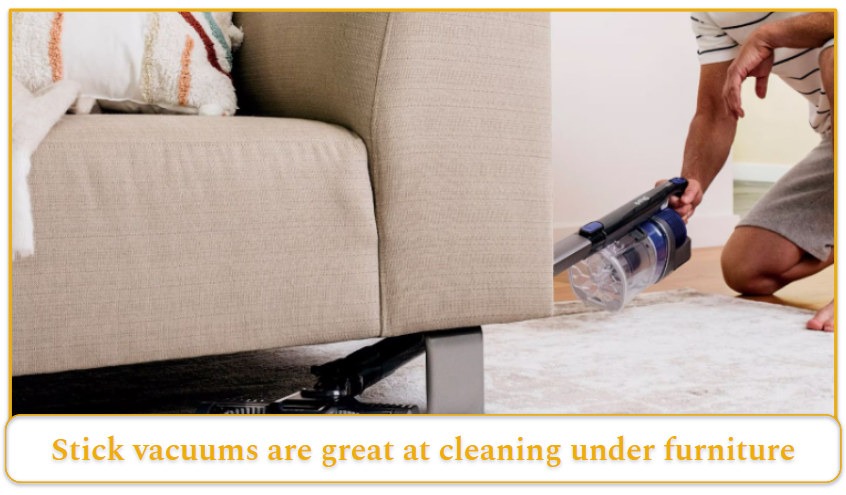
Stick vacuum used under the couch.
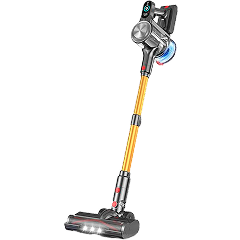
Stick vacuums are defined by their slim and lightweight design. They’re usually a scaled-down version of an upright, which makes them ideal for cleaning tight spaces and small homes.
Many models can also be converted into a handheld for cleaning countertops and car seats.
However, if you have a large house, using a stick vacuum may take multiple charges to clean everything on the highest settings.
Handheld Vacuums
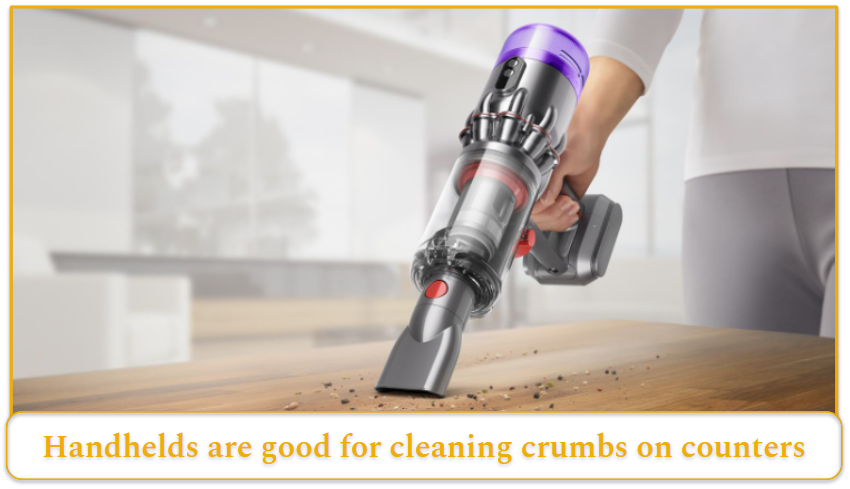
Handheld vacuum cleaning the crumbs off a table.
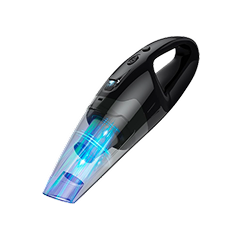
Handheld vacuums are compact enough to sit atop countertops and desks. Usually, they’re battery-powered and designed to clean up small messes like crumbs.
While handhelds lack power, they excel at getting into tight spaces like between cushions.
Overall, they’re better used as supplementary vacuums.
Robot Vacuums
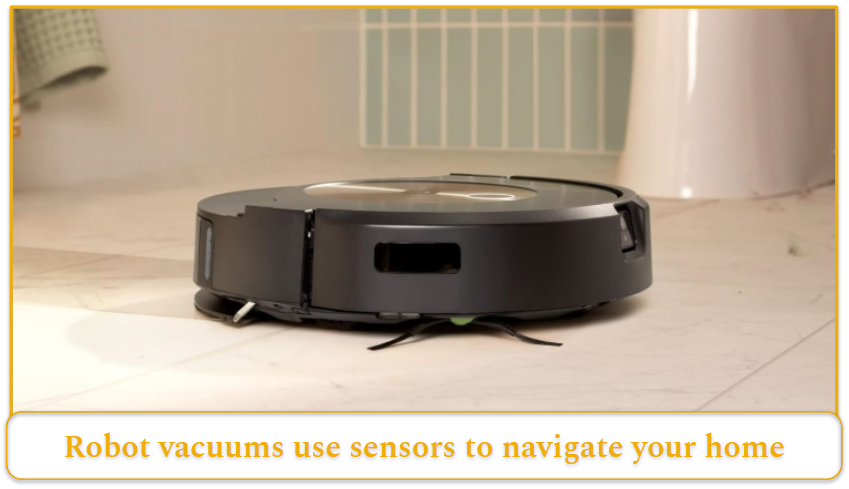
Black robot vacuum on tiled toilet floor.
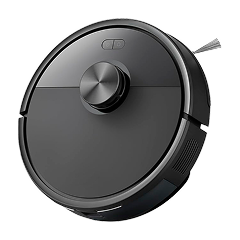
Robot vacuums are self-contained devices that use sensors to navigate and side sweepers to clean floors. The sensors can vary from infrared beams to cameras.
More affordable robot vacuums tend to have poorer navigation and may miss spots. Higher-end models, on the other hand, include mapping technology that helps them avoid bumping into furniture and other obstacles. Some can also automatically empty their dustbins and stream live videos you can view through an app.
Pro Tip: Consider using robot vacuum cleaners with a rotating mop system for high-traffic areas, such as kitchens or those where kids or pets frequent. This helps effectively manage spills and tracked-in dirt.
Wet/Dry Vacuums
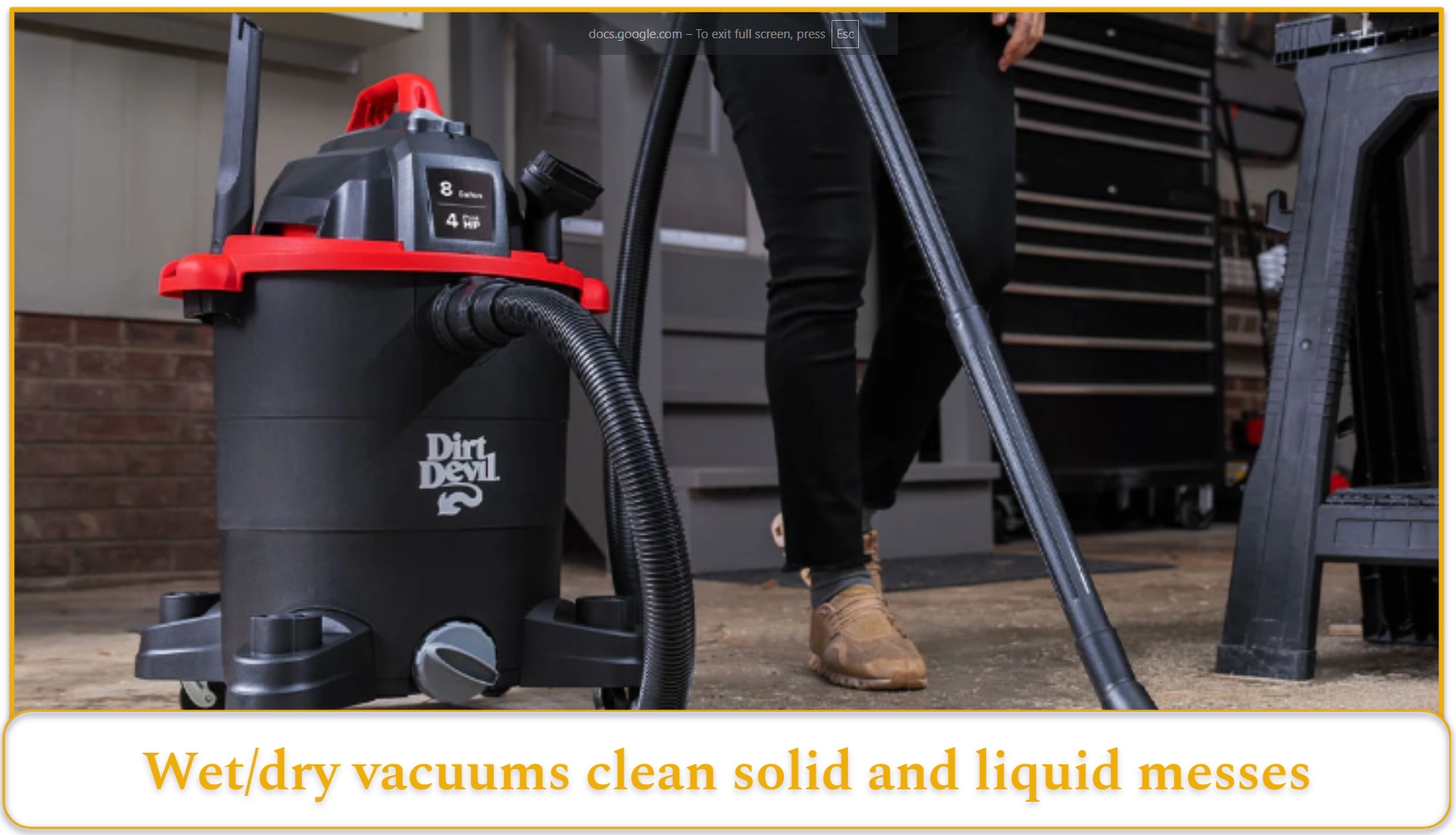
Person using a wet/dry vacuum to clean the garage.
Wet/dry vacuums, also known as shop vacs, are designed to pick up solid debris and mop liquid spills. They typically come in two forms: uprights designed to clean small messes indoors and larger canister versions for cleaning garages and workshops.
How to Choose the Right Type of Vacuum
Each type of vacuum cleaner excels at and struggles with certain tasks and environments. To select the best type for your needs, think about where and how often you plan to use it.
Depending on your cleaning priorities, you may want to purchase two different types of vacuums: one for heavier, more thorough cleaning and another for lighter, quick cleanups.
Here are the key factors you need to consider:
Purpose
First, decide what you want to clean most frequently. It could be floors, carpets, upholstery, countertops, or a combination of these. Identifying the primary surfaces you’ll clean and the additional nice-to-have features you want will help you narrow down your options.
Surface/Area
Recommended Vacuum Type
Hardwood and non-carpeted floors
Upright, stick, or robot vacuums
Carpet
Upright, stick, or canister vacuums
Kitchen countertops and tables
Handheld vacuums
Various surfaces
Canister vacuums
Cars and upholstery
Canister, handheld, or 2-in-1 detachable stick vacuums
Garage and basement floors
Wet/dry vacuums
Grillers and fireplaces
Wet/dry vacuums
Outdoor surfaces (e.g., patios)
Wet/dry vacuums
Pet hair pickup
Upright, stick, handheld, or canister vacuums
Frequency of Use
Also consider the frequency, difficulty, and duration of your cleaning tasks to find the most convenient and efficient vacuum for you.
Cleaning Frequency
Recommended Vacuum Type
Spot cleaning (food crumbs, pet hair clumps)
Handheld or stick vacuums
Quick daily cleaning in high-traffic areas
Handheld or stick vacuums
Light daily floor cleaning
Robot vacuums
Weekly floor cleaning
Upright, canister, stick, or wet/dry vacuums
Floor Area and Layout
Consider the size and layout of your home to ensure you have enough space to maneuver the vacuum around corners and transition easily between different floor surfaces. You also need to have a suitable place to store the unit.
For example, if you’re living in a studio apartment, it’s more convenient to use a cordless stick or robot vacuum. For multilevel homes, it’s ideal to have a cordless stick or canister for stairs and a canister or upright for high-traffic areas.
Pro Tip: Not all models within a vacuum category offer the same features. Once you’ve selected the right type of vacuum, compare models based on features like filter type and battery runtime.
The best vacuum cleaner depends on your needs. To find which one is right for you, consider your cleaning surface, frequency, and coverage area.
Which type of vacuum has the best suction?
Upright and canister vacuum cleaners often have the highest suction power, but their suction efficiency will depend on other factors, such as airflow and brush head design.
What’s the difference between a traditional vacuum and a robot vacuum cleaner?
A traditional vacuum needs to be manually operated, while a robot vacuum is automated. Some robot vacuum cleaners even empty themselves, so the process from beginning to end can remain hands-free.
Which is better, a stick or an upright vacuum?
It depends on what you’re looking for. Stick vacuums are more compact, so they can clean tight spaces better and often have a handheld component that can clean upholstery and countertops. Uprights tend to be more powerful and can clean large areas more quickly, but they’re not good for furniture or countertops.
What is a 2-in-1 stick vacuum cleaner?
A 2-in-1 stick vacuum cleaner transforms from a full stick unit for floors into a portable handheld version for smaller surfaces like countertops. These cleaners are available in cordless and corded models.
Was this article helpful?
Glad you found it helpful!
If you think others might benefit from this guide, please consider sharing it.
Sorry to hear that.
Please share what we can improve to make this guide better.
Thank you!
We appreciate your feedback and will use it to improve our content.
Jonathan Chan is a writer and editor of all things commerce content. He cut his teeth reviewing washing machines, dryers, and dishwashers. Nowadays, he covers everything from EDC gear to cleaning supplies. Jon’s great passion is finding the right products that will serve you and your family well. One thing that sets his work apart is that he likes to delve into the science behind the claims brands make. He demands that you have a nice day!