





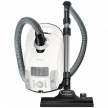




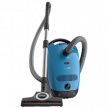


A canister vacuum offers the advantage of allowing you to clean tight spaces without sacrificing power. They also tend to be compatible with a wide array of attachments, often carrying them onboard for easy organization.
If you’re interested in purchasing one but aren’t sure where to start, don’t worry. In this guide, I’ll share what makes a good canister vacuum, what features are available, and what you can expect from the best-selling brands.
What to Look For When Buying a Canister Vacuum Cleaner
The best canister vacuum cleaner will depend on your key priorities. Before buying one, make sure to inspect the following specs first:
Weight
Since canister vacuums are often moved around to reach tight spaces and under furniture, I highly recommend choosing a lightweight model for ease of use. If you plan to carry the canister up and down the stairs, be sure it has a handle – bonus points if it’s wrapped in rubber or has a textured grip for extra comfort.
On the other hand, if you prioritize heavy-duty deep cleaning, you might need to compromise a bit on weight in favor of a model with more powerful hardware and additional attachments. This could mean opting for a slightly heavier canister. But take note that a heavier vacuum doesn’t necessarily mean better quality – you still need to consider factors like motor power and overall design.
Suction Power
Suction power for canister vacuum cleaners is typically measured in air watts (AW), which represents the combined effect of vacuum pressure (the lift generated by the vacuum) and airflow, responsible for moving dust from the nozzle to the dirt collection bag. For canister vacuums, an air watt rating of 200–250 AW is generally sufficient for cleaning.
Filter Types
I recommend choosing units that use high-efficiency particulate air (HEPA) filters because they generally work well in removing 99.97% of fine particles that can trigger allergies, such as dust and pollen. You can also find higher-grade versions if you want to eliminate every possible allergen at home.
You may also encounter filters that claim to be “HEPA-like.” These filters may use almost the same fiberglass mesh as the original, but they don’t meet HEPA standards. Some brands include pre-filters that keep larger particles like hair from clogging the more expensive HEPA filter. Some models add post-filters to ensure that finer particles don’t get blown back into the air.
Bagged vs Bagless
With bagless units, you won’t have to replace vacuum bags when they’re full. Instead, you remove the canister from the main body and empty the dirt into the bin. It’s convenient, but it can get quite messy, especially if the canister is filled with dust and pet hair.
If you don’t want to risk exposure to dust plumes, it’s better to choose bagged models. All the dirt picked up goes straight into a mesh bag. You won’t need to empty anything after each cleaning session – you’ll simply wait until the unit signals that the bag is full and needs to be replaced with a new, empty one. The downside is the extra cost of buying compatible vacuum bags.
Noise Level
Canister vacuums are usually quieter than other types of vacuum cleaners, like powerful upright models. You can also find models designed to clean as quietly as possible, which is especially helpful in apartments with thin walls. Look for vacuums with a Quiet Mode feature or those labeled with “silent technology.”
Brushroll Types
Check the canister’s brush roll type to make sure it’s compatible with the surfaces you clean most often. Some brush heads use soft, fluffy nylon bristles to clean hardwood without scratching. Others use stiffer bristles to lift dirt off carpets. Some models combine both and may include features that cut through hair tangles, making brush cleanup easier.
Storage
The best canister vacuums have onboard storage. You pop open the lid like you would to change the bag, and there’s an area where the mini-brushes and other attachments can be placed.
One of the advantages of a canister vacuum with built-in attachment storage is the ability to quickly swap out the main brush head for a cleaning attachment. Having them close at hand means you’re more likely to use them, which results in getting more value out of your vacuum.
Attachments
My top three must-have attachments are:
- Crevice tool: Sometimes combined with the dusting brush, it’s characterized by having a narrow tip that lets you clean tight spaces.
- Dusting brush: Has bristles that allow you to clean around delicate objects.
- Mini-brush: A versatile tool that can effectively clean stairs and upholstery. Most of them aren’t powered, relying on the airflow of the vacuum’s suction to spin.
Beyond the must-haves, I like the idea of having a spare dusting brush or a dedicated upholstery brush. If you regularly clean surfaces like pet beds, it’s nice to have a spare brush to avoid cross-contamination.
Ease of Cleaning
To ensure you choose a canister vacuum that’s easy to maneuver, look for features like a swivel brush head and wheels that are gentle on floors. Also consider the cord length so you can tell whether you’ll be able to clean every part of your home using the outlets you have.
And, of course, don’t forget about the unit’s overall weight. You can find powerful canister vacuums like the Kenmore 600 models with strong suction and useful tools, but they weigh about 23 lbs (10 kg). You can also find lighter options, like Miele’s Classic C1 at about 13 lbs (5.8 kg).
What Are the Best Canister Vacuum Brands?
To help you narrow down your choices, here are some of my favorite canister vacuum brands:
Miele: Best Lightweight Yet Powerful Canister Vacuum
What I like about Miele’s canister vacuums is their simple design – some even come with a touch of color. It’s a great option if you’re looking for a straightforward and lightweight unit that works well, especially in large areas.
For example, the Classic C1 line has a six-stage rotary selector to adjust suction power and an ergonomic handle, so you can carry the unit around with ease. If you want something more powerful while still keeping the features simple, consider the Guard series.
Before buying, I suggest reading the specs carefully, since similar design and feature sets can make models hard to tell apart. Some are better suited to specific needs, like pet hair, mixed flooring, or carpet-heavy homes. However, as you move up in suction power, expect to pay more.
Kenmore: Best Budget Canister Vacuum with Powerhead
Kenmore’s canister vacuums have excellent suction and extra-wide brush heads that make short work of large carpeted rooms. They also have access to well-engineered attachments like the Pet PowerMate tool that’s specially designed to get pet hair off upholstery.
I’ve tested half a dozen Kenmore canisters, and they all had onboard storage, telescopic wands, and comfortable carrying handles. This winning combination made me want to use them and not keep them tucked away in the closet.