
 Ice Makers
 Chairs
 Kettles
 Projectors
 Air Purifiers
 Dash Cams
 Headphones
 Smartwatches
 Blenders
 Humidifiers
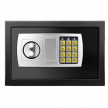
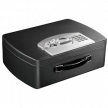
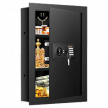
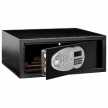
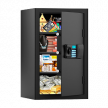
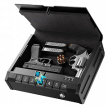
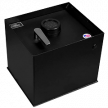
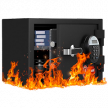


A few years ago, I made what seemed like a simple decision: buy a safe for my home. Today, I own two very different units – a heavy mechanical combination safe and a compact fire-rated model with a key lock – because I learned the hard way that no single safe solves every problem.
With an engineering background, I approached safe selection by analyzing real risks, failure modes, and everyday use, not just manufacturer specs. Living with these safes taught me what most buying guides miss: advertised capacity is optimistic, convenience constantly competes with security, and features that look minor on paper can matter a lot in real life.
This guide distills those lessons into practical, buyer-focused advice so you can choose the right safe the first time.
Safe Types and Use Cases: Choosing the Right Design
Different safes are engineered to solve different problems. Choosing the wrong type often leads to daily frustrations or gaps in protection you didn’t anticipate.
- General home safes. Designed for theft resistance, these use thicker steel, heavier doors, and stronger locking systems. They work best for valuables, documents, and items where forced entry is the primary concern.
- Fire safes. Built around insulation rather than steel thickness, fire safes protect contents from extreme heat but offer limited theft resistance. They’re ideal for irreplaceable documents, photos, and digital backups, especially when bolted down or concealed.
- Combination fire-and-security safes. These attempt to balance heat protection and theft resistance, but usually compromise both to meet consumer price points. They’re convenient, but rarely excel at either function compared to purpose-built safes.
- Gun safes. Prioritize quick access and interior organization over maximum steel thickness. Their layouts work well for firearms but often waste space for non-gun valuables and documents.
- Depository safes (drop-slot models). Designed to secure items without opening the main compartment, depository safes are common in retail and cash-handling environments. For most homeowners, the drop slot adds cost, reduces usable space, and introduces extra failure points without solving a real problem – unless you run a home business or need others to deposit valuables regularly.
Start by identifying your primary risk – fire, theft, access speed, or shared use – before comparing locks or steel thickness. If your needs span multiple risks, two purpose-built safes often provide better protection than one compromised unit.
Understanding Fire Ratings: Why They Matter Before You Buy
Fire protection became my top priority once I researched how quickly residential fires escalate. Many buyers assume any “safe” offers fire protection. That assumption is expensive.
Fire ratings tell you how long the interior of a safe stays below a critical temperature when exposed to extreme heat. If the temperature inside rises too high, your valuables are destroyed even if the safe itself looks intact.
Why Fire Protection Often Matters More Than Theft Protection
After calculating the replacement cost of family documents, photos, and backup drives, I realized my theft-focused safe offered zero fire protection. Standard security safes are designed to slow burglars, not insulate contents from heat.
Being an engineer taught me to plan for the most probable failure modes, and residential fires occur far more frequently than break-ins, at least where I live. Jewelry can be replaced. Decades of photos stored on old hard drives cannot. That realization alone justified buying a dedicated fire-rated safe.
Fire Rating Time Durations: What 30, 60, and 120 Minutes Really Mean
Fire safes are tested to see how long the interior stays below 350°F while exposed to flames.
I used to think 120 minutes must be twice as good as 60 minutes, but house fires don’t work that way. Most residential fires burn through a room in about 30-45 minutes, then either spread elsewhere or get put out by firefighters.
My 60-minute safe gives me plenty of protection without paying double for time I’ll probably never need. Longer ratings make sense if you live far from emergency services, but for many buyers, they add cost without real-world benefit.
Fire Rating Temperatures: Matching Protection to What You Store
Fire ratings aren’t just about time; temperature matters too. Different materials fail at different heat levels, and this directly impacts where you should store them:
- 1200°F rating: Basic paper documents survive
- 1400°F rating: Photographs and some media remain intact
- 1550°F rating: Computer disks, USB drives, and CDs stay functional
- 1700°F rating: Maximum protection for all media types
My fire safe is rated to 1550°F because most of my irreplaceable items are digital storage devices. Going beyond 1550°F costs considerably more for protection I didn’t need.
Steel Thickness and Construction: Why Specs Only Tell Half the Story
Steel thickness follows an exponential curve when it comes to real security. My combination safe has a 1/4″ door. On paper, that may sound thin. In practice, it dramatically increases the time and effort required to break in. Moving from 1/8″ to 1/4″ roughly doubles break-in time, but jumping to 3/8″ or 1/2″ quickly enters diminishing returns for typical residential threats.
Door Thickness vs. Body Construction
Door thickness grabs attention in marketing materials, but wall construction is just as important. Many budget safes feature thick doors attached to thin sheet–metal bodies that you can peel open like a soup can. My combination safe uses consistent steel throughout. My fire safe does not, because its walls are filled with insulation instead of hardened steel. That’s intentional, not a flaw. Ultimately, a safe is only as strong as its weakest panel. Always evaluate door and body construction together.
Why Weight Matters More Than You Think
An 80-pound safe doesn’t seem heavy until you try to move it. That weight forces burglars to plan, bring help, and spend time wrestling with an awkward object that has no good grip points.
A 20-pound fire safe is a completely different story –anyone could tuck that under their arm and walk out. That’s why it has reinforced door edges that make crowbar attacks much harder, though obviously nothing stops someone from just taking the whole thing. At the end of the day, heavier safes deter opportunistic theft, whereas lightweight safes must be bolted down or concealed to offer meaningful security.
Locking Mechanisms: From Traditional To High-Tech
The lock determines how you’ll interact with your safe every single day, not just how secure it is. Here’s what I learned from daily use and extensive research on different systems.
Combination Locks vs. Key Locks in Real Use
Living with both lock types revealed trade-offs I didn’t anticipate. The mechanical combination lock requires 15–-20 seconds to open correctly and requires focus. Mistakes happen when you’re rushed.
The key lock opens instantly, but introduces a different problem: key management. Lose the key or have it discovered, and security is gone. For me, combination locks win on security and key locks win on speed.
Why I Avoided Electronic and Biometric Locks
I researched digital keypads and biometric scanners extensively. They look appealing until you factor in battery dependence, sensor reliability, and electronic failure modes.
Dirty fingers, small cuts, aging fingerprints, and dead batteries all create failure scenarios that don’t exist with mechanical systems.
Digital keypads solve the speed problem but introduce battery dependence and potential electronic failure modes. Dual-lock configurations combining electronic and mechanical systems seemed like the best of both worlds until I saw the price premiums and increased complexity. Every electronic feature adds potential failure points that don’t exist with purely mechanical systems.
Why I Chose Mechanical Locks: Fewer Failure Points, More Predictability
My engineering background taught me that simpler systems fail less often, which led me to analyze each lock type across multiple factors that matter in real-world use:
Mechanical locks have operated reliably for over a century. They depend only on precise manufacturing and proper maintenance, and don’t rely on power, software updates, or sensors to function.
If you need access to important documents during a power outage or emergency, you want certainty that the safe will open over speed.
Bolt Systems and Relockers: What To Look For When Comparing Safes
A lot of safes look secure on paper, but these bolt and relocker details are what actually matter when someone tries to force one open.
- At least three locking bolts. Three well-spaced bolts distribute prying force across the door instead of concentrating it in one weak spot. This is the minimum threshold where real resistance begins for residential safes.
- Bolts that engage the frame, not just the door edge. Effective systems anchor into the safe body itself, making crowbar attacks far less effective than door-edge locking alone.
- A mechanical relocker system. Relockers trigger additional locks if the main lock is drilled or forced, turning a break-in attempt into a harder problem rather than an easier one.
- Consistent steel around the bolt path. Thick bolts don’t matter if the surrounding steel is thin. Look for reinforced door edges and body construction where the bolts engage.
- Avoid single-bolt designs unless security isn’t the goal. Single-bolt safes are suitable only for casual access control. They offer minimal resistance against basic tools and should not be relied on for valuables.
Installation Options: Floor, Wall, and Portable Considerations
The installation method you choose determines both the security level and the convenience. Here’s how different mounting options compare for residential use:
My portable unit represents a security compromise I made for flexibility—I can move it if I really need to, but anyone else can too. Floor-mounted safes eliminate the portability weakness but require permanent installation that I wasn’t ready to commit to in the current home. Wall safes offer concealment advantages but limit capacity and require structural modifications that many homeowners avoid.
Capacity Planning and Interior Organization
Capacity planning turned into the biggest miscalculation during my safe shopping, and I learned expensive lessons about storage reality versus manufacturer specifications. I bought a 1.0 cubic-foot safe for 0.8 cubic feet of items – and I filled it immediately.
The irregular shapes of jewelry boxes, the thickness of document folders, and the awkward dimensions of backup drives consumed space much faster than I predicted. Adjustable shelving helps, but capacity is king.
Now I recommend buying 25-50% more capacity than your current needs suggest, because safe storage requirements only expand over time. I wish I’d bought the next size up in both safes, accepting the higher cost for long-term convenience rather than dealing with the constant space management I face today.
Leading Safe Manufacturers: What Reputation Actually Tells You
Brand reputation often misaligns with the actual product quality, and warranty terms reveal more about manufacturing confidence than marketing materials ever will. Most manufacturers specialize in one area – fire protection, theft resistance, or affordability – and compromise elsewhere to hit price targets.
Instead of assuming a well-known brand equals better protection, it’s more useful to understand what each company prioritizes and where their designs tend to fall short.
SentrySafe: Fire Protection Focus with Security Trade-offs
SentrySafe excels at document protection with solid insulation and reliable temperature control, though the security features feel secondary to the fire ratings. The trade-off is thinner steel construction and simpler locking mechanisms that reflect their mass-market positioning rather than a security-first design philosophy.
Liberty: Gun Safe Specialists with Solid Construction
Liberty built its name selling to gun owners who want sturdy construction without breaking the bank. Thicker steel, solid welds, and effective bolt systems make their safes more resistant to forced entry than most mass-market options. The downside? Its fire ratings lag behind companies that specialize in heat protection.
I’ve noticed they focus heavily on selling through local dealers instead of big box stores, which means you’ll get better service but probably pay more due to dealer markups. Most of its safes come with 3-5 year warranties, which tells me they’re confident the things won’t fall apart right after you buy them.
Cannon: Budget-Friendly Options with Clear Limitations
Cannon targets people who want a safe but don’t want to spend a fortune on one. Their safes provide entry-level theft deterrence and minimal fire resistance, depending on the model. If you’re renting and need something temporary, or you just want to keep kids away from important papers, Cannon safes work fine for that. They’re not suitable for securing high-value or irreplaceable contents long-term.
Stack-On: Economy Segment with Minimal Security
Stack-On function more like secure storage containers than true security devices. Their construction uses thin steel and simple locks that deter casual access but won’t stop determined thieves with basic tools.
They’re best for organizing important documents and controlling access rather than protecting valuables. Their pricing reflects these limitations, often costing 30–50% less than comparable models from other manufacturers while delivering proportionally less security.
Installation and Mounting: Where Security Is Won or Lost
An unmounted safe offers limited protection, regardless of brand or steel thickness. If a thief can remove the entire unit, they gain unlimited time to open it elsewhere.
Floor mounting provides the strongest security but requires permanent installation. Wall mounting works for smaller safes and offers concealment, though it limits capacity and requires proper wall studs. As an engineer, I could handle the floor mounting myself with a hammer drill and concrete anchors, but the permanence has kept me from making what should’ve been an obvious security upgrade. Portable safes trade security for flexibility and should only be used when mounting isn’t possible.
Insurance policies and building codes can influence installation options, so it’s worth checking requirements before buying.
Common Buying Mistakes That Cost Buyers The Most
After living with safes and researching extensively, I’ve identified the mistakes that cost buyers the most money and frustration.
- Buying too small. Real-world storage fills up faster than calculations suggest, especially with folders, cases, and irregular items.
- Choosing convenience over reliability. Faster locks often introduce new failure points that matter during emergencies.
- Ignoring fire temperature ratings. Paper, photos, and digital media fail at very different temperatures.
- Not planning installation early. Choosing placement after purchase often leads to awkward access or skipped mounting altogether.
- Buying for current needs only. Storage requirements tend to grow, not shrink.
Smart Shopping: Specifications That Actually Matter
Cutting through marketing fluff requires understanding which specifications translate to real protection and which are just impressive-sounding numbers. Here’s how to focus research on what matters.
Warranty Length as a Manufacturing Confidence Indicator
Here’s something I figured out while shopping: warranty length tells you more about a safe’s quality than any marketing brochure. Short warranties often reflect cost-cutting. Three to five years suggests reasonable confidence in materials and construction. Lifetime warranties are rare but signal long-term manufacturing commitment.
My combination safe came with a five-year warranty, which helped convince me the manufacturer wasn’t just slapping together cheap components and hoping for the best.
Price Ranges and What You Actually Get
Safe pricing follows predictable tiers where spending 20-30% more typically delivers 50-70% better security.
- Under $200 gets basic document storage.
- $200-500 provides decent theft deterrence with basic heat resistance.
- $500-1000 delivers serious security with good fire ratings.
For most homeowners, the $300-600 range offers the best value for real protection without premium features.
Online vs. Local Dealers: My Purchase Experience
Online retailers offer better prices but eliminate hands-on evaluation of build quality. I bought the combination safe online, saving $150, but couldn’t verify the steel thickness until delivery.
Local dealers charge more but provide delivery, installation, and technical guidance. The fire safe dealer helped me understand fire rating differences that online descriptions glossed over.
Which Safe Is Right for You?
Your primary use case should drive every decision, because different storage needs require fundamentally different design priorities.
- Documents and irreplaceable records. Fire-rated safes make the most sense here. Heat resistance matters more than steel thickness when paper, photos, or backups are the priority.
- Valuables and cash. Theft resistance comes first. Look for thicker steel, heavier doors, and solid mechanical locks, even if fire ratings are modest.
- Firearms. Gun safes prioritize quick access and interior organization. General home safes can work if rapid access isn’t critical.
- Mixed storage. This is the hardest category. Two purpose-built safes offer better protection than one compromise unit, but budget and space may force prioritization.
I recommend focusing your money on features that address real risks. Spend the extra $100-200 for proper steel thickness and fire ratings that match your storage contents. Skip expensive electronic locks and premium features unless they solve specific problems you face.
Space constraints should eliminate options early in your search rather than forcing awkward compromises later. You should measure your installation area first, then shop within those limits.
For first-time buyers, I recommend starting with a quality 1.5-2.0 cubic foot safe from the $400-600 range. Mount it properly from day one, even if that means hiring a professional, because unmounted safes provide false security.