





















Summary: The best kids’ suitcase is lightweight, easy to maneuver, and durable enough to handle rough use. Spinner wheels, adjustable handles, and the right size make the biggest difference in whether your child can actually use it independently.
Kids’ suitcases might look like smaller versions of adult luggage, but they function very differently in real-world travel. What works for you often doesn’t work for a child, especially when it comes to weight, maneuverability, and durability. The wrong suitcase quickly turns into something you end up carrying.
I’ll go through what actually matters when choosing a kids’ suitcase, from wheel systems and handle design to materials and weight. The goal is to help you find something your child can use independently, while still holding up to the way kids actually travel. For a broader overview of how different suitcase types compare, you can check out our main suitcase guide.
Which Kids’ Suitcase Should You Buy?
- For toddlers (2–4 years): Prioritize very low weight (under 3 lbs) and a four-wheel spinner design so they can push instead of pull. Small capacity works best, since extra space leads to overpacking and heavier bags that they can’t manage.
- For ages 5–8: Look for a slightly larger carry-on with durable wheels, a multi-height telescoping handle, and simple interior organization. At this stage, balance weight and durability, since they’ll use the suitcase more independently.
- For ages 9–12: Choose a near full-size carry-on with more capacity and better internal organization. Kids at this age can handle a bit more weight, so features like dividers and sturdier construction become more useful.
- For frequent travel: Focus on durability. Stronger zippers, reinforced corners, and higher-quality wheels make a noticeable difference over time, especially with repeated airport use.
- For occasional trips: Keep it simple and lightweight. There’s no need to pay for premium materials if the suitcase will only be used a few times per year.
- If you plan to reuse it or pass it down: Don’t compromise on build quality. A slightly more durable suitcase with better wheels and materials will last through multiple years or even multiple kids.
Why Kids Need Different Suitcases (Not Just Smaller Ones)
Kids don’t use luggage the same way adults do, and that changes what actually works. A suitcase that feels easy for you to handle can quickly become frustrating or unusable for a child.
Strength and coordination are the biggest differences. A typical adult pulls a two-wheeled suitcase by tilting it back at an angle. Most kids don’t have the balance or strength to do that comfortably. Instead of rolling smoothly, the bag pulls them off balance or drags awkwardly behind them. That’s when they give up and ask you to carry it.
Kids are also much harder on their luggage. Bags get dropped, dragged across rough ground, and used as makeshift stools or steps. This isn’t misuse; it’s just how kids interact with their environment. A suitcase needs to handle repeated impacts and rough handling, not just careful use in airports.
Handle adjustability is another detail that matters more than it seems. Kids grow quickly, and a handle that works one year can feel too short the next. If the handle height doesn’t match their size, the pulling angle becomes uncomfortable and awkward, which again leads to frustration and abandonment.
Carry-On vs Checked: What Makes Sense for Kids?
For most families, carry-on suitcases are the better choice for kids.
Carry-ons are lighter, easier to manage, and stay with you throughout the trip. That means no waiting at baggage claim and no risk of lost luggage. More importantly, kids can actually handle them independently, which is the whole point of having their own suitcase.
Checked luggage makes sense when you need more space, but in practice, kids rarely need that much capacity. Larger bags also become too heavy for them to control, which defeats the purpose.
In most cases, a well-packed carry-on gives you the best balance of independence, practicality, and ease of travel.
Wheel Systems: The Make-Or-Break Feature
Wheels are the single most important feature in a kids’ suitcase because they directly affect whether your child can manage the bag independently.
Spinner wheels (four-wheel designs) allow the suitcase to roll upright instead of being pulled at an angle. This is especially important for smaller bags, which you can explore further in our mini suitcases guide. In practice, this means your child can push the suitcase alongside their body with minimal effort. There’s no need to tilt or balance the bag, which removes the biggest barrier for younger travelers.
This makes a noticeable difference in real situations. Navigating tight spaces like airplane aisles, bathroom stalls, or crowded boarding areas becomes much easier when the suitcase can turn in place. With spinner wheels, kids can move the bag in any direction instead of struggling to drag it behind them.
Wheel size also plays a bigger role than most people expect. Larger wheels roll more smoothly over uneven surfaces like carpet seams, sidewalk cracks, and tile transitions. Smaller wheels tend to catch and stop abruptly, which quickly frustrates kids and leads to you carrying the bag anyway.
The tradeoff is durability. Spinner wheels take more impact because they move in multiple directions and absorb force from different angles. Poor-quality wheels can jam, wobble, or break after repeated drops.
What To Look For
- Four spinner wheels (not two inline wheels)
- Larger wheel diameter for smoother rolling
- Solid wheel housings with no wobble
Weight: Every Pound Counts
Weight matters more for kids than it does for adults because it scales directly with their body size.
A suitcase that feels light to you can be a significant load for a child. Once packed with clothes, toys, and snacks, even a small increase in weight can make the bag difficult to control or push for long distances.
But going as light as possible isn’t always the right approach. Extremely lightweight suitcases often achieve that by using thinner materials, which can reduce durability. Kids need a balance between manageable weight and the ability to withstand drops and rough handling.
Material choice plays a big role here. Lightweight plastics like ABS and polycarbonate offer a good balance between strength and weight. Heavier materials, like reinforced frames or thick fabrics, can add unnecessary weight without improving real-world performance for kids.
Shell Materials and Durability
Hardshell vs. Softshell: Which Holds Up Better for Kids?
The outer material of a suitcase determines how well it handles impact, and for kids, that matters more than almost anything else.
Hardshell suitcases are made from rigid plastics like polycarbonate or ABS. Instead of absorbing damage in one spot, they spread impact across the surface. When a suitcase gets dropped (which will happen often), this helps prevent localized damage.
Softshell suitcases use fabric stretched over a frame. They’re lighter and more flexible, but the stress tends to concentrate at corners and edges. Over time, this can lead to tearing, especially with repeated drops and rough handling.
In real-world use, hardshell designs tend to hold up better for younger kids who are less careful with their luggage. Softshell bags can still work, but they generally wear out faster under the same conditions. For a deeper comparison of materials, you can read our guide on hard suitcase vs soft to see how they perform in different travel situations.
Material Properties That Matter
Flexibility is one of the most overlooked factors. Materials like polycarbonate can bend slightly under impact and return to shape, which helps absorb repeated drops. More rigid materials are more likely to crack when subjected to the same force.
For kids, that ability to absorb impact over time is more important than how the suitcase looks after a single drop.
Handle Design: Two Critical Factors
-
Telescoping Adjustability
A telescoping handle is the extendable handle that pulls up from the suitcase. For kids, adjustability isn’t a nice-to-have – it directly affects whether they can use the suitcase comfortably.
Children grow quickly, so a handle with at least two to three height settings is essential. A handle that’s too short forces them to hunch over, while one that’s too tall makes the suitcase harder to control. Both lead to awkward movement and frustration.
Lock quality is just as important as adjustability. This is the mechanism that keeps the handle fixed in place at each height. Lower-quality systems tend to stick, loosen, or collapse unexpectedly during use. When a handle drops mid-walk, it usually means the child stops using the suitcase altogether.
A well-built handle should click firmly into place and require deliberate pressure to adjust. Anything that feels loose or inconsistent will become a problem quickly.
-
Grip Ergonomics for Small Hands
Handle grip size is often overlooked, but it has a direct impact on control. Most suitcase handles are designed for adult hands, which means they can feel too thick for kids to grip properly. When a child can’t fully wrap their hand around the handle, steering becomes harder, and the suitcase feels less stable.
Kid-friendly designs use slimmer grips or add texture to improve control. This makes it easier for smaller hands to hold on securely, especially when navigating busy or uneven environments.
Carry handles also matter more than expected. These are the fixed handles on the top and side of the suitcase, used for lifting rather than rolling. Even if your child is handling the suitcase most of the time, you’ll still be lifting it into overhead bins, car trunks, or up stairs.
Top handles should be padded for comfort, and side handles make a big difference when maneuvering in tight spaces. Having both gives you flexibility when you inevitably need to step in.
Zipper Quality: Where Cheap Luggage Fails First
Zippers are one of the most common failure points in any suitcase, especially with kids. They’re used frequently and often handled roughly. Kids tend to overpack, pull from awkward angles, and apply uneven force when opening or closing the bag. Lower-quality zippers struggle under this kind of use and can split, jam, or break entirely.
Zipper size and construction matter here. Larger, more robust zippers (like YKK #5 or equivalent) are designed to handle repeated stress without separating. Smaller or generic zippers are more likely to misalign or fail over time.
Pull size also plays a role. Larger zipper pulls are easier for kids to grab and control, especially when their fine motor skills are still developing. Small, thin pulls are harder to use and more likely to snap under pressure.
Safety Certifications and Construction Details
Beyond materials and features, small construction details and safety standards play a big role in how well a kids’ suitcase holds up over time. These are easy to overlook, but they often separate durable bags from ones that fail early.
- CPSIA / ASTM Certifications: These indicate the suitcase has been tested for safety risks like harmful chemicals, sharp edges, and small detachable parts. While not always highlighted, certification is a strong signal of overall product quality.
- Corner Reinforcement: Corners take the most impact when a suitcase is dropped. Reinforced corners use thicker material or rounded shaping to spread force and reduce the risk of cracks forming and spreading.
- Rounded vs. Sharp Edges: Rounded edges handle impact better by distributing stress, while sharp corners concentrate force and are more likely to crack under repeated drops.
- Edge Guards: Protective strips along the edges help absorb impact in high-contact areas. They improve durability but add a bit of weight, so they’re more useful for younger kids who are rougher on their bags.
Interior Organization for Kids
Interior layout plays a bigger role for kids than it does for adults because it helps guide how they pack. Most kids don’t naturally organize their belongings. Without structure, everything ends up thrown into one compartment, making it harder to find items and easier for clothes to shift during travel. Simple built-in features make a big difference:
- Compression straps keep clothes in place and prevent everything from shifting when the suitcase is opened
- Zippered dividers separate items, which is useful for keeping clean and worn clothes apart
- Interior pockets help store smaller items like socks, underwear, or toys that would otherwise get lost
Multiple straps tend to work better than a single cross-strap because they hold items more securely when the suitcase is moved or dropped.
Visual clarity also helps. Mesh panels, separate sections, or even subtle color differences make it easier for kids to understand where things go. When they can see and recognize their setup, they’re more likely to pack (and repack) independently.
Features That Don’t Matter (And Marketing Gimmicks)
Some features sound appealing, but don’t add real value for kids – and in many cases, they make the suitcase less practical.
Ride-on suitcases are a good example. They can be fun at first, but the added structure increases weight, reduces packing space, and introduces more potential failure points. Most kids lose interest quickly, but you’re left with a heavier, bulkier bag.
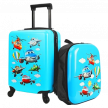
Character designs and licensed branding also don’t indicate quality. While some are well-made, many rely on branding rather than durable construction. It’s better to evaluate the materials, wheels, and zippers than assume a recognizable design means better performance.
Expandable sections are another feature that sounds useful but often works against kids. Expansion zippers increase capacity, but they also add weight and make the suitcase harder to manage. Since kids already tend to overpack, extra space usually leads to a heavier bag that they can’t comfortably handle.
What About Warranties?
Warranties can tell you a lot about how long a suitcase is expected to last, but they’re not as straightforward as they seem.
Longer warranties (five years or lifetime) usually signal that the manufacturer expects the suitcase to hold up over time. Brands don’t offer extended coverage on products with high failure rates. Short warranties, like one year, often reflect more basic construction and lower durability.
That said, warranty length matters less for kids than it does for adults. Children often outgrow their suitcase before it actually wears out. In most cases, you’ll replace the bag for size reasons rather than because it broke. Because of that, it’s more useful to treat the warranty as a quality signal, not something you’ll necessarily rely on.
The terms matter just as much as the duration. Some warranties exclude “normal wear and tear,” which can cover most of the damage kids cause. Others require you to ship the suitcase back at your own expense, which can make a claim impractical.
Which Kids’ Suitcase Is Right for You?
Age and Size Considerations
Choosing the right suitcase depends heavily on your child’s size, strength, and how independently they’ll be handling it.
Toddlers (2–4 years)
Lightweight is essential. Aim for under 3 pounds empty, since heavier bags become unmanageable quickly. Four-wheel spinners allow them to push rather than pull, which is much easier at this stage. Smaller capacity is also better – extra space usually leads to overpacking and heavier bags that they can’t control.
Young kids (5–8 years)
Kids in this range can handle slightly more weight (around 3–3.5 pounds) and benefit from a bit more packing space. Handle adjustability becomes more important as they grow quickly over a short period. Durability also matters more, since they’re more independent and harder on their luggage.
Older kids (9–12 years)
At this stage, kids are closer to adult capability. They can manage heavier suitcases (around 4–4.5 pounds) and larger capacities for longer trips. You can start prioritizing features and organization over maximum durability, as they tend to handle their bags more carefully.
Budget Framework
Price usually reflects build quality, especially when it comes to wheels, zippers, and materials.
For most families, the best balance sits in the $50–$70 range. You get reliable components without paying for features kids won’t use.
Very low-cost options tend to fail early, which often cancels out any savings. At the higher end, you’re usually paying for brand positioning and incremental improvements rather than major functional gains.
Common Mistakes Parents Make
A few common choices make kids’ suitcases harder to use than they should be.
- Buying a bigger suitcase “to grow into”: Larger bags quickly become too heavy and awkward, especially when packed.
- Choosing two-wheel (pull) suitcases: These require strength and balance that most kids don’t have. Four-wheel spinners are far easier to use.
- Focusing on design over function: Character themes and novelty features don’t improve performance. Wheels, weight, and handle design matter far more.
- Letting kids overpack: More space usually leads to heavier bags that they can’t manage. Smaller capacity actually works better.
- Ignoring weight before packing: Even a slightly heavier empty suitcase makes a big difference once it’s filled.
Avoiding these mistakes does more to improve the experience than any premium feature.
Making the Decision
Start with the features that determine whether your child can actually use the suitcase on their own:
- Four-wheel spinner design
- Weight under ~3.5 lbs (especially for kids under 8)
- Telescoping handle with multiple height settings
If these aren’t right, nothing else really matters – the suitcase will end up being carried by you. From there, adjust based on how often you travel.
- Occasional travel (1–2 trips per year). Prioritize lighter weight and reasonable cost. The suitcase won’t see enough use to justify paying for premium durability.
- Frequent travel. Invest in better build quality – stronger zippers, reinforced corners, and more durable wheels. Over time, a longer-lasting suitcase ends up costing less per trip.
Finally, avoid features that don’t improve real usability. Character designs, ride-on functionality, and expandable sections tend to add weight and complexity without making the suitcase easier for kids to use.