





















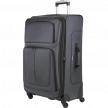


Summary: Choosing a large suitcase comes down to more than size. This guide breaks down how weight, materials, wheels, and build quality affect real travel, so you can pick a suitcase that’s practical, durable, and easy to use.
Large suitcases seem simple at first – just pick a size, pack more, and go. In reality, once you start dealing with heavier loads, airline weight limits, and rough baggage handling, the differences between models become much more noticeable.
This guide breaks down what actually matters when choosing a large suitcase, from materials and wheel systems to weight, durability, and long-term reliability. The focus is on how these features perform in real travel situations, not just how they look on paper.
If you’re deciding between investing in a higher-end case or choosing something more budget-friendly, this will help you understand where it’s worth spending, and where it isn’t. For a broader overview of luggage types and features, you can read our main suitcase buying guide before narrowing down to large suitcases.”
Which Large Suitcase Should You Buy?
- For long trips (7–14+ days): Look for a suitcase in the 90–110L range with a lightweight shell (ideally polycarbonate) and strong compression systems. Weight matters more here because you’re more likely to hit airline limits, especially on return trips.
- For frequent travel: Prioritize durability over everything else. High-quality spinner wheels, strong zippers, and a solid handle system make the biggest difference over time. A longer warranty is a good indicator the suitcase is built for repeated use.
- For overpackers or flexible packing: Expandable suitcases give you extra room when needed, especially useful on the way back from a trip. Just keep in mind that expansion makes it easier to exceed weight limits.
- For carrying fragile or structured items: A more rigid shell (polycarbonate or aluminum) offers better protection. Aluminum is the most protective, but heavier; polycarbonate is the better balance for most travelers.
- For ease of handling in airports: Focus on smooth spinner wheels and a well-balanced design. A fully loaded large suitcase should still feel manageable to push and maneuver, not something you have to drag.
- If you plan to keep it for years: Don’t compromise on core components. Wheel quality, zipper strength, and handle construction determine how long the suitcase actually lasts. These matter more than brand or extra features.
What Size Large Suitcase Do You Actually Need?
“Large suitcase” can mean different things depending on the brand, but most large suitcases fall in the 70–110 liter range, typically around 28–32 inches in height. The right size depends less on the label and more on how you travel.
For trips around 5–7 days, a mid-to-large suitcase (around 70–85L) is usually enough if you pack efficiently. For longer trips (10+ days), bulkier clothing, or shared packing (e.g., traveling with kids), a full-size large suitcase (90–110L) makes more sense.
It’s also worth thinking about how you pack. If you tend to bring options, extra shoes, or return with more than you left with, a slightly larger case gives you flexibility. But bigger isn’t always better — oversized suitcases are easier to overpack, which increases the risk of exceeding airline weight limits.
Airline restrictions matter here too. While checked luggage size limits are more flexible than carry-ons, extremely large suitcases can still run into issues on certain airlines, especially on regional or European routes. Weight limits (typically 23 kg / 50 lbs) are often the bigger constraint, which means a larger suitcase doesn’t always translate to more usable space.
The goal is to choose a size that fits your typical trip, not your worst-case packing scenario. If you’re comparing sizes, you can also check out our medium suitcases guide to see when a slightly smaller option makes more sense.
Which Large Suitcase Is Right for Your Travel Style?
Before getting into materials and features, it helps to decide what level of suitcase actually makes sense for how often you travel. Not everyone needs a premium case, but cutting too many corners can lead to frustration later.
- Frequent travelers (10+ trips per year): A higher-end suitcase is worth it here. Look for durable shell materials (polycarbonate or aluminum), smooth spinner wheels, strong zippers, and a well-built handle system. These are designed to handle repeated use and tend to last significantly longer, making the higher upfront cost easier to justify.
- Occasional travelers (3–5 trips per year): A mid-range suitcase usually hits the sweet spot. You still want reliable wheels, a solid shell, and a decent warranty, but you don’t need to pay for premium materials or overbuilt components.
- Infrequent or budget-focused travelers: You can still find functional options at lower price points, but focus on the essentials. Good wheels, manageable weight, and decent build quality matter more than brand or extra features. Trade-offs will show up in durability and longevity, so expectations should match usage.
Across all categories, it’s worth being cautious with the very cheapest options. Suitcases at the lowest end of the price range often cut corners on the components that matter most, which can lead to early failure after only a few trips.
Why Four-Wheel Spinner Wheels Matter on Large Suitcases
On a large suitcase, wheel design directly affects how manageable the bag feels when fully packed. A checked suitcase can easily reach 20–23 kg (44–50 lbs), and how that weight moves matters.
Two-wheel suitcases are pulled at an angle, which puts constant strain on your arm and makes the bag harder to control. That setup works for smaller luggage, but becomes tiring and awkward with heavier loads.
Four-wheel spinner systems solve this by keeping the suitcase upright and distributing weight across all wheels. You can push the bag alongside you instead of pulling it, which makes movement smoother and reduces strain, especially over longer distances or in crowded spaces.
Not all spinner systems perform the same, though. On larger suitcases, wheel quality matters more because of the added weight. Better bearings and materials keep the suitcase rolling smoothly and consistently over time, while lower-quality wheels tend to develop resistance, wobble, or noise.
How Suitcase Weight Affects What You Can Actually Pack
Most airlines set a checked baggage limit of around 23 kg (50 lbs). That limit includes both your belongings and the suitcase itself, which is why the empty weight of the suitcase matters more than many people expect. A heavier suitcase directly reduces how much you can bring.
For example:
- A 6 kg (13 lb) suitcase leaves you with ~17 kg (37 lbs) for packing
- A 4 kg (9 lb) suitcase gives you ~19 kg (41 lbs)
That difference may not sound huge, but it often determines whether you stay under the limit or pay extra fees.
What Different Suitcase Weights Mean in Practice
The challenge for manufacturers is balancing weight and durability. A suitcase needs to be light enough to maximize packing capacity, but strong enough to handle rough baggage handling. Better-designed suitcases achieve this through smarter construction rather than added bulk. For example:
- Polycarbonate shells can be made thinner while still absorbing impacts
- Internal compression systems reduce the need for heavy structural components
- Reinforced frames add strength without significantly increasing weight
Heavier doesn’t automatically mean stronger. For a closer look at lighter builds, see our lightweight suitcases guide to understand how weight impacts real-world use. In many cases, excess weight comes from less efficient materials or outdated construction, not better durability.
Hard-Shell or Aluminum: Which Material Holds Up Best for Large Suitcases?
The shell material determines how well your suitcase handles impact during real travel. Checked luggage gets dropped, stacked, and dragged, so the goal isn’t just strength, but how the material behaves under stress.
- Polycarbonate (Best all-around choice): A hard-shell material that flexes slightly under impact instead of cracking, helping it absorb drops and rough handling. It’s also relatively lightweight, which gives you more usable packing capacity within airline limits. For most travelers, this offers the best balance of durability and weight.
- Aluminum (Maximum protection, higher weight): A rigid material that dents rather than cracks, which helps preserve the structure and protect contents inside. While highly durable, aluminum cases are significantly heavier, which reduces how much you can pack before hitting airline weight limits.
- ABS (Budget option with clear limitations): A more rigid plastic that becomes brittle over time, especially with repeated impact and temperature changes. It can work for smaller or occasional-use bags, but large checked suitcases put too much stress on it. Cracking at corners and separation at seams are common issues.
For a deeper comparison of materials, you can check out our hard suitcase vs soft guide to see how each performs in different conditions.
Why Reinforced Corners and Edges Matter More Than You Think
Large suitcases rarely land flat. They hit corners, edges, or wheels first, and that’s where the most stress builds up. Even strong materials can fail if those pressure points aren’t reinforced. Good suitcases are designed to spread impact across a wider area, rather than letting one corner take the full force.
This is where details matter. Reinforced corners, edge protection, and integrated bumpers aren’t decorative – they’re structural. The best designs build this reinforcement directly into the shell instead of attaching it afterward.
Wheel mounting points are another common failure area. When a suitcase lands on its wheels, the force transfers straight into the corner of the case. Higher-quality models account for this by reinforcing the internal structure around the wheel housing, which helps prevent cracks from forming over time.
The Parts Most Likely To Fail (and What To Look For)
On large suitcases, three components take most of the stress over time: the zipper, the telescopic handle, and the wheel system. When one of these fails, the suitcase quickly becomes difficult to use.
- Zippers (Built to handle constant pressure): Large suitcases put continuous outward stress on the zipper when packed. Heavy-duty zippers (like #10) are designed to handle that load without separating. Smaller or lower-quality zippers may work initially but are more likely to split when the case is full.
- Telescopic handle (Your main control point): Every time you pull or steer the suitcase, the handle absorbs force and torque. Multi-stage handles allow better height adjustment, which reduces strain during use. Material matters just as much – rigid aluminum handles hold their structure over time, while cheaper builds tend to flex, loosen, and eventually fail.
- Wheel bearings (What determines how it actually rolls): Bearing quality affects how smooth and stable the suitcase feels in motion. High-quality bearings roll easily even under heavy loads, while lower-quality ones develop resistance, noise, and uneven movement over time, especially on larger, heavier bags.
How Do You Keep a Large Suitcase Organized (Without Everything Shifting)?
Large suitcases typically hold 80–100 liters, which sounds like a benefit, until everything shifts in transit. Without proper organization, clothes move around, wrinkle, and end up compressed into one side of the case. The key isn’t just having more space, but controlling that space.
- Compression straps (Keep everything in place): Adjustable straps hold your clothes flat against the case to prevent shifting during transit. On large suitcases, you need at least two (ideally three) to create enough tension across the full packing area. A single strap isn’t enough at this size.
- Full-zip divider systems (Create structure inside the case): These split the suitcase into two separate compartments, making it easier to organize by category or keep clean and worn clothes apart. Fully enclosed dividers also stop items from spilling into the opposite side.
- Internal pockets and compartments (Control smaller items): Mesh pockets and smaller compartments keep things like chargers, toiletries, and accessories from getting lost or crushed under heavier items.
- Overall layout (What keeps large capacity usable): Large suitcases typically hold 80–100 liters, which can work against you without proper structure. Good internal organization turns that space into something usable; poor layouts lead to shifting, wrinkling, and disorganization by the time you arrive.
Most basic interiors fall short because they don’t account for the size of the suitcase. Without enough compression and separation, the extra space becomes harder to manage rather than more useful.
How Easy Is It To Lift and Handle a Full Suitcase?
A large suitcase doesn’t just roll; it needs to be lifted, turned, and repositioned multiple times during a trip. This is where handle design makes a bigger difference than most people expect.
Ideally, a large suitcase should have four handles: one on top, one on the bottom, and one on each side. Each serves a different purpose in real use. The top handle is what you’ll use most often, especially when pulling the suitcase off a baggage carousel. Side handles make it easier to lift the case in and out of a car trunk or onto a surface. The bottom handle is especially useful when flipping the suitcase upright, which avoids awkward bending or strain.
Handle placement matters more than padding or materials. Well-positioned handles let you lift the suitcase from different angles depending on the situation, which makes a noticeable difference with heavier bags.
Suitcases with only a top handle limit how you can lift them. That often leads to awkward movements and unnecessary strain, which is something that becomes much more noticeable with a fully packed checked bag.
What Does the Warranty Actually Tell You About Durability?
Warranty length is one of the clearest signals of how a manufacturer expects a suitcase to perform over time.
- Longer warranties (10+ years) generally indicate more confidence in the product’s durability. Suitcases with 10-year or lifetime warranties are typically designed for frequent use and built to handle repeated travel. They tend to cost more upfront, but are meant to last longer.
- Mid-range warranties (5–9 years) usually reflect solid build quality with the expectation of normal wear over time. These suitcases should handle regular trips without major issues, even if they show cosmetic wear.
- Short warranties (1–2 years) often indicate more limited durability. These usually cover manufacturing defects rather than long-term use, which means performance can drop off after a few trips.
What matters just as much as the length is what’s actually covered. The components most likely to fail on a large suitcase are the wheels, handles, and zippers, so it’s worth checking whether those are included.
Nice-To-Have Features (Useful, But Not Deal-Breakers)
Some features can make travel easier, but they shouldn’t outweigh core things like durability, weight, and wheel quality.
- Expandability (Extra space when you need it): An expansion zipper adds a few extra centimeters of depth, which is especially useful on return trips when you’ve picked up extra items. It won’t change how the suitcase performs, but it can save you from needing an additional bag.
- Water resistance (Helpful in wet conditions): Coated fabrics or sealed zippers help protect your belongings if your suitcase sits on wet pavement or gets caught in the rain. Hard-shell suitcases naturally offer better water resistance than fabric ones, but this is more of a safeguard than a must-have feature.
- TSA-approved locks (Security without damage): These locks allow airport security to open and inspect your suitcase without cutting through the zipper. They don’t make your bag theft-proof, but they do prevent unnecessary damage during inspections.
If you’re deciding between sizes for different trips, it may help to explore our carry-on suitcases guide for shorter travel needs.
Common Mistakes People Make When Buying a Large Suitcase
These are the issues that tend to cause the most frustration after purchase — usually because they’re overlooked at the decision stage.
- Prioritizing looks over build quality: A suitcase might look premium, but weak wheels or a flimsy handle will show up quickly in real use. Performance matters more than appearance, especially for checked luggage.
- Ignoring suitcase weight: Heavier suitcases reduce how much you can pack before hitting airline limits. That often leads to overweight fees, which can cost more than choosing a lighter case upfront.
- Choosing the wrong wheel system: Large suitcases with poor-quality wheels or two-wheel designs are much harder to manage when fully loaded. This is one of the most noticeable differences in day-to-day use.
- Not testing handle comfort: Handle height and grip feel vary more than you’d expect. If possible, testing a similar model in person can help you avoid something that feels awkward or unstable.
- Assuming higher price means better quality: More expensive suitcases often include premium finishes or branding, but that doesn’t always translate to better durability. Core components like wheels, zippers, and handles matter more than price alone.
Which Large Suitcase Is Right for You?
The right suitcase depends less on the destination and more on how often you travel and how long you expect it to last. The more you travel, the more small differences in build quality start to matter.
If you travel frequently (10+ trips yearly), buy premium. Get polycarbonate or aluminum with lifetime warranties, YKK #10 zippers, precision bearings, and multi-stage aluminum handles. These run $400–$700 but last for decades. After a few years, you’re spending less than $10 per trip.
Occasional travelers (3–5 trips yearly) can go mid-tier at $200–$350. Stick with polycarbonate, decent spinners with sealed bearings, and 5+ year warranties. You can skip premium materials, just don’t cheap out on the mechanical parts.
Budget shoppers can still find functional luggage at lower price points. Focus on must-haves: four-wheel spinners, weight under 12 pounds, and YKK zippers. You’ll get shorter warranties and basic materials, but functional cases exist in the $150–$200 range.
Across all categories, it’s worth being cautious with very low-cost suitcases. Models at the lowest end of the price range often cut corners on key components, which can lead to early failure, sometimes after just a few trips. If space is more limited, it’s also worth checking out mini suitcases for shorter or lighter trips.