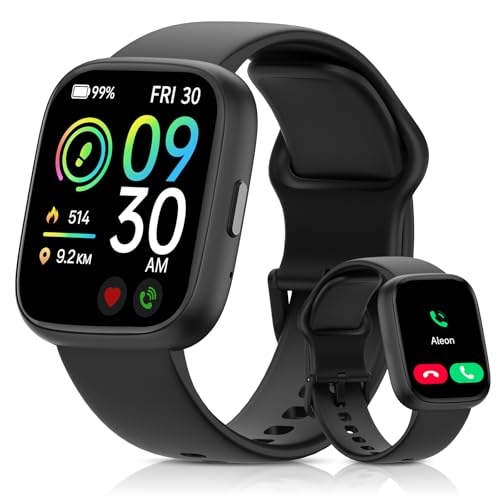










Smartwatches are increasingly used to track health metrics such as heart rate, sleep, and activity levels. Some models also claim to estimate blood pressure, raising an important question: how accurate are these readings compared with traditional monitors?
While smartwatch-based blood pressure tracking can help identify trends over time, it works very differently from medical-grade measurements. Understanding how these features work—and their limitations—can help you decide when smartwatch data is useful and when a validated cuff is still necessary.
Quick Answer: Are Smartwatch Blood Pressure Readings Accurate?
Smartwatch blood pressure readings can provide general trend insights, but they are not a substitute for medical-grade blood pressure monitors.
Most smartwatches estimate blood pressure using optical sensors and algorithms rather than directly measuring pressure in the arteries. Because of this, readings can vary depending on calibration, wrist position, and movement.
For routine health monitoring, smartwatch estimates may help track patterns. For medical decisions or diagnosis, healthcare professionals still recommend validated upper-arm blood pressure cuffs.
What “Blood Pressure” on a Smartwatch Really Means
Smartwatches vary by brand and model in how they deliver blood pressure data. There are three primary categories you’ll encounter, so it’s good to know what each one means:
Cuff-Based Wearable BP Monitors
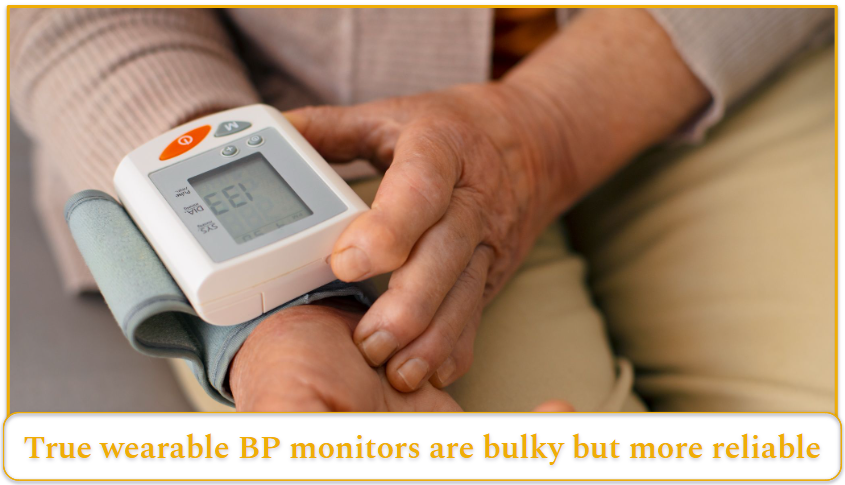
Some wearables have small, built-in inflatable cuffs, allowing them to measure blood pressure more accurately than smartwatches that solely rely on pulse waves. They’re usually bulkier than standard smartwatches, but can be used as diagnostic tools with guidance.
Cuffless Estimated Blood Pressure
Most smartwatches from top brands use the same optical sensors that measure heart rate, combined with pulse wave analysis, to estimate blood pressure. It’s not as accurate as true cuff-based measurements, but it’s the most convenient way to quickly check your blood pressure and spot trends over time.
TIP: Learn more about how smartwatches track your health in this guide.
Hypertension Risk Detection
Some wearables do not provide a numerical blood pressure reading at all. Instead, they monitor signals such as:
- pulse wave variability
- heart rate trends
- activity patterns
These signals may indicate patterns associated with hypertension risk, though they do not measure blood pressure directly.
Why Measuring Blood Pressure at the Wrist Is Difficult
Blood pressure is traditionally measured at the upper arm because it provides a stable reference point relative to the heart.
At the wrist, several factors can affect measurements:
- wrist position relative to heart level
- strap tightness
- sensor contact with skin
- movement during measurement
Even small positioning changes can affect readings.
Other biological factors also influence measurements, including:
- wrist anatomy
- skin thickness
- hair density
- blood vessel depth
Because these factors vary widely between individuals, cuffless smartwatch estimates can be inconsistent without careful calibration.
How Accurate Are Smartwatch Blood Pressure Readings?
Smartwatch accuracy depends heavily on measurement conditions.
In controlled conditions—such as:
- Sitting still
- Keeping the wrist at heart level
- Maintaining good sensor contact
- Using recent cuff calibration
Some smartwatch systems can approximate blood pressure readings reasonably well.
However, real-world use introduces variables such as movement, sweat, and shifting straps, which can cause readings to vary.
For this reason, smartwatch blood pressure features are generally best used for long-term pattern tracking rather than precise measurements.
How Major Smartwatch Brands Handle Blood Pressure
Different smartwatch brands vary in what they offer for blood pressure readings. Some offer both cuffless estimates and true cuff-based readings, but these are limited to less popular brands such as Omron and Huawei.
Samsung smartwatches are unique among top brands in that they use cuff calibration to deliver accurate readings. They sync with a cuff and take three separate readings to create a baseline between readings from the cuff and the smartwatch. The model lasts roughly 28 days and provides significantly more accurate readings than smartwatches that rely solely on cuffless estimates.
Here’s a look at what every top smartwatch brand can track:
How to Improve Smartwatch Blood Pressure Accuracy
While smartwatch blood pressure readings are never as accurate as those from medical-grade cuffs, there are practical steps you can take to get readings within 5 mmHg of those from a diagnostic test.
Calibrate When Required
Some devices require calibration using a traditional cuff monitor. Recalibration is often recommended every 3–4 weeks.
Follow the Proper Measurement Position
For the best readings:
- Sit upright and relaxed
- Keep your wrist at heart level
- Remain still during measurement
Focus on Long-Term Trends
A single reading rarely provides meaningful insight. Instead, watch for patterns across weeks or months.
Question Outliers
If readings differ significantly from your normal pattern—or how you physically feel—confirm with a traditional monitor.
What to Use Instead (If You Need Accurate BP)
If you need reliable or clinical blood pressure readings, a validated upper-arm cuff remains the recommended option.
Traditional monitors measure blood pressure by:
- Inflating the cuff to restrict blood flow
- Gradually releasing pressure
- Detecting arterial pulse changes
This direct measurement method is far more precise than the algorithm-based estimates used by most smartwatches.
For medical monitoring, diagnosis, or medication management, healthcare providers still rely on validated cuff-based monitors.
If an arm band isn’t feasible, you can also try a wrist version.
Source: Freepik