

















The truth is, the type of air fryer you choose matters just as much as the brand. Capacity, layout, airflow design, and added features all affect cooking speed, ease of cleaning, and how much you can make at one time.
In this guide, we’ll break down the main types of air fryers — basket, oven-style, paddle, and combo models — so you can confidently choose the one that fits your space, budget, and cooking style.
Basket-style Air Fryer
![[MK] Draft: Types of Air Fryers](https://www.market.com/wp-content/uploads/2025/08/-mk-draft-types-of-air-fryers-2.png)
Pros
- Straightforward to use
- Easy to clean
- Takes up minimal amount of countertop space
- Cheap
Cons
- Smaller cooking capacity
- Fewer presets and features
- No visibility while cooking (in most cases)
- Single function (usually)
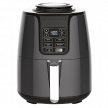
Basket-style air fryers are the most common type. When people picture an air fryer, this is usually what they’re thinking of.
They feature a pull-out drawer with a removable nonstick basket. Food sits on a raised tray, allowing hot air to circulate underneath for even crisping. These models are compact enough to fit easily on most countertops and are simple to store when not in use.
If you’re cooking for one or two people, this style makes the most sense. It’s perfect for snacks, frozen foods, or quick weeknight meals.
Some basket air fryers include two separate cooking compartments. Each basket can run independently, meaning you can cook different foods at different temperatures and times simultaneously.
If you want basket-style simplicity but need more flexibility, this is a strong middle-ground option.
Oven-style Air Fryer
![[MK] Draft: Types of Air Fryers](https://www.market.com/wp-content/uploads/2025/08/-mk-draft-types-of-air-fryers-3.png)
Pros
- Larger cooking capacity
- Usually comes with additional features and presets
- Can replace several kitchen appliances at once
- Transparent door for better visibility
Cons
- More expensive
- Harder to clean (more parts to clean)
- A bit slower
- Takes up more space
Oven-style air fryers resemble toaster ovens, with a front-opening glass door and interior racks or trays.
They’re bulkier, but that extra space means greater cooking capacity.
Many models can:
- Cook multiple dishes at once
- Roast a small whole chicken
- Bake, broil, or dehydrate
- Include rotisserie attachments
For families or anyone who wants to cook full meals at once (like salmon and smashed potatoes together), this style makes more sense than a small basket unit.
You’ll pay more — and you’ll give up counter space — but you gain versatility.
Paddle-style Air Fryers
![[MK] Draft: Types of Air Fryers](https://www.market.com/wp-content/uploads/2025/08/-mk-draft-types-of-air-fryers-4.png)
Pro
- Added convenience for certain types of food (low-effort)
- Easier to clean than some other types
- Even cooking
Cons
- More limited use case
- Need to be careful with crowding
- Not many models
Paddle-style air fryers are less common. Most available models come from lesser-known brands, though a few well-known manufacturers have produced them.
The defining feature? A built-in paddle that automatically moves or flips food during cooking.
This is especially useful for:
- French fries
- Diced vegetables
- Small, evenly cut foods
You won’t need to pause the cycle to shake the basket.
However, the paddle can interfere with larger or delicate foods. Steaks, breaded items, or fragile ingredients may break apart.
Many models allow you to remove the paddle, but that reduces the main benefit of this design.
Air-fryer combos
![[MK] Draft: Types of Air Fryers](https://www.market.com/wp-content/uploads/2025/08/-mk-draft-types-of-air-fryers-5.png)
Pros
- 2-in-1 functionalities save space and money
- Can do more than air fry
Cons
- Can be a little more complicated to use
- A little harder to clean
- Pricier
There’s a whole other category of kitchen appliances that can air fry, but aren’t technically air fryers themselves. These include microwaves, pressure cookers, and more all with added air fry capabilities.
It’s a great concept as you don’t need to make space for two separate devices in the kitchen, but they can be a little pricier. Of course, the added functionality means added versatility making them a good addition to those with limited space but wanted to do more than just air fry.
- Pressure cooker-air fryer combos — These are multi-cookers (like the Instant Pot) that include an air frying lid or attachment. They combine the capabilities of a pressure cooker, slow cooker, and air fryer in one appliance.
- Microwave-air fryer combos — Some modern microwave ovens now include built-in air frying functionality. These usually include a convection fan and crisping tray to mimic the air fryer effect.
- Toaster oven-air fryer hybrids — These are essentially oven-style air fryers, but the term is often used when the unit places equal emphasis on toasting and air frying. Many of these models include presets for toast, bake, broil, and reheat in addition to air fry.
- Rotisserie air fryers — Some oven-style air fryers include a rotisserie spit for cooking whole chickens, kebabs, or other rotating dishes. These allow for more even browning on all sides of the food.
Types of Air Fryers: Comparison
How to Choose the Right Type of Air Fryer
Not all air fryers fit every household. Here’s how to think about it:
Choose Basket-Style If:
- You cook for 1–2 people
- You mainly make snacks or small meals
- You want simplicity and easy cleanup
- Budget matters
Choose Oven-Style If:
You cook for 3–5 people
You want to cook full meals at once
You want baking, broiling, or dehydrating
You have enough counter space
Choose Paddle-Style If:
- You cook fries or diced vegetables frequently
- You want automatic stirring
- You don’t mind limited model options
Choose a Combo Model If:
- You want one appliance to replace multiple devices
- You’re short on space
- You’re comfortable with a slightly more complex interface
Maintenance
When it comes to maintenance and ease of use, the most basic air fryers, the basket-style, are the easiest. Cleaning is straightforward because you can remove the whole basket and soak or wash it in the sink. The tray inside, which raises food off the bottom to allow air circulation, is typically dishwasher-safe as well (though always check your manual to be sure).
Oven-style air fryers usually come with dishwasher-safe trays and accessories for easy cleanup. However, if anything splatters or drips inside, you have to clean these areas with a rag and cleaning solution, similar to how you’d clean a microwave or oven.
Multi-cooker air fryers share similar cleaning requirements with oven-style models but may have an additional component, such as an air fryer lid (in pressure cooker combos), that also needs cleaning. This lid is removable and can be washed like a tray.
Paddle-style air fryers are a bit harder to clean because the paddle itself requires cleaning. Usually, the paddle can be removed, but if it can’t, cleaning becomes more involved. This means one more piece to wash compared to basket-style air fryers.
Ease of Use
Basket-style air fryers are generally the easiest to use, mostly because they have fewer features. Most air fryers are straightforward — you just select a temperature and cooking time. Even when air fryers advertise “modes,” these are usually just presets adjusting temperature and time; the basic cooking function remains the same.
Oven-style models tend to offer more features. They often provide a wider range of temperatures and more cooking modes. Some oven-style air fryers include broiling capabilities with a top heating element for intense, direct heat, and even rotisserie functions with food thermometers that plug into the unit to display internal temperature.
Paddle-style air fryers automate stirring via the paddle, which makes them hands-off during cooking. However, you need to be mindful not to overcrowd the basket, or the paddle may damage the food. Certain recipes won’t work well with a paddle constantly moving delicate items (like steaks), so the paddle will need to be removed for those.
Multi-cookers tend to be more complex simply because they offer multiple cooking methods (pressure cooking, slow cooking, sautéing, air frying). This doesn’t make them difficult but means they have a steeper learning curve compared to single-function air fryers.
Placement and Ventilation
Tip: Oven-style air fryers and multi-cookers tend to be bulkier, and people often stack items on top of them or push them flush against walls. However, all air fryers require space to breathe because they expel hot air, usually out the back. This hot air needs room to escape safely.
Oven-style air fryers are more likely to produce visible steam during cooking. This steam is usually just moisture escaping and not smoke, but it’s worth being aware of in smaller or less ventilated kitchens.

