











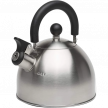









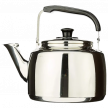
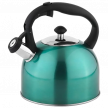


After years of working with heating systems, I keep coming back to a simple truth: the straightforward solution usually wins. Stovetop kettles have no electronics to fail, no circuit boards to corrode, and they’ll keep working during power outages when your electric kettle becomes a useless hunk of plastic. From an engineering perspective, direct heat applied to a properly designed vessel remains one of the most efficient ways to boil water.
The cheap $30 kettle sitting on the shelf next to the $90 model isn’t just marked up for profit. Six months from now, that budget option will have a warped base and uneven heating. The pricier model will still be working reliably twenty years from now. The difference comes down to design details that create this massive gap in performance and longevity. I’m breaking down what you should actually care about when picking a stovetop kettle: features that determine whether you’ll be happy with your kettle for decades or replace it in a year.
The Foundation: Base Construction and Heat Distribution
The base is where most cheap kettles fail. I’ve tested enough of them to see the pattern: thin, single-layer stainless steel bases start warping within months, creating hot spots that make the kettle rock on your burner. Once that happens, heating becomes inefficient, and the warping only gets worse with each use.
Multi-layer encapsulated bases solve this problem through smart engineering. Picture a sandwich: stainless steel on the outside, aluminum in the middle. Aluminum conducts heat about 15 times faster than stainless steel, spreading it evenly across the entire base. You get even heating with no hot spots or warping. Stainless layers add durability and scratch resistance. It costs more to make, but the payoff is years of dependable use.
Look for specifications that mention tri-ply construction or encapsulated bases. Heavy-gauge single-layer stainless (0.8mm or thicker) can work, but it won’t distribute heat quite as evenly. Anything thinner than 0.5mm will warp. This is where budget kettles cut corners, and you’ll notice it fast.
Stovetop Compatibility: Matching Your Kettle to Your Heat Source
Different heat sources need different base designs. Here’s what matters for each type.
- Induction cooktops. Induction requires a magnetic base to work. Most stainless steel is magnetic, but not all of it. The aluminum core in multi-layer bases isn’t magnetic, so the outer stainless layers must be thick enough to trigger the induction burner. Quality kettles heat quickly and evenly across all cooktops, so buying induction-compatible ensures future flexibility.
- Gas and Electric Coil. These are the most forgiving heat sources. Gas distributes heat well, while electric coils rely on direct contact, so base flatness matters more. A slightly uneven base wastes energy and leads to slower boils.
- Ceramic and Glass Cooktops. You need a flat base, no exceptions. Warped or uneven bases reduce contact area, which slows down heating and can damage your cooktop. Glass scratches easily, too, so check that the base finish is smooth with no rough spots or manufacturing burrs.
Safety First: Whistle Mechanisms That Actually Work
A whistle isn’t optional; it’s an essential safety feature that prevents dry-boiling and possible fire hazards. I’ve evaluated dozens of whistle mechanisms, and automatic whistles are far more reliable than manual flip-up types because they activate automatically when the lid is closed. Forgetting a manual whistle even once can permanently damage your kettle.
Two-tone or harmonic whistles are easier to hear from other rooms compared to single-tone versions. Some models let you adjust the volume, which helps if the default whistle is too loud for your space. The whistle should open smoothly with one hand, but shouldn’t pop open under steam pressure.
Handle Safety: Staying Cool Under Heat
I’ve treated enough kitchen burns to take handle design seriously. Poorly designed kettle handles cause a lot of injuries. Phenolic resins and Bakelite don’t transfer heat well, which means your hands stay safe even after prolonged boiling. These materials were engineered specifically for high-temperature work. Silicone-wrapped metal handles look modern, but I’ve burned myself on too many of them. The silicone layer needs substantial thickness to actually insulate properly.
Pay attention to these key design elements:
- Heat shields. Physical barriers between the handle base and the kettle body to block radiant heat transfer.
- Stay-cool engineering. Handles placed away from steam vents and heat sources.
- Grip clearance. At least 1.5 inches between your hand and the hot kettle body.
- Grip texture. Enough to hold securely when your hands are wet without digging into your palm.
Body Materials and Wall Thickness
Every material choice involves trade-offs between performance, upkeep, and appearance. Understanding how these materials behave under heat will help you choose one that fits your routine and expectations. Here’s the reality of what you’re buying:
I prefer 304 stainless for most people. It’s durable, won’t mess with your water’s taste, and is low-maintenance. The 316 grade handles salt corrosion better, which is useful near the ocean but overkill for households. Copper delivers exceptional heat conductivity and a classic look but needs regular polishing to stay bright. Enamel coating gives you color choices, but once it chips, the exposed steel rusts quickly.
Thicker walls (1.0mm and up) hold heat longer after you take the kettle off the burner and resist dents. Thin walls lose heat quickly and damage easily. When comparing models, pick them up – substantial construction always feels different from flimsy.
Pour Control and Spout Design
Spout design directly affects safety and precision. Gooseneck spouts give you precision control over flow rate and direction. Coffee nerds love them for pour-over brewing, but they’re also just safer. Traditional curved spouts get the job done if precision doesn’t matter to you, while wide spouts tend to splash when pouring from a full kettle.
A good spout has an anti-drip tip. It stops water cleanly when you finish pouring instead of running down the outside. That small design detail prevents daily messes and long-term rust along the spout
Lid Security: Preventing Mid-Pour Accidents
I’ve seen what happens when a lid falls off mid-pour. Poorly designed lift-off lids can detach mid-pour, causing serious burns. Hinged lids are safest – they stay connected even if the latch loosens over time. Screw-on lids stay tight but quickly become tedious to use. Lift-off styles can work if they fit snugly, but quality control varies between brands, and the fit tends to loosen with use. Always test lid stability before buying.
Capacity Considerations for Stovetop Use
Kettle size directly impacts heating time and ease of use. A 3L kettle takes about 50% longer to boil than a 2L kettle. For most households, 2.5L capacity kettle provides the best balance – large enough to make several cups without waiting forever for it to boil.
Anything bigger than 3.5L and the kettle becomes heavy and awkward when full, increasing your risk of spilling. Smaller kettles (under 1.5L) are fine if you live alone, but they’re impractical when you have guests over.
Handle Attachment: The Overlooked Critical Detail
Nobody thinks about handle attachment until it fails. Weak attachments are the leading cause of kettle failures and serious burns. Welded or riveted handles with reinforcement plates distribute stress evenly, keeping the handle secure through thousands of heating cycles. Spot welds and crimped tabs focus stress on small points that eventually crack from thermal expansion.
Look at where the handle meets the body. You should see substantial rivets with backing plates or a continuous weld line rather than small spot joints.
Warranty as a Quality Indicator
The warranty shows you how confident the manufacturer is in their engineering. Lifetime coverage means they’re betting on decades of use; one-year coverage suggests they’re planning for failures and trying to limit how long they’re on the hook. While it’s not always accurate, it’s a useful signal.
You can think about the math here. Replacing a $30 kettle every three years costs you more over time than buying one $90 kettle that works for twenty years. Plus, the better-built model also performs more efficiently throughout its lifespan.
Leading Manufacturers: Quick Overview
All-Clad and Le Creuset make kettles with premium materials and consistent craftsmanship. Cuisinart and OXO hit a nice balance between quality and price. For detailed brand comparisons and specific model recommendations, see our kettle buyer’s guide.
Common Mistakes Stovetop Kettle Buyers Make
- Buying thin stainless steel to save money. Warps quickly, causing uneven heating and instability.
- Choosing enamel color over build quality. Chips lead to rust and contamination.
- Skipping induction compatibility. Limits future cooktop options.
- Overlooking handle insulation. Results in burns and poor grip safety.
- Buying oversized kettles. Slower boiling, heavier handling, higher spill risk.
- Ignoring whistle reliability. Manual or weak whistles increase dry-boil risk.
- Neglecting warranty length. Short coverage often signals low-quality construction.
Which Stovetop Kettle is Right For You?
For a kettle that’ll outlast your kitchen appliances, get encapsulated base construction, an automatic whistle, and phenolic handles. These three features give you safety, efficiency, and longevity. Plan on spending $70-$120 for proper construction.
For budget-conscious buyers, you can compromise on capacity and warranty, but not on safety. Prioritize an automatic whistle and cool-touch handles, since they can help prevent serious injuries. A $50 kettle with those features is far better than a $35 model that poses risks.
Before purchasing, confirm these essentials:
- Automatic whistle
- Cool-touch handle
- Flat base suited to your cooktop
- Hinged or snug-fitting lid
- Reinforced handle attachment