
























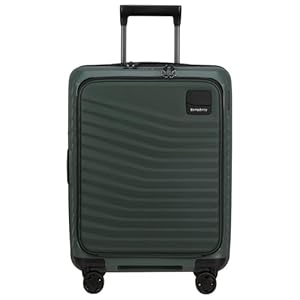


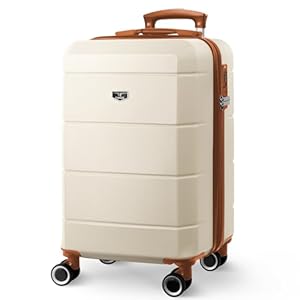


Summary: The best carry-on suitcase fits airline rules, rolls smoothly, and holds up over time. This guide explains how size, weight, wheels, materials, and build quality affect real travel so you can choose one that works consistently.
Carry-on suitcases all promise the same thing: skip the baggage claim, move faster through the airport, and keep your essentials within reach. But in practice, not all carry-ons actually deliver. Small differences in size, weight, wheel quality, and construction can determine whether your bag fits overhead effortlessly or gets gate-checked, whether it rolls smoothly or becomes frustrating to handle after a few trips.
I’ll go over what actually matters when choosing a carry-on suitcase. From airline size limits and weight restrictions to wheel systems, materials, and long-term durability, the goal is to help you understand how these features perform in real travel scenarios. Whether you fly occasionally or every month, you’ll be able to choose a carry-on that works consistently, not just one that looks good on paper. For a broader overview of luggage types and how they compare, it helps to read our main suitcase guide before deciding.
Which Carry-On Suitcase Should You Choose?
- For frequent flyers and business travel: Look for a lightweight hard-shell carry-on with durable components. A compact size that fits stricter airline limits helps you avoid issues across different carriers.
- For short weekend trips: Prioritize efficient packing space and good compression. Weight matters less here, but smooth maneuverability still makes a difference.
- For international or budget airline travel: Choose a smaller, lighter carry-on that stays within stricter limits. Expandability is less useful here since stricter airlines are more likely to enforce size limits.
- For durability and long-term use: Focus on materials and build quality. Polycarbonate shells, reinforced corners, and high-quality wheel systems hold up better over time.
- For maximum packing flexibility: Soft-shell carry-ons or expandable designs give you more flexibility, especially if you tend to overpack. Just be aware that expansion can push the bag beyond carry-on limits.
- If you plan to use it for years: Don’t compromise on core components. Wheels, handles, and zippers determine how long the suitcase lasts. Since these are the most common failure points, investing in higher-quality construction upfront usually saves money over time.
Size Compliance: The Non-Negotiable Starting Point
If your bag doesn’t meet airline size limits, it’s not a carry-on – it’s a checked bag you’ll end up paying for. Carry-on size restrictions refer to the total external dimensions of the suitcase, including wheels, handles, and any protruding parts. This is where many travelers get caught out. The difference between 21.5″, 22″, and 22.5″ might sound minor, but airlines measure precisely – and enforcement is often strict.
Budget airlines like Spirit and Frontier typically enforce a 21.5″ limit, and gate agents do check. Even being half an inch over can result in a $60+ fee. Most domestic carriers allow up to 22″, but many international airlines use stricter limits, sometimes smaller than 21.5″, especially on regional aircraft.
Buying a slightly oversized bag for “a bit more space” is rarely worth it. If your bag doesn’t fit in the overhead bin or gets flagged at the gate, it will be checked. That means waiting at the jet bridge, risking damage, and losing the time-saving advantage of traveling carry-on only.
Always measure the suitcase yourself. Don’t rely on manufacturer specs. Some brands list internal dimensions, while others exclude wheels and handles entirely. A bag labeled “carry-on compliant” can easily measure closer to 23″ in real-world use. For a step-by-step breakdown, you can check out our guide on how to measure a suitcase to avoid common sizing mistakes.
What To look For:
- Total height including wheels and handle ≤ 21.5–22″
- Compact wheel design that doesn’t add unnecessary height
- Clear external dimensions listed (not just internal capacity)
Wheel Systems: Maneuverability in Tight Spaces
Wheel design has a direct impact on how easy your suitcase is to handle, especially in crowded airports and narrow airplane aisles.
- A spinner suitcase uses four wheels that rotate 360°, allowing you to roll the bag upright beside or in front of you
- A two-wheel (inline) suitcase must be tilted and pulled behind you
For carry-ons, spinners are the better choice in almost every scenario. Dragging a two-wheel bag down a narrow aisle often leads to bumping seats and slowing down boarding. Spinners let you move smoothly through tight spaces and position the bag more easily when lifting it into overhead bins.
That said, not all spinner systems perform the same, and wheel quality matters. Higher-end suitcases use sealed bearings (often from Japanese or German manufacturers), which maintain smooth rotation over time. Lower-quality wheels can degrade quickly, leading to stiffness, wobbling, and increased strain on the handle.
Once wheels start failing, it creates a chain reaction. You pull harder, which puts more stress on the telescoping handle – and now multiple components are wearing out at once. Wheel size also plays a role in long-term performance. Larger wheels (around 50mm or more) roll more smoothly over uneven surfaces like cobblestones, sidewalks, and airport transitions, which reduces strain on both the wheels and the handle over time.
What To look For:
- Four-wheel spinner system (not two-wheel)
- Smooth, quiet rolling with minimal resistance
- Larger wheel diameter for better stability
- Reinforced wheel housings
What To Avoid:
- Small, hard plastic wheels with no suspension
- Wheels that feel stiff or uneven when tested
- Poorly mounted wheels with visible flex
Weight: Every Ounce Counts
Carry-on weight limits are often overlooked, but they can be just as restrictive as size limits, especially on international airlines. Many airlines impose carry-on weight limits between 7–10 kg (15–22 lbs). Some weigh bags at check-in or the gate, particularly on European and low-cost carriers. If your suitcase is heavy before you’ve packed anything, you’re already at a disadvantage.
A suitcase weighing 8 lbs leaves you with very little capacity for clothes, shoes, and electronics before hitting the limit. For most travelers:
- Under 5 lbs → ideal for maximizing packing allowance
- 5–6.5 lbs → balanced option (good durability + usability)
- 7+ lbs → starts to limit what you can realistically pack
Lightweight suitcases typically use thinner materials, such as lightweight polycarbonate. This can slightly reduce impact resistance, but for carry-ons (which you handle yourself most of the time), the tradeoff is usually worth it.
Weight also affects usability. You’ll be lifting your bag into overhead bins, carrying it up stairs, and maneuvering it throughout your trip. A heavier suitcase adds noticeable strain, especially on longer travel days.
Shell Construction and Durability
Carry-ons experience a different kind of stress than checked luggage. Instead of being thrown around, carry-ons are constantly pushed, twisted, and compressed inside overhead bins. Bags get forced into tight spaces, stacked on top of each other, and shifted during the flight. Over time, this kind of pressure can wear down weaker materials and structural points.
Material Selection
Suitcases generally fall into two categories: hard-shell and soft-shell. Hard-shell suitcases use rigid materials like polycarbonate or ABS plastic:
- Polycarbonate is the preferred option for frequent travelers. It’s flexible, meaning it absorbs impact without cracking.
- ABS is more affordable but more brittle. It’s fine for occasional travel, but it’s more prone to cracking under pressure.
- Aluminum offers excellent protection, but it’s significantly heavier. For carry-ons, the added weight usually outweighs the benefits.
Soft-shell suitcases are made from woven fabrics (like nylon or polyester):
- Offer flexibility and external pockets
- Often include expandable sections for extra capacity
- Provide less protection for fragile items
Soft-shell bags can work well if you primarily pack clothes and want easier access to items. But if you carry electronics, cameras, or anything delicate, a hard-shell case offers better protection. For a deeper comparison of materials, you can read our guide on hard suitcase vs soft to see which performs better for your travel style.
Corner Reinforcement
- Corners are the most common failure point on a suitcase. When pressure is applied, like when another bag is stacked on top, stress concentrates at the corners. Without reinforcement, this leads to cracking or structural weakening over time. High-quality suitcases include:
- Reinforced corners or corner guards
- Additional support around wheel mounting points
- Impact-resistant edge construction
Weak corner construction can lead to more serious failures. In some cases, wheels can detach entirely if the surrounding structure isn’t strong enough – and at that point, repairs often cost more than replacing the suitcase.
What To Look For:
- Polycarbonate shell for durability and flexibility
- Reinforced corners and edges
- Solid wheel mounting structure
What To Avoid:
- Thin, brittle plastic shells
- No visible reinforcement at stress points
- Loose or poorly integrated wheel housings
Security Features: What Actually Matters for Carry-Ons
Security features on carry-ons are fairly minimal – and that’s important to understand upfront. Unlike checked luggage, carry-ons stay with you most of the time. That means the goal isn’t high-level theft protection, but rather preventing casual access when your bag is out of sight, such as during gate-checking or security inspections.
TSA-Approved Locks
TSA-approved locks become relevant the moment your carry-on leaves your control. When overhead bins fill up, airlines often require passengers to gate-check their bags. At that point, your carry-on is treated like checked luggage. If security needs to inspect it and you’re using a non-TSA lock, it will simply be cut off. A TSA-approved lock allows agents to open and relock your bag using a universal key system, avoiding damage while still keeping your belongings secure.
Zipper Quality
Zippers are the most failure-prone part of any carry-on. They’re used constantly and often under tension when the bag is fully packed. Over time, weak zippers start to separate, skip teeth, or break entirely – and once that happens, the suitcase becomes unreliable.
High-quality carry-ons typically use YKK #10 zippers, which are designed to handle repeated stress without deforming. The difference becomes noticeable after a dozen trips, when cheaper zippers begin to fail.
Even small details matter. If a zipper pull breaks, the bag becomes difficult to use. With reputable brands like YKK, replacement pulls are widely available. With generic zippers, they often aren’t.
What To look For:
- YKK or similarly high-quality branded zippers
- Smooth, consistent movement without resistance
- Sturdy metal pulls (not thin or flexible)
Handle Systems: Comfort and Long-Term Reliability
Handle design directly affects how comfortable your suitcase is to use, especially over long travel days. A telescoping handle locks at multiple height positions. This allows different users to adjust it properly and helps maintain a natural walking posture. A handle with only one height setting often forces you to hunch or overextend your arm, which becomes uncomfortable quickly in large airports.
Material quality also matters. Lower-cost suitcases often use plastic handle systems, which can crack at stress points where segments slide together. Aluminum handles are more durable and maintain their structure over time, even with frequent use.
Carry handles are just as important, and often overlooked. You won’t always be rolling your bag. Lifting it into an overhead bin, pulling it out of tight spaces, or carrying it up stairs requires good grip and leverage. A single top handle isn’t enough in many situations. A well-designed carry-on should include:
- A top handle for standard lifting
- A side handle for horizontal carrying
- A bottom handle to help pull the bag out of overhead bins
That bottom handle, in particular, makes a noticeable difference when dealing with tightly packed compartments.
Warranty Coverage: What It Tells You About Build Quality
Warranty length is one of the clearest signals of how a suitcase is built. Manufacturers don’t offer long warranties on products they expect to fail. A carry-on with a 1–2 year warranty often reflects lower-cost materials and a shorter expected lifespan. Bags with 5–10 year warranties tend to offer more reliable construction, but still have defined limits.
A lifetime warranty usually indicates higher confidence in durability, but it’s important to read the details. A strong warranty doesn’t guarantee perfection, but it reduces long-term risk, especially if you travel frequently.
Interior Organization: Packing Efficiency for Short Trips
Carry-ons are designed for short trips, so the interior should prioritize efficient use of space and stability while in transit, not extra compartments that reduce capacity. Here are the features that actually make a difference:
- Compression straps: One of the most important features. Compression straps hold your clothes in place and reduce bulk, helping you fit more without exceeding size limits. Cross-pattern straps are more effective than single straps because they secure items from multiple angles and prevent shifting during travel.
- Laptop compartment (if needed): Many carry-ons include a laptop section, but quality varies widely. A proper compartment should be padded and slightly suspended from the outer shell so impacts aren’t transferred directly to your device. Thin fabric sleeves offer little real protection.
- Internal dividers and pockets: Mesh dividers and small pockets can help organize accessories and smaller items. They’re useful, but should not come at the cost of the main packing space. Overbuilt interiors often reduce flexibility when packing bulkier items.
- Expandability: Expandable sections add extra depth, usually around 2–3 inches. This can be helpful on return trips when you have more to pack. However, expansion often pushes the suitcase beyond carry-on size limits, which may result in gate-checking.
For even more compact packing options, you can check out our mini suitcases guide if you typically travel very light.
Will Your Carry-On Actually Fit in the Overhead Bin?
Overhead bin space is more limited than most people expect, especially on full flights or smaller aircraft. Even if your suitcase meets official size limits, its shape and exterior design determine how easily it fits. Bags with bulky profiles or protruding features tend to get caught on the edges, slowing down boarding and increasing the chances of being forced to gate-check.
Hard-shell carry-ons with smooth exteriors slide into bins much more easily, even when space is tight. Soft-sided bags, especially those with external pockets, can snag or require awkward repositioning to fit properly.
Front pockets are one of the most common problem areas. If a pocket adds even 2–3 inches of depth, it can prevent the bag from fitting in the required orientation, usually wheels-first. Some designs solve this by recessing the pocket into the shell, but outward-facing pockets often create clearance issues.
Structure also matters once the bag is inside the bin. Hard-shell suitcases maintain their shape when other luggage is stacked on top. Soft bags tend to compress and deform, which can make them difficult to remove later. If you’ve ever been stuck waiting while someone wrestles their bag out of a tightly packed bin, you’ve seen this firsthand.
Common Mistakes When Choosing Carry-Ons
Most carry-on mistakes come down to focusing on the wrong features.
- Choosing based on looks or brand name: A good-looking suitcase doesn’t tell you anything about how it performs. Features like USB ports or flashy finishes don’t matter if the wheels fail or the handle breaks after a few trips. You’re buying a functional system, not a fashion item.
- Ignoring airline size differences: “Carry-on size” is not universal. A bag that works on one airline may exceed limits on another. If you regularly fly budget or international carriers, choosing a slightly oversized bag can lead to consistent fees.
- Testing the bag empty, not packed: Many suitcases feel smooth in the store but perform very differently when fully loaded. Weak wheels and flexible handles only show their limitations under real weight. It’s worth packing the bag before your first trip to understand how it actually handles.
Which Carry-On Suitcase Is Right for Your Travel Style?
The right carry-on depends less on features and more on how you actually travel.
- If you fly frequently (monthly or more): Invest in a premium suitcase with durable components and a strong warranty. Frequent use puts consistent stress on wheels, handles, and zippers, so build quality matters more than price.
- If you travel a few times a year: A mid-range suitcase usually offers the best balance. You don’t need top-tier materials, but you still want reliable components that won’t fail after limited use.
- If weight is your top priority: Look for lightweight polycarbonate shells under 5 lbs paired with a solid handle system. You’ll give up some impact resistance, but the reduced strain when lifting and moving the bag is worth it.
- If you’re on a tighter budget: Focus on the components that fail first. Wheels, handles, and zippers matter more than branding or extra features. A lower-cost suitcase with solid hardware will outperform a more expensive one with weak construction.