





























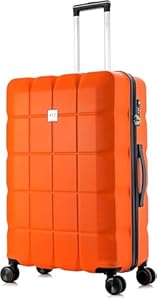


Summary: A lightweight suitcase should make travel easier, but not all of them do. This guide explains how to choose one that’s genuinely practical, from weight and capacity to materials and real-world performance.
Lightweight suitcases all promise the same thing: less weight, easier travel. But in practice, not all of them actually deliver. Some save weight by cutting capacity, others by using weaker materials, and many end up being less practical once you start packing.
I’ll lay out what actually matters when choosing a lightweight suitcase. From how weight is measured to which materials and features make a real difference, the goal is to help you choose something that’s not just light on paper, but genuinely easier to travel with. For a broader overview of how different suitcase types compare, you can check out our main suitcases buyer’s guide.
Which Lightweight Suitcase Should You Choose?
- For carry-on travel and strict airline limits: Look for a suitcase under 6 lbs with a strong weight-to-capacity ratio. A compact but efficient interior matters more than extra features. Spinner wheels and a lightweight handle make it easier to lift into overhead bins and move through the airport.
- For checked luggage and longer trips: Prioritize very low empty weight (ideally under 5–6 lbs for larger cases) so you don’t lose packing allowance. A durable polycarbonate shell and reinforced stress points matter more here, since checked bags take more impact.
- For frequent flyers: Focus on efficiency and reliability. A good weight-to-capacity ratio, durable materials, and high-quality components (like zippers and handles) will make a bigger difference over time than shaving off the last few ounces.
- For maximum packing space: Choose a suitcase that balances weight with higher capacity rather than going for the lightest option available. Soft-sided designs can help here, as they often provide more usable space at a lower weight.
- For the lowest possible weight: Soft-sided suitcases or ultra-light polycarbonate models are the best options. Just make sure the build quality holds up – cutting too much weight can reduce durability.
- If you plan to use it for years: Don’t prioritize weight alone. A slightly heavier suitcase with better materials, stronger components, and a solid structure will last longer and perform more consistently over time.
What Actually Makes a Suitcase “Lightweight”?
Most people compare suitcases by the advertised weight. That’s a useful starting point, but it doesn’t tell you how practical the suitcase will be once you start packing and moving through an airport.
A lightweight suitcase isn’t just about being easy to lift empty. It’s about how efficiently it uses that weight – how much you can pack, how easy it is to maneuver, and how well it performs under real travel conditions. That includes lifting it into overhead bins, rolling it through long terminals, and handling it in and out of cars, trains, or storage spaces.
Weight-To-Capacity Ratio: The Metric That Actually Matters
The most useful way to evaluate a lightweight suitcase is by looking at how much usable packing space you get for its weight. This is known as the weight-to-capacity ratio – in simple terms, how many pounds the suitcase weighs per 10 liters of internal space.
- A lower ratio means you’re getting more packing space for the same weight
- A higher ratio means the suitcase is inefficient, even if it seems light
Example:
Two carry-ons both weigh 6 lbs:
- Suitcase A: 45L capacity
- Suitcase B: 35L capacity
You can pack significantly more in Suitcase A without carrying any extra weight. That difference becomes noticeable on every trip, especially if you’re trying to avoid checking a bag.
How To Interpret the Ratio
You don’t need to calculate this exactly when shopping, but it explains why some suitcases feel small for their weight. Choosing the right size can be tricky, so it helps to read our guide on how to measure a suitcase before deciding.
What Does Capacity Actually Mean in Practice?
Capacity is usually listed in liters, but that number only becomes useful when you translate it into how you pack. As a rough guide:
- Around 30–35L works for short trips (2–3 days)
- Around 40–45L covers most carry-on travel (3–5 days)
- Around 60–80L is typical for checked luggage (1–2 weeks)
This is why the weight-to-capacity ratio matters. A suitcase that’s slightly heavier but gives you enough space for your trip is often more practical than a lighter one that forces you to pack less or carry an extra bag.
Why Total Weight Still Matters (Airline Limits)
Even with a good weight-to-capacity ratio, total weight becomes critical once you factor in airline restrictions. Most airlines set carry-on weight limits (often around 7–10 kg / 15–22 lbs), and that includes both your suitcase and everything inside it.
- A heavier suitcase reduces how much you can pack
- A lighter one gives you more flexibility, especially on stricter airlines or international routes
Example: If your airline allows 15 lbs and your suitcase weighs 8 lbs, you’re left with just 7 lbs for your belongings. That can be limiting even for a short trip.
What To Look For:
- A carry-on that leaves at least 8–10 lbs of usable packing allowance
- A balance between low weight and practical capacity
- Materials that reduce weight without making the case feel fragile
What Counts as Lightweight for a Carry-On?
For a standard 22-inch carry-on (designed to fit most overhead bins), these weight ranges are a practical benchmark:
- Ultra-light (under 5 lbs): Premium materials and construction. Best for frequent flyers dealing with strict weight limits.
- Very light (5–6.5 lbs): The sweet spot for most travelers. Good balance between durability and usability.
- Light (6.5–7.5 lbs): Still usable, but the difference becomes less noticeable once packed.
- Standard (over 7.5 lbs): Feels heavy in real use. Best avoided if keeping weight down is a priority.
Which Suitcase Materials Actually Keep Weight Down?
Material choice is the foundation of any lightweight suitcase. It affects not just how heavy the case is, but how well it holds up to real travel – being dropped, squeezed into overhead bins, and handled repeatedly.
You can’t design around a heavy base material. The best lightweight suitcases start with materials that are naturally strong for their weight, then build everything else around that. For a deeper comparison of materials, you can check out our hard suitcase vs soft guide to see which performs better for your travel style.
Polycarbonate: The Best Balance of Strength and Weight
Polycarbonate is the benchmark for hard-shell lightweight luggage because it offers a strong balance between durability and low weight. It allows manufacturers to use thinner shells (typically around 2–3 mm) without making the suitcase fragile.
What makes polycarbonate effective in real use is how it handles impact. Instead of cracking under pressure, it flexes slightly and absorbs the force. That flexibility helps it survive drops and rough handling that would damage more brittle materials like ABS. It also means the shell doesn’t need to be overly thick, which keeps the overall weight down.
Higher-quality versions, such as Makrolon used by Samsonite, are engineered specifically for this kind of performance. The difference shows up over time, especially if you check your luggage frequently. This type of construction makes the most sense if you’re traveling with anything fragile or structured, or if your suitcase will go through regular baggage handling.
Soft-Sided Suitcases: The Lightest Option Overall
Soft-sided suitcases use materials like ballistic nylon or high-denier polyester, which are naturally lighter than rigid shells. In practice, that often translates to carry-ons in the 4–5 pound range, sometimes with as much usable space as heavier hard-shell options.
The tradeoff is protection. Fabric doesn’t shield contents in the same way a rigid shell does, especially for electronics or anything that needs structure. It’s also more exposed to wear from sharp edges or rough handling over time.
Where soft-sided luggage works well is in flexibility. If you’re comparing sizes within this style, you may also want to explore our medium suitcases guide to see how capacity scales across different formats. It can compress slightly to fit into tighter overhead spaces, and that can make a difference if you tend to pack full. For frequent flyers who prioritize weight and capacity over rigid protection, it’s often the more practical choice.
Materials To Avoid for Lightweight Luggage
Some materials look similar on paper but work against the goal of keeping weight down.
- ABS is the most common example. It’s often used in budget hard-shell suitcases and can look similar to polycarbonate, but it’s heavier and more brittle. That means you’re not only carrying more weight, but also getting less durability.
- Polypropylene blends fall into a similar category. They tend to be heavier and don’t offer the same level of impact resistance, so there’s little advantage if your goal is a lightweight build.
- Aluminum is the clearest mismatch. While it looks premium and is very durable, it’s significantly heavier than other materials. Many aluminum carry-ons weigh between 8 and 12 pounds empty, which takes a large portion of your packing allowance before you’ve added anything inside.
Where Else Does Suitcase Weight Come From?
The shell gets most of the attention, but it’s only part of the picture. Wheels, handles, zippers, and internal features all contribute to total weight – and small differences across these components add up quickly. This is where two suitcases with the same advertised weight can feel very different in real use.
Wheel Systems: Why Spinners Make a Difference
Four-wheel spinner systems are the standard for lightweight luggage, not just for convenience but for how they reduce strain.
With four wheels, the suitcase rolls upright alongside you, so you’re not carrying any of its weight. With two wheels, you have to tilt and drag the case, which means your arm and shoulder are supporting part of the load the entire time. That difference becomes noticeable in long airport walks.
Wheel construction also affects weight more than most people expect. Heavier rubber wheels can add close to a pound across a suitcase, while lighter composite wheels reduce that without affecting how smoothly the case rolls on airport floors. You don’t need oversized or “heavy-duty” wheels for typical travel—most airport surfaces are smooth, and standard sealed bearings are more than enough to keep things rolling reliably.
Handle Design: A Hidden Source of Extra Weight
Telescoping handles don’t look significant, but they can add noticeable weight depending on how they’re built.
Aluminum is the right material here. It’s lighter than steel and still strong enough for repeated use. Simpler designs also tend to be better. Handles with multiple tubes or excessive locking positions add internal components, which increase both weight and the likelihood of failure over time.
In practice, a straightforward aluminum handle with two or three height settings does everything most travelers need. Thicker tubing doesn’t necessarily improve durability, but it does add weight, so overbuilt handles are worth avoiding.
Plastic handles are sometimes used to shave off a small amount of weight, but they tend to wear out or break much faster. The tradeoff isn’t worth it in real travel conditions.
Zippers: Small Component, Big Impact
Zippers are one of the most common failure points in any suitcase, and lightweight designs can put them under more stress. Because lightweight shells are thinner, the zipper absorbs more pressure when the case is packed full or handled roughly. That makes quality especially important. Well-made zippers, like YKK #8, strike a good balance between durability and weight. Heavier versions exist, but they add bulk without much practical benefit for carry-on use.
Lower-quality or unbranded zippers are where problems usually show up. Once a zipper fails, the suitcase becomes difficult or impossible to use mid-trip, which is far more disruptive than carrying a few extra ounces.
Other Features That Impact Weight and Usability
Interior Design: Keep It Simple to Save Weight
Interior organization can quietly add a lot of unnecessary weight. Multiple dividers, layered compartments, and extra zippers may look useful, but they reduce usable space and work against the goal of keeping the suitcase light.
A simpler setup tends to work better in practice. Compression straps and a single divider are usually enough to keep items in place and separated. Beyond that, additional structure often adds more weight than real value.
Minimal mesh pockets are fine, but heavily compartmentalized interiors tend to be less efficient overall.
Reinforcement: Where It Matters (and Where It Doesn’t)
Extra protection isn’t always better when weight is a priority.
Full corner bumpers and thick edge guards add weight across the entire suitcase, even though most impact happens in specific areas. A more efficient approach is targeted reinforcement, which means strengthening the bottom corners and wheel mounts where the suitcase actually takes hits. This keeps the case durable where it needs it most without adding unnecessary material elsewhere.
Expandability: Extra Space vs Extra Weight
Expandable suitcases include a secondary zipper that adds extra packing space, usually by expanding the depth of the case. That flexibility can be useful, especially for return trips when you have more to bring back. But it comes at a cost. The expansion system adds weight through the zipper, additional fabric, and reinforced structure—often around half a pound or more.
If your priority is minimizing weight, it’s usually better to skip expansion and choose a suitcase with the right capacity from the start. If you value flexibility, then the added weight may be a reasonable tradeoff, as long as you’re aware of it.
Where Buyers Go Wrong With Lightweight Suitcases
Most mistakes come down to focusing on a single number instead of how the suitcase actually performs in use.
- Focusing only on weight instead of capacity: A 6 lb suitcase with 30L isn’t better than a 7 lb suitcase with 45L. You’re carrying less weight, but you’re also packing less. Look at how much space you’re getting for that weight.
- Saving ounces on zippers: Cheap zippers are the most common failure point. Shaving off a small amount of weight isn’t worth the risk of a suitcase that breaks mid-trip. Stick with reliable options like YKK.
- Choosing aluminum for the “premium” feel: Aluminum cases are significantly heavier than polycarbonate. You’re often adding 3–5 lbs of empty weight with no practical benefit for most trips.
- Overlooking handle construction: Plastic telescoping handles may save a few ounces, but they wear out and fail faster. Aluminum handles add minimal weight and hold up better over time.
- Chasing the lowest possible weight: Ultra-light models can sacrifice durability. If a suitcase can’t handle regular use, the weight savings don’t matter. A good lightweight case should still feel solid and reliable.
Leading Lightweight Suitcase Manufacturers
Different brands approach lightweight design in different ways, whether that’s through materials, construction, or overall design priorities.
Which Lightweight Suitcase Is Right for You?
The right choice depends less on the label and more on how you actually travel.
If you usually check luggage and pack close to airline weight limits, suitcase weight becomes critical. For example, if you typically pack around 35 pounds and your airline limit is 40, an 8-pound suitcase leaves almost no margin. In that case, you need something closer to 5 pounds just to stay within limits.
For frequent travelers, the weight-to-capacity ratio tends to matter more than the total weight. Over time, that extra packing space makes a noticeable difference, especially if you’re trying to avoid checking a bag or reduce how much you carry separately.
If you mostly travel with a carry-on, total weight becomes more important. You’ll be lifting the suitcase into overhead bins, storing it, and moving it more often, so keeping it under 6 pounds makes day-to-day use easier.
Material choice should reflect what you pack. Hard-shell polycarbonate works best if you carry electronics or anything fragile, while soft-sided designs make more sense if your priority is minimizing weight and maximizing flexibility.
In the end, the goal is simple: choose the lightest suitcase that still holds what you need and can handle how you travel. If you’re buying for younger travelers, it’s worth taking a look at our kids’ suitcases guide for lighter, size-appropriate options.