
























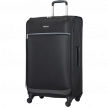
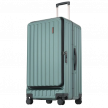
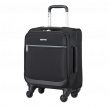
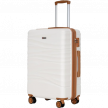
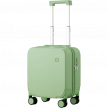
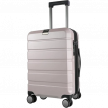
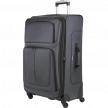

Summary: The best small suitcase fits airline carry-on limits, rolls easily through crowded spaces, and holds up over time. Focus on spinner wheels, lightweight materials, and durable components to avoid common travel frustrations.
Small suitcases seem straightforward, but the differences between them become obvious the moment you start traveling. Some glide effortlessly through crowded terminals and fit overhead without issue. Others feel awkward to maneuver, don’t quite meet airline limits, or start breaking down after a few trips.
I’ll lay out what actually matters when choosing a small suitcase, from wheel systems and materials to size compliance, weight, and durability. It’s designed for travelers who want a carry-on that works reliably in real-world conditions, not just one that looks good on paper.
Whether you travel frequently or just a few times a year, the goal is the same: choose a suitcase that fits airline rules, protects what you pack, and holds up over time without becoming a frustration. For a broader overview of how different suitcase types compare, it’s worth reading our main suitcase guide before deciding.
Which Small Suitcase Should You Choose?
- For strict carry-on travel: Prioritize true airline compliance (21.5″ or under, including wheels and handles), a lightweight build, and a compact shape that fits easily into overhead bins. Smooth spinner wheels and a stable handle matter more than extra features.
- For short trips (2–4 days): Look for efficient internal organization, including compression straps and a divider system. Packing space matters more than expandability, since you’ll want everything to fit without pushing size limits.
- For frequent travel: Focus on durability and weight. A lightweight polycarbonate shell, high-quality zippers (like YKK), and a strong warranty will hold up better over repeated use than heavier or cheaper alternatives.
- For protecting valuables (laptops, electronics): Choose a hard-shell suitcase with good structural rigidity and some level of water resistance. Internal padding and secure compartments help prevent shifting and damage.
- For flexibility on return trips: Expandable cases can be useful, but only if you’re willing to check the bag when expanded. For strict carry-on use, it’s better to rely on efficient packing instead of extra depth.
- If you plan to use it for years: Don’t compromise on core components like wheels, zippers, and handle systems. These wear out first, and higher-quality construction makes a significant difference over time.
What Actually Matters When Choosing a Small Suitcase
Small suitcases are designed for short trips and carry-on travel, but not all of them perform the same once you start using them in real situations. The difference comes down to a few core factors: how easily the suitcase moves, whether it fits airline rules, how much you can realistically pack, and how well it holds up over time.
For most travelers, this isn’t about finding the smallest or cheapest option. It’s about choosing a suitcase that works consistently—one that fits in overhead bins without stress, rolls smoothly through crowded spaces, and doesn’t develop problems after a handful of trips. A good small suitcase should:
- Move easily in tight, crowded environments
- Fit within strict airline carry-on limits
- Maximize usable packing space without becoming bulky
- Hold up to repeated handling, lifting, and impact
Everything else (materials, zippers, handles, and internal layout) feeds into these outcomes. The sections below break down how each of these factors affects real-world use so you can choose a suitcase that actually performs, not just one that looks good online.
Choosing the right size can be confusing, so it helps to read our guide on how to measure a suitcase before deciding.
Why Four-Wheel Spinner Suitcases Are the Better Choice
Two-wheel suitcases were designed for a different kind of travel. When airports were less crowded, pulling a tilted suitcase behind you worked fine. Today, with tighter spaces, security lines, and packed boarding areas, that design quickly becomes frustrating.
A two-wheel suitcase must be tilted to move, which puts constant strain on the telescopic handle and your wrist. It also limits how you maneuver. Navigating narrow aisles, elevators, or crowded terminals becomes awkward because you need space behind you to pull the bag.
Spinner suitcases use four wheels that rotate 360 degrees, allowing you to push or glide the case beside you instead of dragging it. This makes a noticeable difference in real-world travel. You can move through crowds more naturally, change direction instantly, and keep the suitcase upright at all times.
From a durability standpoint, four wheels also distribute weight more evenly. Instead of two wheels taking the full load, the stress is spread across four contact points. This reduces wear on each wheel and helps maintain smoother rolling over time.
Wheel quality matters just as much as the number of wheels. Higher-quality bearings, often found in better-built suitcases, stay smooth even after repeated use and exposure to dirt. Lower-quality wheels tend to develop wobble or resistance after a handful of trips.
Hard-Shell or Soft-Shell: Which Material Should You Choose?
Suitcase materials don’t just affect appearance – they determine how well your luggage protects your belongings, how much it weighs, and how it holds up over time.
Hard-shell suitcases are made from rigid materials like polycarbonate, ABS plastic, or aluminum. They provide structure and protect contents from impact. Soft-sided suitcases, typically made from ballistic nylon or similar fabrics, are lighter and more flexible but offer less protection. Here’s how the most common materials compare:
- Polycarbonate: Offers the best balance for most travelers. It flexes under pressure instead of cracking, which helps prevent long-term damage. Scratches can appear over time, but the structure stays intact.
- ABS plastic: Common in cheaper suitcases. It may feel sturdy at first, but repeated stress often leads to cracking, especially around corners and high-impact areas.
- Aluminum: Durable and premium-looking, but significantly heavier. For small suitcases—especially carry-ons—the added weight reduces how much you can pack within airline limits.
- Soft-sided (ballistic nylon): Works well if you’re packing mostly clothing and want flexibility. However, it offers limited protection for fragile items like electronics or toiletries that could get crushed.
For a deeper comparison of materials, you can check out our hard suitcase vs soft guide to see which performs better for your travel style.
Weight Efficiency: Every Pound Counts
Suitcase weight directly affects how much you can pack, especially with strict airline carry-on limits. Most airlines cap carry-on weight between roughly 7–10 kg (15–22 lbs), depending on the carrier. That limit includes the suitcase itself. A heavier suitcase reduces your usable packing capacity before you’ve even added anything. For example:
- 8 lb suitcase + 14 lbs packed = 22 lbs (limit reached)
- 3 lb suitcase + 19 lbs packed = 22 lbs (significantly more usable space)
That difference becomes very noticeable on longer trips or when packing bulkier items.
Shell material plays a major role here. Polycarbonate cases typically stay in the 3–4 lb range for carry-on sizes. Aluminum cases often exceed 7 lbs, while poorly designed ABS cases can be surprisingly heavy without offering better durability.
Weight alone isn’t a sign of quality. Some heavier suitcases simply use inefficient materials or unnecessary reinforcements. A well-designed lightweight case often outperforms a heavier one in both durability and usability.
What Size Carry-On Actually Fits Airline Rules?
Airlines typically advertise a 22-inch carry-on limit, but that measurement includes everything – wheels, handles, and external components. Most suitcase brands list only the shell size, which can make a bag seem compliant when it’s not.
In real-world use, anything over 21.5 inches total external height starts to become risky. This is especially true on budget airlines and smaller regional aircraft, where overhead space is more limited.
Gate-checking is where this becomes a problem. If your suitcase doesn’t fit, it gets checked at the gate, which defeats the purpose of traveling with a carry-on. You lose time at baggage claim, increase the risk of damage, and may even face unexpected fees.
- If you want maximum reliability: Choose a suitcase that stays under 21.5″ total height
- If you push to 22–23″: It may work most of the time, but occasional failures are inevitable
- If you fly budget airlines frequently: Strict compliance matters even more
Expandable Suitcases: Extra Space or Hidden Problem?
Expandable suitcases use a zipper system that adds 2+ inches of depth, giving you extra packing space when needed – typically for return trips.
The issue is that expansion often pushes your suitcase beyond airline size limits. A 21.5″ compliant carry-on can quickly become oversized once expanded. That means it may no longer fit in overhead bins, increasing the chance of being gate-checked.
- Useful for: Return trips where you don’t mind checking the bag
- Risky for: Strict carry-on travel or full flights
- Common mistake: Expanding the suitcase before boarding, then struggling to fit it overhead
Why Zipper Quality Matters More Than You Think
Zippers are one of the most common failure points in a suitcase. Unlike wheels or handles, they’re used constantly – during packing, security checks, and throughout your trip. Cheap zippers wear out quickly, leading to separation, sticking, or complete failure. Once a zipper breaks mid-trip, there’s usually no reliable fix.
- YKK #10 zippers: The most durable standard, with larger teeth that handle stress better
- YKK #8 zippers: Acceptable for lighter use, but wear faster over time
- Unbranded zippers: Higher risk of failure, especially under pressure
The slider mechanism is just as important. High-quality sliders maintain tension so the zipper stays closed under load. When this fails, the zipper can separate behind the pull—even if it looks intact.
Also, check how the zipper is attached to the case. Reinforced stitching at corners helps prevent tearing, which is another common failure point.
Do You Really Need a TSA Lock on a Carry-On?
It may seem unnecessary to lock a carry-on, but real-world travel says otherwise. Even if you plan to keep your suitcase with you, gate-checking happens frequently, especially on full flights. When that happens, your bag is handled like checked luggage.
If you’re using a non-TSA lock, security may cut it off during inspection. This can damage your suitcase or leave it unsecured for the rest of your trip.
- TSA-approved locks: Allow security to open your case without damage
- Integrated locks: More durable and convenient than external padlocks
- Combination locks: Reliable, as long as you remember the code
- Key locks: Less practical—easy to lose the key
TSA locks don’t provide high-level security, but they reduce the risk of opportunistic theft and prevent your suitcase from opening during handling.
What Makes a Durable Suitcase Handle?
The telescopic handle is one of the most stressed parts of a suitcase. It’s extended, retracted, and used for control throughout your trip – often dozens of times. Over time, lower-quality handles develop wobble, which makes the suitcase harder to steer and less stable when rolling.
- Multi-stage aluminum handles: Offer better height adjustment and resist bending over time
- Single-stage handles: Limited adjustment and more prone to looseness
- Plastic handle systems: Tend to flex, crack, and degrade quickly
A well-built aluminum handle maintains tighter tolerances, which means smoother control and less long-term wear.
What Makes a Durable Suitcase Handle?
Telescopic handles are one of the most common failure points in a suitcase, second only to zippers. Over time, they develop wobble at connection points, which makes the case harder to control and less stable when rolling. This happens because the nested tubes gradually lose their tight tolerances with repeated use. Every extension and retraction adds wear, especially if you travel often.
Multi-stage aluminum handles are the most reliable option. They offer adjustable height settings and hold their structure better under repeated stress. In contrast, single-stage handles only provide one height, which can lead to discomfort if it doesn’t suit your body, and the simpler mechanism tends to loosen faster over time.
Plastic handle systems are the weakest option. They flex under load, the locking mechanisms wear down quickly, and the entire handle tends to feel unstable after relatively few trips.
Why Interior Organization Matters in Small Suitcases
Limited space makes organization more important, not less. Without it, contents shift during travel, wrinkle easily, and become harder to access.
At a minimum, a well-designed interior should include compression straps to hold clothing in place, a zippered divider to separate sections, and a few mesh pockets for smaller items. These features make a noticeable difference when you’re packing for multiple days in a compact space.
Cases without internal organization may look simpler, but they make packing less efficient and unpacking more frustrating. You end up digging through everything instead of seeing what you packed at a glance.
For slightly larger options with more built-in organization, you can find out more about medium suitcases and how they compare.
What Warranty Length Tells You About Quality
Warranty terms are one of the clearest indicators of how long a manufacturer expects a suitcase to last. Anything under five years is a red flag for regular travel. A five- to ten-year warranty is a reasonable baseline, while lifetime coverage usually signals higher-end construction, though it’s important to read the details.
Many warranties exclude wheels, handles, or “normal wear,” which are the exact areas most likely to fail. The claims process also matters. Some brands require you to ship the suitcase back at your own expense, while others handle claims quickly with minimal hassle.
Why Corner Reinforcement Matters for Durability
Corners take the most impact during travel. When a suitcase is dropped, lifted into an overhead bin, or set down repeatedly, the force almost always lands on the edges and corners.
Without reinforcement, these areas are more likely to crack or weaken over time. Once that happens, the damage can spread to surrounding areas, including wheel mounts and structural points.
Good suitcases include reinforced corner caps, edge protection, or small bumpers at the base. These features help absorb repeated impact and maintain the integrity of the shell.
This is especially important for carry-ons. Even everyday use, like placing your suitcase into overhead bins, puts repeated stress on the same corners, and that wear adds up quickly.
How Important Is Water Resistance for a Small Suitcase?
Small suitcases often carry your most sensitive items—laptops, tablets, documents, and valuables that can’t get wet. While you’re not traveling in heavy rain constantly, real-world exposure happens more than you’d expect. Think wet pavements, damp baggage carts, or spills in overhead bins.
Hard-shell suitcases offer the best protection here. The shell itself is typically waterproof, and when paired with well-designed zippers, it can handle most everyday exposure. Some models include gasket-lined zippers or protective flaps that help prevent water from getting inside.
Soft-sided suitcases are usually treated with water-resistant coatings. These can handle light rain, but they don’t provide reliable protection against sustained moisture. Over time, these coatings also wear down, reducing their effectiveness.
Zippers are the main weak point, even on hard-shell cases. Without proper sealing, water can seep through the teeth. Better designs use overlapping flaps or tighter closures to redirect moisture away from the opening.
Which Small Suitcase Should You Choose?
Not every feature matters equally. A few key elements determine whether a suitcase performs well over time or becomes frustrating after a handful of trips. Three features are essential:
- A four-wheel spinner system for easy maneuverability
- True carry-on compliance (21.5″ or under, including wheels and handles)
- High-quality zippers (ideally YKK)
Beyond that, your choice depends on how often you travel.
If you travel frequently (10+ trips per year), prioritize weight and long-term durability. A lightweight polycarbonate suitcase under 4 pounds with a strong warranty will make a noticeable difference over time. The weight savings alone adds up across repeated trips.
If you travel occasionally (3–5 trips per year), you can afford to prioritize features like added protection or design. That said, wheels and zippers still matter—these components fail based on use cycles, not just time.
Cost should be viewed long-term, not upfront. A higher-quality suitcase that lasts years often ends up cheaper than replacing a lower-quality one after repeated failures. If you’re deciding between sizes, it can help to see our guide to mini suitcases for even more compact options or compare with large suitcases for longer trips.