






















Summary: Learn how surveillance cameras work, from image capture and processing to video compression, storage, and remote access. This expert guide breaks down the technology behind modern home and business security systems.
Ever wondered how those small cameras mounted above doorways or garages actually keep your home safe? I asked myself the same question before installing my Ring system.
My engineering background, combined with hands-on experience installing home security cameras, has given me insights beyond what you’ll find in product manuals. I’ll walk you through everything from basic components to advanced features so you’ll understand not just what these devices do, but how they protect your property – and what that means when choosing a system.
If you want a broader purchasing breakdown alongside this technical deep dive, our main buyer’s guide expands on system selection and planning.
What Is a Surveillance Camera?
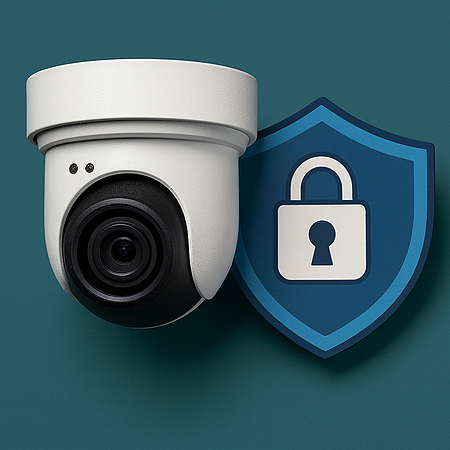
A surveillance camera is a security device designed to continuously monitor and record activity within a specific area. Unlike webcams or smartphone cameras, which you turn on intentionally, a surveillance camera is built to run in the background. It automatically captures footage, detects movement, and stores video for later review.
Their role is both preventive and evidentiary. Visible cameras can deter trespassing or theft, while recorded footage documents events if something does occur. Modern systems often include motion alerts, allowing homeowners to know when activity is detected without constantly watching a live feed.
You’ll find surveillance cameras anywhere where ongoing monitoring is required. Homes typically have them at entry points – front door, garage, backyard. Businesses monitor cash registers, inventory areas, and parking lots. Public spaces like parks, streets, and government buildings use them for wider security coverage. While features vary by setting, the goal is consistent: maintaining visual oversight when no one is physically present.
Types of Surveillance Cameras
When buying cameras, I found several distinct categories serving different security needs. Understanding these differences helped me narrow down what made sense for my home before choosing my Ring system.
Analog vs. Digital (IP) Cameras
Analog cameras use older technology that sends continuous video signals through coaxial cables. These systems connect to DVRs for storage and offer lower resolution. They’re reliable but limited – typically offering lower resolution and fewer remote viewing capabilities. For a modern home setup, the image quality felt outdated.
Digital, or IP, cameras convert images into data packets and send them over a network. Ring cameras fall into this category. They capture higher resolution footage (1080p), connect to home Wi-Fi, and store footage locally or in the cloud – making it possible to view live or recorded video from anywhere through a mobile app.
Wired vs. Wireless Cameras
Wired cameras need physical connections for power and data transmission. They provide stable feeds without signal interference, but make installation more complex. My neighbor spent an entire weekend running cables through walls and attic space to install his system.
Wireless cameras use Wi-Fi and run on batteries or nearby outlets. Installation is much faster. In my case, it took under an hour for all three of my cameras. However, they need strong Wi-Fi signals and regular battery maintenance.
Specialized Cameras: PTZ and Others
PTZ (pan-tilt-zoom) cameras use motorized components to move horizontally, vertically, and zoom in on activity. They’re common in commercial settings where one camera needs to cover a large area, such as a parking lot or warehouse floor. You can explore deployment scenarios in our dedicated PTZ guide.
Other specialized cameras include:
- Dome cameras (discreet, vandal-resistant)
- Turret cameras (combining dome durability with directional visibility)
- Multi-sensor cameras (multiple lenses to monitor areas with a single unit)
Indoor vs. Outdoor Considerations
Indoor cameras are designed for controlled environments and require minimal weather protection. They work are generally more affordable and easier to install in living spaces.
Outdoor cameras need serious weather protection. They must withstand rain, dust, and temperature swings. My Ring Spotlight Cams have an IP65 rating – a feature I now consider essential after an earlier outdoor camera failed during a rough winter. Always check weatherproofing and operating temperature ranges before buying.
Core Components and Functionality
Here’s how surveillance cameras work based on my experience with Ring and research into other systems:
- Lenses and Light Capture: Wide-angle lenses (140° in my Ring cameras) focus light onto the image sensor and determine the camera’s field of view. That light is directed onto the image sensor, and lens quality plays a major role in clarity, distortion control, and how much area the camera can monitor.
- Image Sensors: Millions of photosites (pixels) convert light into electrical signals. These sensors contain millions of photosites (pixels). A 1080p camera, like mine, captures roughly 2 million pixels per frame, which is enough to identify faces or license plates in good lighting, though fast motion can still cause blur.
- Signal Processing: The camera’s onboard processor enhances raw sensor data through noise reduction, color correction, contrast adjustment, and white balance. This chip largely determines night vision quality – something I noticed immediately when upgrading from my grainy first-generation doorbell camera to a newer model.
- Encoding and Transmission: Cameras compress video (H.264 in Ring models) before sending it through Wi-Fi or wired connections to storage systems or cloud servers. This entire process (from light entering the lens to video on my phone) happens nearly instantly, with alerts arriving within seconds of motion detection.
Video Resolution and Image Processing
Once a camera captures light through the lens and converts it into digital signals, the system determines how detailed that footage will actually look. This comes down largely to resolution, which is the number of pixels used to build each video frame. A 1080p camera records just over two million pixels per image, while 4K models capture roughly four times that, which is why higher-resolution footage holds more detail when you zoom in.
But resolution isn’t the whole story. The camera’s processor actively refines the raw image before it’s saved. It adjusts contrast, balances color, reduces grain, and sharpens edges so the footage is usable rather than flat or noisy, especially in low-light scenes.
Frame rate shapes how motion appears in recordings. Measured in frames per second, it determines how many still images the camera captures each second. Higher frame rates make movement look smoother, but they also generate more data, which affects storage and bandwidth demands.
Before footage is stored or transmitted, it’s compressed using formats like H.264 or H.265. Compression reduces file size by removing repeated visual data between frames, allowing cameras to retain more footage without overwhelming storage or network capacity.
Power Sources and Requirements
Power is one of the most overlooked decisions in a surveillance setup – until installation day. Where and how your cameras receive power affects reliability, maintenance, and long-term performance.
Standard Power Options
Most surveillance cameras use one of three power sources: standard electrical outlets, rechargeable batteries, or hardwired low-voltage wiring. Plug-in cameras draw continuous AC power from a wall outlet, which allows them to record, stream, and send alerts without interruption. My doorbell camera connects to 16–24V AC doorbell wiring. This type of low-voltage connection provides steady power while keeping wiring concealed, which is why it’s commonly used for video doorbells.
In my previous home, I used battery-powered cameras for easier installation without running wiring. They run on rechargeable lithium-ion batteries that typically last several months per charge, depending on how often motion is detected and how frequently footage is recorded. Environmental factors also matter – colder temperatures reduce battery efficiency, which can shorten operating time between charges.
Power over Ethernet (PoE)
Power over Ethernet (PoE) uses network cabling to deliver both electricity and data through a single Ethernet cable. Instead of plugging into an outlet or relying on batteries, the camera connects to a PoE-enabled network switch, which supplies power while also transmitting video to the network.
This setup requires running Ethernet cables during installation, but it creates a more integrated system. Because the connection is wired, PoE cameras avoid Wi-Fi interference and maintain constant power without battery limitations. This allows them to support features like continuous recording or higher-resolution video more reliably.
Energy Consumption Considerations
Surveillance cameras are designed to operate continuously while using relatively little electricity. Most residential models consume only a few watts of power – enough to run image sensors, processors, and wireless or wired transmitters.
Power use increases slightly for cameras with infrared night vision, built-in spotlights, or advanced processing features. While individual units have minimal impact on energy bills, total consumption becomes more relevant in larger multi-camera systems that run around the clock.
Solar Options
Solar power provides an alternative for cameras installed in locations where wiring or outlets aren’t practical. Solar panels connect to battery-powered cameras and convert sunlight into electrical energy, recharging the internal battery during daylight hours.
Effectiveness depends on direct sun exposure, panel angle, and seasonal daylight availability. In sunny regions, solar can significantly extend operating time between charges. In cloudier climates, it typically reduces (rather than eliminates) manual charging needs.
Backup Power Considerations
Surveillance coverage can be disrupted during power outages unless backup systems are in place. Cameras that rely on household electricity will shut down when grid power fails.
To prevent this, systems can be connected to uninterruptible power supplies (UPS), which store backup battery power. In PoE installations, connecting the central network switch to a UPS can keep all connected cameras running for several hours, preserving monitoring and recording during outages.
Understanding how cameras are powered (and how that power is maintained) is essential for building a system that remains operational when it’s needed most.
Storage and Video Management
After setup, I quickly realized storage matters as much as the cameras themselves. Capturing footage is only useful if it’s stored securely and can be accessed when needed. Here are the main options:
- microSD Cards: Some standalone cameras store footage on internal microSD cards, recording motion clips or continuous video directly within the device. Storage capacity determines how long footage is retained before older recordings are overwritten. However, if the camera is stolen or damaged, the stored footage is lost with it.
- NVR/DVR Systems: Network Video Recorders (NVRs) and Digital Video Recorders (DVRs) store footage on centralized hard drives connected to multiple cameras. These systems allow longer retention periods and keep video stored on-site rather than in the cloud. While they require higher upfront investment, they eliminate recurring subscription fees and provide full ownership of recorded data.
- Cloud Storage: Cloud storage uploads video recordings to remote servers managed by the camera provider. This allows footage to be accessed, downloaded, and shared from any internet-connected device. However, it depends on stable internet connectivity for uploads and places data security responsibility with the provider.
- Hybrid Systems: Hybrid storage combines local and cloud recording. Cameras store footage internally during connectivity interruptions, then sync recordings to the cloud once the connection is restored. This approach provides redundancy by maintaining both on-site and off-site copies.
Retention and Capacity Planning
Video storage needs vary based on resolution, recording mode, and camera count. Motion-activated systems use far less space than continuous recording, which can generate significant daily data volumes. You should determine how many days of footage you want retained before selecting storage capacity.
Video Access and Retrieval
Storage is only useful if footage can be quickly located and reviewed. Most systems organize recordings by time, camera, or motion event, and allow downloading or sharing clips. The quality of the management interface can significantly affect how efficiently incidents are identified.
Network Connectivity and Bandwidth Requirements
Surveillance cameras don’t just record video – they continuously transmit data across your network. That data flow affects internet speed, Wi-Fi stability, and overall system reliability. Understanding how cameras connect and how much bandwidth they consume helps prevent slowdowns, dropped feeds, or missed recordings.
Connection Types
Surveillance cameras connect to networks in several ways:
- Ethernet (Wired): Wired cameras use Ethernet cables to transmit data to a router, switch, or recorder. With Power over Ethernet (PoE), a single cable delivers both power and data. This provides the most stable connection, minimal interference, and consistent performance, which is important for higher-resolution cameras or multi-camera systems.
- Wi-Fi: Many consumer cameras use 2.4GHz or 5GHz Wi-Fi networks. While convenient for installation, Wi-Fi signals are susceptible to interference from walls, distance, weather conditions, and other connected devices. Strong router placement or mesh networking may be necessary to maintain consistent coverage across larger properties.
- Cellular: Some specialized cameras include 4G/5G connectivity. These models use mobile data either as a primary connection or as backup during internet outages. They typically require monthly data plans and are most common in remote locations or critical monitoring scenarios where wired internet isn’t available.
Bandwidth Consumption
Each camera consumes bandwidth when streaming live video or uploading recorded footage. The amount depends on resolution, frame rate, compression format, and whether recording is continuous or motion-based.
1080p Camera (Medium Quality):
- Live Viewing: 2–3 Mbps per stream
- Recording Upload: 1–2 Mbps during motion events
4K Camera (High Quality):
- Live Viewing: 8–10 Mbps per stream
- Recording Upload: 4–6 Mbps during motion events
These numbers matter most on the upload side of your connection. Many home internet plans advertise high download speeds but provide significantly lower upload bandwidth. If multiple cameras trigger at once, upload congestion can cause delays, buffering, or incomplete recordings. Homes with slower broadband connections (under 200 Mbps with limited upload capacity) should carefully evaluate how many cameras they plan to run simultaneously.
Planning network capacity alongside camera selection helps avoid performance bottlenecks once the system is active.
Local Network Traffic
Even cloud-based systems generate substantial traffic within your home network. Before footage reaches the cloud, it travels from the camera to your router, which means video data still moves across your local network infrastructure.
For systems that record continuously to a local NVR, internal traffic increases substantially. A four-camera 1080p setup recording 24/7 can generate multiple terabytes of data per month across the local network. While this does not consume internet bandwidth, it can strain switches, cabling, or older routers that weren’t designed for constant high-volume video transmission.
Router and Switch Requirements
Small systems with motion-based recording typically function well on modern consumer routers. As camera counts increase (particularly with continuous recording), network hardware becomes more important.
- Managed Switches: This allows administrators to monitor and prioritize traffic across connected devices. In camera-heavy systems, this helps prevent dropped frames or recording interruptions by allocating bandwidth appropriately. PoE-managed switches also centralize both power and data control for wired cameras.
- VLAN Segmentation: A VLAN (Virtual Local Area Network) logically separates devices on the same physical network. Placing cameras on a dedicated VLAN can improve security by isolating them from other devices and can also reduce unnecessary broadcast traffic.
- QoS Settings: Quality of Service (QoS) settings prioritize certain types of traffic (such as video streams) over less time-sensitive data. Proper configuration helps maintain smooth video transmission when the network is under load from streaming, gaming, or file downloads.
Remote Access Considerations
Remote viewing requires outbound connections from the camera system to external networks. Most consumer platforms simplify this by routing video securely through their cloud services, allowing users to access feeds via mobile apps without advanced configuration.
For systems that store footage locally, secure remote access often involves setting up a VPN (Virtual Private Network). A VPN creates an encrypted connection to the home network without exposing cameras directly to the public internet. While more complex to configure, it provides greater control and security for advanced installations.
Planning for Future Expansion
Bandwidth planning should account for both internet upload speeds and internal network capacity. Cloud-based cameras rely heavily on upload bandwidth, while local recording systems depend more on switch throughput and cabling quality.
As systems grow beyond a handful of cameras, upgrading network infrastructure, including higher-capacity switches or faster interconnections between switches and recorders, may be necessary. Larger installations often benefit from professional network planning to prevent bottlenecks or hardware limitations from undermining performance.
Advanced Features and Technologies
Basic camera principles haven’t changed much, but modern systems layer advanced sensors and software on top of those fundamentals to improve accuracy and usability.
- Motion Detection: Modern cameras combine software motion analysis with PIR (Passive Infrared) sensors that detect heat signatures. Custom zones help limit alerts, though environmental movement can still trigger false notifications.
- Two-Way Audio: Built-in microphones and speakers allow real-time communication through the mobile app. Audio quality is limited but useful for interacting with visitors or delivery drivers.
- Night Vision: Infrared LEDs illuminate areas invisible to the human eye, enabling black-and-white recording in darkness. Performance depends on range and placement, and infrared can reflect off glass or nearby surfaces.
- Color Night Vision: Enhanced sensors and low-light processing allow some cameras to record color footage in dim environments. This improves visual detail compared to standard infrared-only night vision.
- Starlight Technology: High-sensitivity sensors amplify available ambient light to produce color images in near-dark conditions. This reduces reliance on infrared illumination but is typically found in higher-end cameras.
- Person Detection: AI distinguishes human shapes from other moving objects, dramatically reducing false alarms from animals and debris movement.
- Package Detection: Object recognition can identify delivered packages within defined zones. Alerts are more specific than general motion notifications.
- Smart Home Integration: Many cameras connect with smart home platforms to trigger lights, locks, or alarms. Integration enables automation but depends on system compatibility.
Surveillance Cameras in Smart Homes
Integrating cameras with other smart devices transforms them from simple recording tools into core components of a responsive home security ecosystem:
- Alexa/Google Integration: Many cameras connect directly to voice assistants, allowing users to pull up live feeds on smart displays using voice commands. This provides hands-free monitoring without opening mobile apps.
- Home Automation Hubs: Smart home hubs allow cameras to interact with other connected devices across brands. Motion events can trigger lighting, alarms, or recording rules through centralized automation platforms.
- IFTTT Connections: IFTTT (If This Then That) enables cross-platform automation through prebuilt or custom applets. Cameras can trigger actions like activating lights or sending alerts based on specific conditions.
- Practical Applications: Motion-triggered automations commonly activate exterior lighting at night. This improves video clarity while also serving as a visual deterrent.
- Smart Lock Integration: Some camera systems integrate with smart locks or garage controls, enabling remote entry management. This allows homeowners to grant temporary access while monitoring activity in real time.
- Remote Access: Camera platforms typically provide centralized dashboards for live viewing, playback, and alert management. Multi-user permissions allow different access levels for household members.
- Voice Control: Voice queries can retrieve live feeds or recent activity updates. This adds convenience when checking cameras while multitasking.
- Privacy Safeguards: Many systems include privacy features such as geofencing-based camera disablement, local video processing, or physical lens shutters. These controls help balance automation with in-home privacy concerns.
Security and Privacy Considerations
Security cameras are designed to improve safety, but they also introduce digital and legal responsibilities. Because modern systems connect to the internet, they must be protected like any other networked device.
Most reputable manufacturers encrypt video data both in transit and at rest. Encryption protocols such as TLS/SSL protect video as it travels between the camera and cloud servers, while standards like AES-128 secure stored footage so it cannot be easily accessed without authorization. However, the most common vulnerabilities are not encryption failures – they are weak passwords, reused credentials, and outdated firmware. Enabling automatic updates and using strong, unique passwords significantly reduces risk.
Privacy considerations extend beyond cybersecurity. Many states regulate where cameras can be placed and whether audio recording requires consent. In some jurisdictions, posting visible signage is required when surveillance is in use, and certain states require all parties to consent before conversations are recorded, which affects how two-way audio features are used.
Camera placement also matters. While homeowners can generally record their own property, intentionally capturing neighboring private spaces can create legal or civil disputes. Adjusting camera angles, limiting continuous recording in public-facing areas, and using motion zones responsibly help balance security needs with reasonable privacy expectations.
Understanding both digital security and legal boundaries ensures surveillance systems enhance protection without creating unintended risks. For deeper regulatory context, see our surveillance cameras and data protection guide.