

























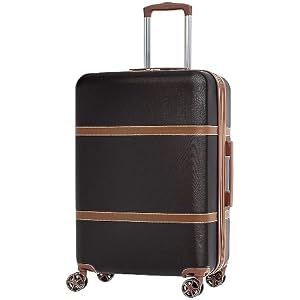


Summary: A medium suitcase offers the best balance between packing space and portability. The right choice depends on size, weight, durability, and how you travel, so you can pack enough without dealing with unnecessary bulk or handling issues.
Medium suitcases sit in a practical middle ground. They offer enough space for a week-long trip without the bulk of larger checked luggage, which makes them one of the most versatile options for regular travel.
But not all medium suitcases perform the same. Once you’re dealing with a fully loaded bag, small differences in weight, wheel quality, and construction become noticeable fast. This guide focuses on the features that actually matter, so you can choose a suitcase that stays reliable trip after trip. For broader brand comparisons and reputation rankings, see our main suitcase guide.
Which Medium Suitcase Should You Buy?
- For durability and long-term use: Focus on impact-resistant materials like polycarbonate or aluminum, along with reinforced corners and strong zippers (such as YKK #10). A longer warranty is a good indicator that the suitcase is built to handle repeated baggage handling without failing.
- For staying within airline weight limits: Prioritize lightweight construction, ideally under 10 lbs for hard-shell suitcases. Lower weight gives you more usable packing capacity, but make sure it hasn’t come at the expense of wheel quality or structural reinforcement.
- For frequent travel: Look for high-quality wheels with smooth bearings, durable telescopic handles, and strong zippers. These components experience the most wear over time and have the biggest impact on how the suitcase performs across multiple trips.
- For easier maneuverability in airports: Choose a four-wheel spinner design with stable, well-built wheels. This allows the suitcase to roll upright and reduces strain when navigating crowded terminals or long distances.
- For better packing and organization: Look for compression straps and a full divider system to keep contents stable and separated. This makes it easier to organize clothing and reduces shifting during transit.
- If you tend to bring items back from trips: Expandable suitcases give you extra space when needed, usually adding around 15–20% more capacity. This can help avoid needing an additional checked bag on return journeys.
- If you plan to use it for years: Don’t compromise on core components like wheels, zippers, and handle construction. These determine how long the suitcase stays functional, especially under repeated use.
What Size Is a Medium Suitcase – and Will It Meet Airline Rules?
Most medium suitcases measure 24–26 inches tall, which places them firmly in the checked luggage category. These aren’t designed for overhead bins. Once you check them in, they go into the cargo hold, where bags are stacked, dropped, and handled roughly.
That context matters. A medium suitcase isn’t just about size – it needs to handle repeated impact while still being easy to move when fully loaded, and it also needs to work within airline limits. Most airlines cap checked baggage at 23 kg (50 lbs), which directly affects how much you can pack and makes the empty suitcase weight more important than most people realize.
- A 12 lb suitcase leaves you 38 lbs for packing
- A 9 lb suitcase gives you 41 lbs
That small difference adds up quickly. It can be the difference between packing comfortably and having to remove items at the airport.
Which Features Actually Matter in a Medium Checked Suitcase?
Spinner Wheels vs Two Wheels — What Works Best for Heavier Bags?
Suitcases typically come with either two wheels (rolled at an angle) or four spinner wheels (rolled upright in any direction). Two-wheel suitcases require you to tilt and pull the bag behind you. With a 20+ kg load, that weight transfers directly into your arm and shoulder. It becomes noticeable very quickly, especially in large airports or long walkways.
Spinner suitcases, on the other hand, roll upright on four wheels. The weight stays centered over the wheels, which makes the bag significantly easier to control. You can push it beside you, guide it through crowds, and change direction without strain. Realistically, for medium-sized suitcases, spinner wheels are the practical choice.
Wheel quality also matters. Look for:
- Sealed bearings (protect against dust and moisture)
- Smooth, stable rolling under load
- Minimal wobble when the suitcase is fully packed
Lower-quality wheels tend to degrade quickly under heavier weights, leading to sticking, vibration, or uneven rolling.
Hard-Shell or Soft-Shell – Which Holds Up Better in Checked Luggage?
Suitcase materials directly affect how well your bag handles impact during travel. Hard-shell suitcases are designed to protect contents from compression and rough handling. The most common materials include:
- Polycarbonate: Flexible and impact-resistant. It can absorb shocks and return to shape without cracking, making it one of the most durable options for frequent travel.
- Aluminum alloy: Extremely strong and highly protective. Instead of cracking, it dents under impact. It’s heavier, but very durable.
- ABS plastic: More affordable, but less resilient. It handles occasional travel well but is more prone to cracking over time.
Soft-sided suitcases use fabric exteriors. They’re lighter and often include external pockets, but offer less protection when other heavy bags are stacked on top. For a deeper breakdown, you can check out our hard suitcase vs soft guide to see which performs better over time.
What To Look For:
- If you check your bag often → hard-shell is the safer long-term choice
- If you prioritize flexibility and lighter weight → soft-sided can work, but comes with trade-offs
Do You Really Need a TSA Lock?
A TSA-approved lock allows airport security to open and relock your suitcase without damaging it. This matters because:
- Checked bags are routinely inspected
- Non-TSA locks may be cut off during screening
- Once removed, your bag travels unlocked for the rest of the journey
Integrated TSA locks (built into the suitcase) are usually more practical than external padlocks. They don’t get lost and sit flush with the case.
What To Look For:
- Metal locking components (more resistant to temperature changes and wear)
- A solid, easy-to-use combination mechanism
Why Suitcase Weight Matters More Than You Think
Every kilogram your suitcase weighs is one less kilogram you can pack. With strict airline limits, weight efficiency becomes a key factor — not just a nice-to-have.
Here’s a practical benchmark:
Lighter doesn’t always mean weaker. Well-designed suitcases reduce weight by reinforcing high-impact areas while trimming excess material elsewhere. Poorly designed lightweight suitcases often cut material evenly across the shell, which reduces durability where you need it most.
What Actually Determines How Long a Medium Suitcase Lasts?
Why Zippers Fail First – and What To Look For
Zippers are the most common failure point in medium-sized suitcases. Once the bag is fully packed, the internal pressure from 60–70 liters of contents constantly pushes against the closure. When a zipper fails, it doesn’t partially fail – it renders the suitcase unusable.
The difference comes down to build quality. YKK #10 zippers are the standard for checked luggage because the larger teeth handle sustained stress without separating. YKK #8 can work if you pack lighter, but anything smaller or unbranded is a risk for frequent travel.
It’s not just the zipper teeth that matter. Metal pulls last longer than plastic, and the stitching where the zipper connects to the shell needs to be reinforced. That junction is where failures often start, even on otherwise decent suitcases.
Why Corners and Edges Take the Most Damage
Most suitcase damage doesn’t happen across the flat panels – it happens at the corners. When bags are dropped or thrown during handling, they typically land on an edge or corner, which concentrates the impact into a small area. That’s how cracks begin. Once a hard-shell suitcase cracks, the structural integrity is compromised.
Good suitcases are designed to absorb that impact before it reaches the shell. Reinforced corners, protective edge guards, and solid wheel mounts all help distribute force and prevent damage from spreading. Without these, the shell itself takes the full hit every time.
Handles – Where Comfort Meets Durability
The telescopic handle is one of the most used components on any suitcase, and one of the most overlooked. With a fully loaded medium suitcase often weighing over 20 kg, you’ll be pulling that weight across long airport corridors, sidewalks, and uneven surfaces. Over time, that repeated strain exposes weaknesses in both materials and design.
That’s why handle construction matters more than it seems. Multi-stage aluminum systems are the most practical option, since they let you adjust the height to a comfortable position instead of hunching or overextending your arm. Single-stage handles work, but often lock you into a less natural pulling position.
Material quality plays a role here, too. Aluminum systems hold up well under repeated stress, while plastic components tend to fatigue and eventually crack. When that happens, the suitcase quickly becomes difficult (or impossible) to use mid-trip.
Why Interior Organization Matters More at This Size
With a medium suitcase, you’re no longer packing just essentials. You’re managing a full week’s worth of clothing, shoes, and accessories, which makes internal structure more important.
Compression straps help keep everything in place and reduce shifting during transit, which also helps limit wrinkling. A full divider panel is even more useful. It allows you to split the suitcase into two sections, making it easier to separate clean and worn clothes or isolate bulkier items from smaller ones.
The best dividers include a zippered closure, so contents stay contained even when the suitcase is handled roughly. Mesh pockets add convenience for smaller items, but the core functionality comes from keeping everything stable and organized under movement.
Sizing can be confusing across brands, so it helps to read our guide on how to measure a suitcase before choosing.
Expandability – Useful, but Easy To Misuse
Expandable suitcases add extra depth through a secondary zipper, typically increasing capacity by around 15–20%. This is most useful on return trips. You can pack normally on the way out, then expand the suitcase to fit additional items coming back. It’s a practical way to avoid needing a second checked bag.
That said, expansion changes how the suitcase behaves. When fully expanded and heavily packed, the weight distribution shifts, and the bag can feel less stable when rolling. It also makes it easier to exceed airline weight limits without realizing it.
Is Warranty Length a Good Indicator of Suitcase Quality?
Warranty length is one of the clearest signals of how confident a manufacturer is in its product. When a suitcase comes with a long warranty, it usually means the company expects it to hold up under repeated real-world use, including rough baggage handling. A lifetime warranty suggests the bag is built to survive years of travel, not just occasional trips.
Short warranties, typically 1–2 years, often indicate the opposite. They suggest the manufacturer anticipates wear or failure within a shorter timeframe. In practice, warranty coverage is often more useful than brand reputation alone. A well-built suitcase from a mid-tier brand with a 10-year warranty is usually a safer long-term choice than a more expensive option with limited coverage.
How Important Is Water Resistance for Checked Luggage?
Checked luggage isn’t handled in controlled conditions. Bags sit on wet tarmacs, get loaded in the rain, and can be exposed to moisture during transit. Hard-shell suitcases generally perform better in these situations. Their solid exterior helps prevent water from seeping inside, especially when seams and closures are well constructed.
Soft-sided suitcases are more vulnerable. Fabric exteriors can absorb moisture if they’re not treated or coated, which increases the risk of damp clothing or damage to sensitive items.
Even so, no suitcase is fully waterproof. Zippers, seams, and pressure changes all create potential entry points for moisture. The only reliable way to protect valuables is to pack them separately. Electronics, documents, and anything sensitive should go into sealed internal bags, regardless of the suitcase type.
Common Mistakes To Avoid When Choosing a Medium Suitcase
Even well-reviewed suitcases can disappoint if you focus on the wrong features. These are the most common mistakes that lead to frustration during real travel:
- Prioritizing appearance over wheel quality. A suitcase can look premium but still perform poorly. Weak wheels make a fully loaded bag difficult to maneuver, especially in crowded airports or long terminals. After basic durability, wheel performance has the biggest impact on everyday use.
- Ignoring empty weight. Heavier suitcases reduce how much you can pack before hitting airline limits. This often becomes a problem at check-in, when you’re forced to repack on the spot. A better approach is to work backward from what you typically pack and choose a suitcase that keeps you within the limit.
- Choosing two-wheel designs to save money. Two-wheel suitcases require you to tilt and pull the full weight of the bag, which adds strain and reduces control. With a medium suitcase, that difference becomes obvious quickly, especially when navigating busy airports or uneven surfaces.
For shorter trips, you may want to see our guide to mini suitcases for more compact options.
Which Medium Suitcase Is Right for Your Travel Style?
The right choice depends on how you travel and what you prioritize. Focus on the factors that will affect you most in real use:
If durability matters most, choose polycarbonate or aluminum with reinforced corners, high-quality zippers (like YKK #10), and a long warranty. These suitcases are built to handle repeated impact and rough baggage handling. Expect a slightly higher empty weight, typically around 10–11 lbs.
If staying under airline weight limits is your priority, look for lightweight polycarbonate options under 10 lbs. The key is making sure weight savings don’t come at the expense of weaker wheels or reduced reinforcement. Some suitcases cut weight in the wrong areas, which shortens their lifespan.
If you travel frequently (20+ trips per year), focus on components that wear out first. High-quality wheels with smooth bearings, durable telescopic handles, and strong zippers make the biggest difference over time. These features determine how long the suitcase remains reliable.
Choosing the wrong suitcase usually shows up mid-trip – when a handle sticks, wheels drag, or a zipper fails under pressure. Get the fundamentals right, and the suitcase will hold up consistently over years of travel.