









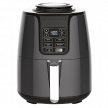








Air fryers are popular because they make it easier to cook crisp, satisfying food quickly — often with less oil and less effort than a full oven. At their core, most air fryers are compact convection ovens: a heating element produces heat, and a fan circulates it to cook food faster and more evenly.
But not every model performs the same, and “best” depends on what you cook, how many people you cook for, and how much space you have. This guide breaks down the main air fryer types, the specs that matter (capacity, temperature, timer, wattage), and the features worth paying for, so you can pick the right model confidently.
Quick Answer: How Do You Choose the Best Air Fryer?
Choose an air fryer by starting with type and capacity (basket vs oven-style vs multi-cooker), then check temperature range, timer length, and wattage based on what you actually cook. Prioritize easy cleaning (removable tray/plate, dishwasher-safe parts), and only pay extra for modes you’ll use (like dehydrate, broil, or rotisserie).
How To Choose an Air Fryer
There are a number of factors to consider when choosing an air fryer. Some are more important than others, but they all have a place when making that choice. Not only do you want to have a good handle on how much power you need, but internal capacity, temperature range, what kind of modes are available, and more.
Capacity
Capacity is one of the biggest “make or break” factors because it determines how much food you can cook at once and how large the unit will be on your counter. You’ll see capacity listed in litres or quarts — they’re close enough that you can treat them as roughly equivalent for shopping purposes.
- Under 3L: best for single servings, dorms, and snacks
- 3–5L: works for one person or light use
- 5–10L: solid everyday range for 1–2 people (and some small families, depending on meals)
- 10–20L (oven-style): better for families, multi-tray cooking, and baking
- 20L+: large meal prep, entertaining, and rotisserie-capable models
Temperature
Not every air fryer has the same temperature range. This matters more than most people expect, especially if you want to dehydrate, proof, bake, or finish foods with high-heat crisping.
- If you want dehydrating, look for low temps around 160–195°F (70–90°C) plus long timers.
- If you want strong browning, some models reach 450°F (230°C), while others top out at 400°F (204°C).
Avoid this: models without adjustable temperature control. Fixed-temp air fryers limit what you can cook and make consistent results harder, especially for baking and thicker foods.
Timer Range
Similarly, the timer range on air fryers is not universal, either. Just about every air fryer can get up to an hour, but plenty can’t go beyond that.
If you want to dehydrate food, you not only need a low temperature, but a long cooking time. And if you want to use an air fryer for baking, you might need a longer time range.
Heating Type
Heating type isn’t the first thing most people shop for, but it can affect evenness and top/bottom browning:
- Single top element: most common; great for everyday crisping
- Top + bottom elements: better for baking and more even browning
- Dual zones (dual basket): helpful for cooking mains + sides at once
- Infrared hybrids: niche and pricey, but can heat fast and brown well
Wattage
Wattage affects how quickly an air fryer heats and how well it maintains heat, especially in larger oven-style models.
- Basket air fryers: ~1400–1600W is typically plenty
- Oven-style air fryers: higher wattage helps because there’s more space to heat
- Be cautious with large oven-style units under ~1200W as they often struggle with even browning and preheat time.
Controls
Controls are mostly preference — digital is easier for precision and displays, while analog dials are simple and durable. What matters more is whether the air fryer includes modes that require specific hardware or real temperature capability.
These 3 modes actually change what an air fryer can do:
- Dehydrate: requires low temp + long timer
- Broil: requires strong high heat (often up to 450°F)
- Rotisserie: requires space + rotisserie hardware (usually oven-style)
Everything else is mostly a preset of time/temp you can replicate manually.
Build
Air Fryer Type
Start with the type of air fryer. I’ll go over this more in-depth later, but here are the basics:
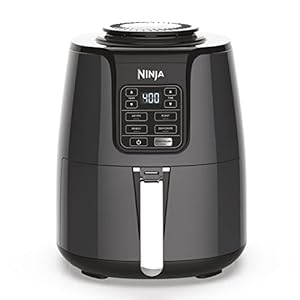
- Basket-style: Most common. Great for quick meals and compact kitchens.
- Oven-style: Usually larger, with trays instead of baskets. Better for batch cooking or baking.
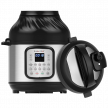
- Multi-cookers with air fry lids: Flexible but bulkier. Good if you want one appliance for multiple cooking methods.
Note: Paddle-style air fryers are largely outdated and typically only found second-hand. They’re not part of the current mainstream market.
Size and Weight
While capacity (liters/quarts) often determines the overall size and weight, don’t ignore the external dimensions:
- Compact kitchens: Check that the unit will fit on your counter or inside a cabinet.
- Storage needs: If you plan to put it away between uses, make sure it’s not too heavy or awkward to lift.
Single vs. Dual Compartment
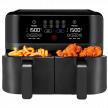
Most air fryers have a single cooking compartment, but a few premium models offer dual baskets with independent time and temperature controls. These are ideal if you want to cook two different dishes at once, like a main and a side. Expect to pay more for this feature.
Cooking Surface Design
- Basket-style models use a crisper plate, which sits at the bottom of the basket. Always look for a removable crisper plate, as fixed ones are difficult to clean.
- Oven-style models use removable trays, which serve the same purpose. If the tray isn’t removable, skip that model—cleaning will be unnecessarily difficult.
Ease of Cleaning
Check whether the following parts are dishwasher safe:
- Basket
- Crisper plate
- Tray
Most modern air fryers have dishwasher-safe components, but not all do. Models requiring hand-washing of internal parts or accessories can become a chore, especially with frequent use. Oven-style models often require manual cleaning of the interior walls—just like a regular oven.
Interior Materials
There’s growing concern about plastic components inside air fryers, especially:
- Basket-style units with plastic near the top heating element and fan. This is the part directly above your food.
- If you’re avoiding PFAS or microplastics, look for units with all-metal interiors or those that avoid exposed plastic near the heating element.
- Oven-style models are typically better in this regard—they tend to have fewer exposed plastic components near the cooking zone.
See-through Windows and Interior Lighting
These are convenience features, not essentials, but they improve usability:
- A see-through door or basket window lets you monitor food without interrupting the cooking cycle.
- An interior light helps make that window useful—especially in darker kitchens or with smaller foods that are harder to see.
Extra Features: What’s Worth Paying For?
Extra features matter most when they change what you can cook or make the air fryer safer and easier to live with. Some models stay simple (basket + crisper plate), while others add accessories, smarter controls, and safety upgrades.
Accessories and Add-Ons (Nice to Have)
Many air fryers include extras, but they’re only valuable if you’ll actually use them.
- Multiple trays/racks (common on oven-style models): Useful for baking, dehydrating, and cooking more than one item at once.
- Built-in meat thermometer (higher-end models): Helpful for steak, chicken, and rotisserie cooking if you want accurate doneness without guessing — especially if you don’t already own a thermometer.
Accessories are hard to compare across brands because inclusions vary, but they can make a real difference for specific cooking styles.
Safety Features (Non-Negotiable)
For a high-heat countertop appliance, safety features aren’t optional.
- Auto shutoff: Should be standard, but some budget models still skip it. It stops the unit when the timer ends (or if something goes wrong), reducing risk and making the appliance more “set-and-forget.”
- If you’re shopping on a tight budget, prioritize a well-reviewed model with core safety protections rather than the absolute lowest price.
Smoke Control (Situational)
Smoke control is less common, but can be useful in the right kitchen.
- These systems use filters or airflow design to reduce visible smoke when cooking fatty foods or marinades.
- If you already adapt recipes well (less oil, lower temps, less sugar-heavy marinades), you may not need it.
- If your kitchen has limited ventilation, or you want the air fryer to be as low-maintenance as possible, smoke control is worth considering.
Types of Air Fryers
Air fryers aren’t all built the same. If you’re unsure which design makes the most sense for your kitchen, you can explore our full guide to the different types of air fryers — but here’s a quick breakdown to get you started.
Basket-style
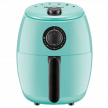
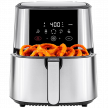
Basket-style models are the most recognizable type of air fryer. They’re typically taller than they are wide and feature a pull-out drawer with a removable basket. Inside the basket, there’s usually a vented crisper plate that allows hot air to circulate underneath the food. Ideally, that plate should be removable for easier cleaning.
These models tend to:
- Take up less counter space (check out my favorite compact air fryers here)
- Heat up quickly
- Be easier to clean (the entire basket often goes in the sink or dishwasher)
- Cost less than oven-style models
They’re best for singles, couples, small kitchens, and quick everyday meals. However, they usually have a smaller capacity and fewer advanced features compared to larger models.
If you mainly want to cook fries, wings, vegetables, or reheat leftovers, a basket-style unit is often more than enough.
Toaster Oven
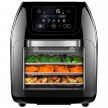
Oven-style air fryers look like compact toaster ovens, with a front-opening door and interior racks or trays instead of a pull-out basket.
Instead of shaking a basket, you place food on trays and slide them in and out. Many models include multiple racks, which allows you to cook more food at once or prepare multiple dishes simultaneously.
Compared to basket models, oven-style air fryers typically:
- Offer much larger capacity
- Handle whole chickens or larger portions
- Include more cooking modes (bake, broil, roast, dehydrate, rotisserie)
- Cost more
- Require more cleaning inside the cavity
Cleaning can be slightly more involved since you’ll need to wipe down interior walls, similar to maintaining a toaster oven.
These are ideal for families, batch cooking, baking, or anyone who wants their air fryer to function more like a secondary oven.
Multi-Cooker
Multi-cookers combine air frying with another cooking method, such as pressure cooking, slow cooking, or even microwave functionality.
They’re appealing because they:
- Save counter space
- Replace multiple appliances
- Offer more cooking versatility
For example, pressure cooking uses steam under pressure, which is very different from convection-style air frying. That added flexibility can be valuable in smaller kitchens.
However, there’s a trade-off:
- They’re often heavier and bulkier
- Air frying may not be as convenient as dedicated models
- If the unit fails, you lose multiple cooking functions at once
They’re best for space-conscious kitchens or users who want one appliance to handle multiple tasks.
Paddle-style
Paddle-style air fryers include a rotating arm that moves food during cooking. The goal is to eliminate the need to pause and manually shake the basket.
In theory, this improves even cooking. In practice:
- They work best for sturdy foods like fries or chopped vegetables
- Softer foods can break apart
- Overcrowding can strain the paddle mechanism
These models are far less common today. While some brands (like Tefal) still offer them, they’re largely a niche option.
Unless you specifically want automatic stirring, most buyers are better off choosing a basket or oven-style air fryer, which offer simpler operation and broader versatility.
What to Look For in an Air Fryer
It’s tough picking the best air fryer overall. Not just because there are multiple manufacturers making solid machines, but because there are so many different needs out there.
For some, a feature-packed smart air fryer like Dreo’s ChefMaker or a dual-compartment air fryer from Ninja are the most ideal for their situation, while others would prefer something simple with great performance like the Cosori Turbo Blaze.
Since everyone’s needs are different, it’s important to get a handle on which criteria are most important to you.
- If you live in a small space, you need to make sure to go with something that actually fits. That means prioritizing basket-style air fryers with smaller internal capacities – I would suggest around six liters or less.
- If you’re trying to cook for your family, get something bigger, whether it’s a dual compartment air fryer or a larger capacity toaster oven model.
Consider what kind of dishes you hope to cook in one as well. Temperature range is important if you have recipes that call for very low or high heat, as not all air fryers are the same. The same thought process goes for time ranges.
Similarly, having more modes might seem better, but only if you care about versatility. If you do, then definitely look for models with more modes, focusing on which modes are important for you, whether it’s something like “Toast,” “Rotisseries,” “Dehydrate,” etc.
Also consider which additional features are make-or-break for you. Having a see-through window with an internal light is crucial for someone doing some convection baking. After all, you don’t really want to open to check and let heat out – that’s a great way to kill a soufflé, for example.
Common Mistakes to Avoid
A few small missteps when buying an air fryer can leave you with something that doesn’t actually fit your kitchen or cooking habits. Here are the mistakes I see most often:
- Buying too small (or way too big). A 2–3L model sounds fine until you realize it barely fits dinner for two. On the flip side, a massive oven-style unit can take over your counter if you only cook snacks. Match the capacity to how you actually cook.
- Focusing only on price. Affordable is great. Ultra-cheap usually isn’t. Look for basic essentials like temperature control, a removable crisper plate, and auto shutoff before worrying about saving the last $20.
- Overpaying for modes you’ll never use. Ten cooking presets sound impressive, but most are just time and temperature combinations. If you’re never going to dehydrate, proof dough, or use rotisserie, you don’t need to pay for those functions.
- Ignoring cleaning and maintenance. If the tray or crisper plate isn’t removable, cleaning becomes a chore fast. Always check whether parts are dishwasher safe and how easy the interior is to wipe down.
- Not checking temperature and timer range. Some models don’t go low enough for dehydrating or high enough for strong browning. Others cap timers too early for longer recipes. Make sure the specs match what you plan to cook.
- Choosing an unknown brand with no support. Warranty coverage and customer service matter more than people think — especially with a high-heat appliance. Established brands typically offer clearer support and replacement options.
Brands
Cosori
Cosori is a newer brand that’s quickly become one of the best-selling names in the air fryer space. Their models are known for being budget-friendly yet powerful, with a variety of both basket-style and toaster oven–style options. Cosori air fryers tend to get very good reviews, especially for their performance relative to price. They offer a two-year limited warranty.
Dreo
Dreo is another relatively new company, known for forward-thinking, smart home devices. They currently only offer one air fryer, but it’s gained attention for its advanced smart features. It’s on the pricier side and comes with a one-year warranty, but stands out due to its modern design and strong user feedback.
Ninja
Ninja is arguably the most popular air fryer brand on the market. They offer a wide variety of models, including both basket-style and toaster oven–style units. Ninja is known for cutting-edge features and dual-compartment models, which are great for cooking multiple items at once. Their products tend to be more expensive than average but are consistently well rated. They come with a one-year limited warranty.
Philips
Philips was one of the first brands to bring air fryers to the mass market. While they aren’t the flashiest or most cutting-edge, their basket-style models are solid, reliable, and focused on the budget to mid-range space. Philips offers a two-year warranty, and their models are generally very well received by users.
Tefal (T-Fal)
Tefal was once known for paddle-style air fryers, but that’s no longer a focus. Today, they offer a small range of basket-style and toaster oven–style air fryers. One standout is their infrared air fryer, which heats almost instantly. Their lineup is relatively small, and they offer a one-year limited warranty.
Breville
Breville focuses exclusively on toaster oven–style air fryers, typically at the premium end of the market. Their models are known for being feature-rich, especially in terms of smart cooking functions and rotisserie capabilities. Breville units are well-reviewed and come with a two-year limited warranty.
Our Place
Better known for cookware, Our Place offers a single toaster oven air fryer in two sizes. What sets them apart is design aesthetics—their models are visually appealing and popular among style-conscious buyers. Despite the premium branding, they offer only a one-year warranty.
Instant Pot
While primarily known for pressure cookers, Instant Pot also offers a wide range of air fryers, including standalone units and multi-cookers with air fry lids. They’re among the most prolific and affordable brands in the space, offering a wide variety of sizes and styles. Reviews are generally positive, and all products come with a one-year warranty.
Chefman
Chefman is a budget brand, offering a wide variety of basket and toaster oven–style air fryers at some of the lowest prices for an established name. While they’re affordable, user ratings tend to be slightly lower than competitors. Their air fryers come with a one-year warranty.
Cuisinart
Cuisinart is a well-known kitchen appliance brand but has a relatively small footprint in the air fryer space. They do offer a few basket-style models, which are well liked and affordably priced. One standout feature is their three-year warranty, which is longer than most other brands offer.